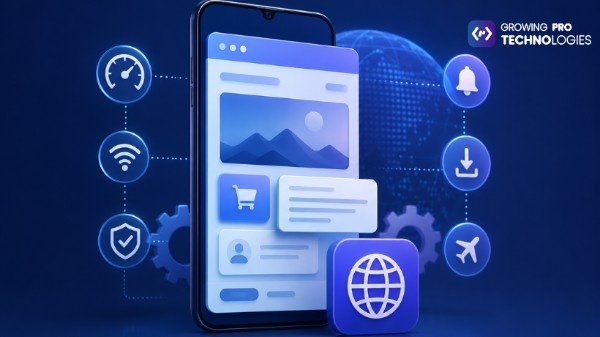
The eCommerce industry is becoming increasingly mobile-first, and businesses need fast, reliable, and engaging digital experiences to stay competitive. Progressive Web Apps (PWAs) combine the flexibility of websites with many of the capabilities associated with mobile applications. For online retailers, this means faster browsing, improved accessibility, and a smoother customer journey across devices. Partnering with a professional PWA development agency can help businesses build scalable web experiences that meet modern customer expectations while supporting long-term growth.
What Is PWA Development for eCommerce?
Progressive Web App development involves creating web applications that use modern browser technologies to deliver an app-like experience. Unlike traditional websites, PWAs can support features such as offline functionality, push notifications, home-screen installation, background updates, and fast loading.
For eCommerce businesses, these capabilities can make product discovery, shopping, checkout, and post-purchase engagement more convenient. A PWA can work across smartphones, tablets, laptops, and desktops without requiring businesses to maintain separate applications for every platform.
Instead of forcing customers to download an app before accessing enhanced functionality, a PWA allows them to interact with the store directly through their browser. This reduces friction and creates a more accessible shopping experience.
Key Features of an eCommerce PWA
A successful eCommerce PWA should combine strong performance with practical shopping features. Some of the most important capabilities include:
Fast Loading and High Performance
Speed is critical in online shopping. Customers are more likely to leave a website when pages load slowly or interactions feel unresponsive. PWAs use technologies such as caching, service workers, and optimized resources to improve loading performance.
A faster storefront can help shoppers browse categories, view product details, and move through checkout more efficiently.
Responsive Design
Customers access online stores from devices with different screen sizes. PWAs are designed to provide a consistent experience across smartphones, tablets, and desktops.
Responsive layouts ensure that product images, menus, filters, shopping carts, and checkout interfaces remain easy to use regardless of screen size.
Offline and Low-Connectivity Support
One of the most valuable PWA features is the ability to provide functionality when connectivity is limited. Service workers can cache selected resources, allowing customers to continue accessing certain parts of a store even when the network connection is unstable.
For eCommerce brands operating across regions with varying internet quality, this can improve accessibility and user experience.
Push Notifications
Push notifications can help retailers reconnect with customers after they leave the website. Businesses can use notifications for relevant promotions, product launches, order updates, abandoned-cart reminders, and personalized offers.
When implemented responsibly, notifications can support customer retention without creating unnecessary interruptions.
Home-Screen Installation
Customers can add a PWA to their device's home screen directly from a compatible browser. This creates convenient access to the online store without requiring a traditional app-store installation.
For retailers, this can encourage repeat visits and make the shopping experience feel more like a dedicated application.
Secure Shopping Experience
Security is essential for eCommerce platforms because customers provide personal and payment information during transactions. PWAs should be delivered over HTTPS and integrated with secure authentication, payment, and data-handling systems.
A professional PWA development agency can help businesses incorporate security practices throughout the application architecture.
Benefits of PWA Development for eCommerce Businesses
Better Mobile Engagement
Mobile shoppers expect websites to respond quickly and provide intuitive navigation. PWAs are designed around modern mobile experiences, helping retailers deliver smooth interactions without requiring customers to download a separate native application.
Improved Customer Experience
A streamlined shopping experience can make it easier for customers to discover products, compare options, add items to their carts, and complete purchases. Features such as caching, responsive design, and fast navigation contribute to a more convenient customer journey.
Wider Customer Reach
Traditional mobile applications often require separate development for different operating systems. A PWA can be accessed through a web browser, allowing businesses to reach users across multiple platforms with a single application architecture.
This can be especially useful for retailers looking to expand their digital presence without creating several independent experiences.
Reduced Development Complexity
Maintaining separate native applications and a traditional website can increase development and maintenance requirements. A PWA can provide a unified web-based experience while still delivering many app-like capabilities.
This approach can simplify updates and allow businesses to deploy improvements more efficiently.
Stronger Customer Retention
Features such as home-screen installation and push notifications can encourage customers to return to an online store. Retailers can use these capabilities to maintain relevant communication with existing shoppers and promote new products or offers.
Scalable eCommerce Experiences
A PWA architecture can be designed to support growing product catalogs, increasing traffic, and expanding functionality. When combined with a suitable backend and eCommerce platform, PWAs can provide a flexible foundation for businesses at different stages of growth.
PWA Development Trends for eCommerce in 2026
The PWA ecosystem continues to evolve as retailers focus on performance, personalization, and seamless omnichannel experiences.
AI-Powered Personalization
Artificial intelligence is increasingly being used to analyze customer behavior and improve product recommendations. eCommerce PWAs can integrate AI-powered features to provide more relevant search results, product suggestions, and personalized shopping experiences.
Headless eCommerce Integration
Headless commerce separates the frontend presentation layer from backend commerce functionality. PWAs are well suited to this architecture because businesses can create highly customized storefront experiences while connecting them to existing commerce systems through APIs.
This flexibility allows retailers to experiment with new interfaces without rebuilding their entire backend infrastructure.
Voice and Conversational Shopping
Voice search and AI-powered conversational interfaces are becoming more relevant to digital commerce. Future-focused PWAs can integrate conversational search and assistance features to help customers find products and receive answers more naturally.
Advanced Web Capabilities
Modern browsers continue to introduce capabilities that allow web applications to behave more like native applications. Features such as improved installation experiences, background processing, and enhanced device integration can make PWAs increasingly powerful for eCommerce.
Omnichannel Experiences
Customers may discover a product through social media, research it on a desktop, and complete the purchase on a smartphone. PWAs can contribute to a consistent cross-device experience, helping retailers connect different stages of the customer journey.
Performance-Focused Development
Core Web Vitals, efficient resource delivery, image optimization, and mobile performance remain important considerations. eCommerce brands are increasingly prioritizing technical performance because it affects usability, engagement, and search visibility.
How to Choose a PWA Development Agency
Selecting the right development partner is important when building an eCommerce PWA. Businesses should evaluate an agency based on technical expertise, eCommerce experience, development methodology, security practices, and post-launch support.
Look for a PWA development agency that understands both progressive web technologies and the complexities of online retail. The right partner should be able to integrate APIs, payment gateways, inventory systems, analytics tools, CMS platforms, and existing eCommerce infrastructure.
It is also useful to review the agency's previous projects and determine whether its development approach aligns with your business objectives. A strong partner should focus not only on creating an attractive interface but also on performance, scalability, security, usability, and long-term maintainability.
Why Businesses Should Invest in eCommerce PWAs
The modern eCommerce customer expects speed, convenience, and consistency. A slow or complicated digital experience can create unnecessary barriers between shoppers and purchases. PWAs provide an opportunity to address these challenges through a flexible web-based application model.
For businesses that want to improve mobile experiences without maintaining completely separate digital platforms, progressive web applications can be a practical solution. They can support faster experiences, broader accessibility, customer engagement, and scalable development.
However, successful implementation requires more than simply converting an existing website into a PWA. Businesses need a carefully planned architecture, user-focused design, secure integrations, optimized performance, and continuous improvement.
Conclusion
PWA development for eCommerce is becoming an increasingly valuable approach for retailers seeking fast, accessible, and engaging digital shopping experiences. From responsive design and offline capabilities to push notifications, AI personalization, and headless commerce integration, PWAs offer a wide range of opportunities for modern online businesses.
Working with an experienced PWA development agency can help your business select the right technologies, create a scalable architecture, and deliver an optimized customer experience across devices. As eCommerce continues to evolve, investing in progressive web technology can help businesses build digital storefronts that are flexible, competitive, and ready for future customer expectations.
Tags : PWA development agency