In PVC processing, achieving consistent material quality isn’t optional; it’s mission‑critical. Whether you’re producing rigid pipes, profiles, or color‑enhanced compounds, the difference between a successful batch and one riddled with defects often comes down to how well the raw materials are blended. Poor mixing can lead to gelation issues, color inconsistencies, and downstream processing headaches that erode throughput and profitability.
That’s where proven mixing solutions for PVC come into play. Modern PVC compounding demands machinery that delivers uniformity, stability, and quality every cycle, and the right mix of engineering and expertise can make all the difference.
Why PVC Mixing Complexity Demands Specialized Solutions
PVC compound formulations typically include resin, fillers like calcium carbonate, plasticizers, stabilizers, lubricants, and pigments. Each component plays a role in defining the mechanical and processing behavior of the final product, but blending them isn’t as simple as tossing them into a blender.
Mechanical energy from mixing tools generates heat, and PVC compounds are sensitive to temperature fluctuations. If heat isn’t managed and distribution isn’t uniform, you will end up with material variations, gel spots, uneven plasticizer distribution, poor color dispersion, and even degradation of stabilizers. These variations translate to inconsistencies in extrusion performance, surface finish, and ultimately product quality. The right machinery addresses these challenges, not just through power, but through precision.
High Intensity Mixer for Color Dispersion and Homogeneous Blends
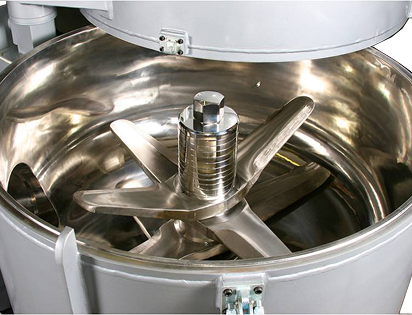
At the heart of trusted mixing systems for PVC is the High Intensity Mixer for Color Dispersion and material homogenization. These mixers deliver the high shear and kinetic energy necessary to thoroughly integrate all ingredients. By operating at tip speeds up to 40 meters per second, they ensure rapid and even distribution of each component, including pigments and additives critical to color consistency.
The design of these mixers isn’t accidental: the mixing tools are crafted to create deep vortex flow patterns that expose every particle to the same mechanical action. This is key in PVC systems, where uniform dispersion determines not just how materials behave in the mixer, but how they perform in downstream extrusion or molding.
Solving Color Challenges: Industry Demand for Consistency
Color Consistency in Plastic Mixing is more than a buzzword; it’s a real productivity issue. Variations in color shades between batches can lead to rejected lots, reprocessing costs, and customer dissatisfaction. Think of it like baking: even tiny variations in ingredients or mixing time can yield drastically different results, but in industrial plastics, the stakes (and batch sizes) are much higher.
To combat this, advanced mixing solutions incorporate engineered tool geometry, controlled temperature staging, and rapid cooling techniques that prevent heat‑induced color shifts. These combined features help avoid streaking or poor dispersion, ensuring every bag of PVC compound delivers the same hue and performance, batch after batch.
Uniformity and Process Control: Not Just Mix, Predictable Mix
What does uniformity really mean? It’s more than just “everything looks mixed.” In PVC compounding, it means:
Uniform resin and filler distribution
Consistent plasticizer and stabilizer uptake
Repeatable color outcomes
Predictable temperature profiles across the batch
To achieve these, modern systems use staged ingredient addition protocols like heating the resin, adding stabilizers, processing aids, and plasticizers at precise moments before fillers and pigments are introduced. Then, once the mix reaches target temperature and dispersion, the material is transferred to cooling systems that rapidly bring it to a stable state for discharge and downstream processing.
This level of process control minimizes human variability and creates repeatable, high‑quality dry blends that are easier to extrude, mold, or further process.
Stability Through Cooling and Intelligent Discharge
Managing heat isn’t just about preventing degradation; it’s also about ensuring stability. PVC compounds tend to be heat‑sensitive during processing; if a batch overheats or cools too slowly, you risk variations in physical properties and inconsistent flow during extrusion. That’s why traditional high‑shear mixing is often followed by a rapid, controlled cooling phase.
Rapid cooling stabilizes the compound’s temperature before discharge, reducing cycle times and helping ensure each batch leaves the mixer with the same thermal history as the last. Combined with large, efficient discharge systems, this approach maintains productivity without sacrificing mix quality.
Real‑World Results: ROI Beyond the Mixer
Industry experience shows that investing in proven mixing solutions yields measurable improvements: reduced batch‑to‑batch variation, shorter cycle times, and increased throughput. For example, PVC processors using precision temperature control and engineered mixing systems have seen variations drop from 8% to 2%, with cycle times reduced by minutes, enhancing annual throughput by double‑digit percentages.
These aren’t abstract benefits; they translate into fewer rejects, lower production costs, and higher confidence in product performance, all of which are crucial in competitive markets.
Choosing Proven Solutions for PVC Mixing
If your goal is to optimize your PVC production line, look for systems that combine:
High shear and precision mixing tools that promote uniform dispersion
Temperature‑staged ingredient addition for controlled processing
Rapid cooling capabilities to stabilize every batch
Proven engineering backing from experienced manufacturers who understand PVC compounding challenges firsthand
For manufacturers seeking such capabilities, Reliance Mixers offers industry‑tested systems engineered to deliver uniformity, stability, and top‑tier quality through every batch. Their refined high-intensity and cooling systems are designed to meet the demanding needs of PVC processors, ensuring repeatable results and predictable performance.
Conclusion
Proven mixing solutions for PVC make all the difference between a process that almost works and one that delivers consistent, high‑quality output day after day. By focusing on uniform mixing action, controlled heat management, and engineered dispersion technologies, manufacturers can reduce variation, improve color consistency, and maximize stable material properties even with complex formulations.
Discover how advanced mixing systems can elevate your PVC production line at the Reliance PVC Solutions.