Paintless Dent Removal Is Quietly Changing the Way Sydney Drivers Fix Their Cars
By Bruce Waller 23-07-2026 66
There's a particular sinking feeling that comes with walking back to your car and spotting a dent that wasn't there this morning. Maybe it happened in a tight shopping centre car park, maybe a shopping trolley got away from someone, or maybe last week's storm left more of a mark than you first realised. Whatever the cause, the next thought is usually the same. How much is this going to cost, and how long is my car going to be out of action?
For a long time, the answer meant booking into a panel shop, waiting days for parts and paint to be matched, and paying a bill that often felt disproportionate to the size of the damage. These days, a growing number of Sydney drivers are discovering a faster, less invasive alternative that doesn't involve sanding, filling, or repainting at all. Paintless dent removal has been around for decades, but it's only in recent years that more everyday car owners have started to understand just how effective it can be.
What Actually Happens During the Repair
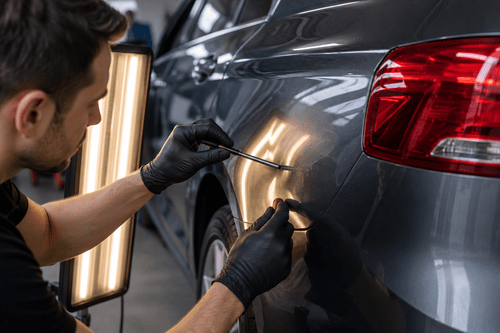
The process itself sounds almost too simple to work, which is probably why so many people are surprised when they see the results. Rather than filling a dent with body filler and spraying new paint over the top, a trained technician accesses the panel from behind and gradually massages the metal back into its original shape. No sanding, no primer, no colour matching, and crucially, no risk of the repaired section looking slightly different to the rest of the car under certain lighting.
This matters more than people often realise. Even the best panel shops can struggle to get an exact paint match, especially on older vehicles where the factory colour has faded slightly over the years. Paintless dent removal sidesteps that problem entirely, since the original paintwork stays intact throughout the entire repair.
Why It Works So Well for Everyday Dents
Not every kind of damage is suited to this approach, and any honest technician will tell you that upfront. If the paint has cracked, chipped, or the metal has stretched significantly, a more traditional repair method is usually the better path forward. But for the kind of everyday dents most drivers deal with, a door ding from a neighbouring car, a minor crease from a low-speed bump, or the scattered dimples left behind after a hailstorm, paintless repair tends to be both faster and considerably more affordable.
Hail damage in particular has become one of the more common reasons Sydney drivers seek this kind of repair. A single storm can leave dozens of small dents across a bonnet or roof, and repainting each affected panel the traditional way would be slow and expensive. Paintless dent repair allows technicians to work through multiple dents in a single session, often completing the job in a fraction of the time a conventional repair would take.
The Environmental Angle Nobody Talks About
It's easy to focus purely on cost and convenience, but there's a quieter benefit to this repair method that doesn't get discussed as often. Traditional dent repair relies on chemical fillers, primers, and sprayed paint, all of which contribute to solvent emissions and non-biodegradable waste. Because paintless repair skips those steps entirely, it produces a noticeably smaller environmental footprint. For drivers who think about these things, it's a small but meaningful point in favour of choosing this method over conventional bodywork whenever the damage allows for it.
Why Workshop Conditions Make a Real Difference
One detail that often gets overlooked is just how much lighting and workspace setup affects the quality of a paintless repair. Technicians rely heavily on reflected light to spot even the smallest imperfections in a panel, which means a poorly lit garage or a rushed mobile job in a car park isn't always going to produce the same standard of finish as a proper workshop environment.
I came across a helpful explanation of this while reading through a few car care blogs recently, where the writer mentioned DKC's paintless dent removal process as an example of how much workshop conditions can influence the final result. Controlled lighting angles, temperature, and tooling access all play a part in making sure even subtle dents are caught and corrected properly, rather than glossed over.
Choosing Someone Who Knows What They're Doing
Given how much skill is involved in judging metal memory and panel flexibility, this isn't really a job suited to trial and error. A technician needs a genuinely trained eye to know exactly how much pressure to apply and where, since pushing too hard in the wrong spot can stretch the metal and make the damage worse rather than better. This is one of those trades where experience genuinely shows in the final result.
For Sydney drivers trying to work out who to trust with this kind of repair, it's worth looking into professional paintless dent repair services with a solid track record and genuine before-and-after examples of their work, rather than choosing based on price alone. A lifetime workmanship warranty, which several established operators in this space offer, is also a reasonable indicator that a business stands behind the quality of its repairs.
Getting a Fair Assessment Before Committing
A decent technician should be willing to assess your vehicle honestly, including telling you when paintless repair isn't the right fit for a particular dent. This kind of transparency is worth paying attention to, since it suggests a business more interested in doing the job properly than simply taking on every piece of work that comes through the door. Many operators can even provide a rough quote from photos before you bring the car in, which saves time if you're comparing a few options before deciding.
Reading through reviews and past customer experiences tends to be one of the more reliable ways to judge dent removal specialists in Sydney, since consistent feedback about workmanship and communication says more than any marketing copy ever could. Word of mouth still carries real weight in this industry, particularly among drivers who've had a good experience and are happy to recommend someone to friends or family facing the same kind of car park mishap.
The Bigger Picture for Car Owners
At the end of the day, a dent doesn't have to mean a drawn-out repair process or a bill that makes you wince. Understanding that a faster, paint-preserving option exists, and knowing what separates a good repair from a rushed one, puts drivers in a much stronger position when damage inevitably happens. Cars pick up dings and dents through no fault of the owner, whether from weather, other people's carelessness, or simple bad luck in a crowded car park, but the way that damage gets fixed doesn't have to be as stressful or costly as it once was.