Bathrooms exist as the most commonly used spaces within a home but they present the greatest difficulty for cleaning. The battle against mould persists endlessly while water stains continue to appear on glass surfaces. The widespread adoption of no-clean bathroom designs in Australian renovation projects exists because of this particular need.
In fact, instead of just going after the looks, people are now picking layouts that not only make cleaning less of a chore but which also enhance their daily lives.
What Is a No-Clean Bathroom?
The no-clean bathroom concept requires designers to select materials and design bathroom layouts which create minimal requirements for cleaning. The process requires cleaning work to be done but the upcoming tasks will need less effort because of reduced work and cleaning requirements.
This trend certainly didn't go unnoticed in luxury zones. A lot of people who are looking to renovate their bathroom in Mosman now see practical and easy to clean features as their first choice instead of the quite elaborate and complicated ones.
Reasons Behind the Popularity of This Trend
People today seek time-saving facilities which require minimal effort because of their hectic lifestyles. The current renovation choices reflect present-day development needs which require active building maintenance.
- Time-saving designs
- Durable and long-lasting material choices
- Creating environments that are more resistant to mould and therefore healthier
Indeed, this is entirely in line with the general notion of prioritising function over everything else.
Key Features of a No-Clean Bathroom
1. Seamless Surfaces
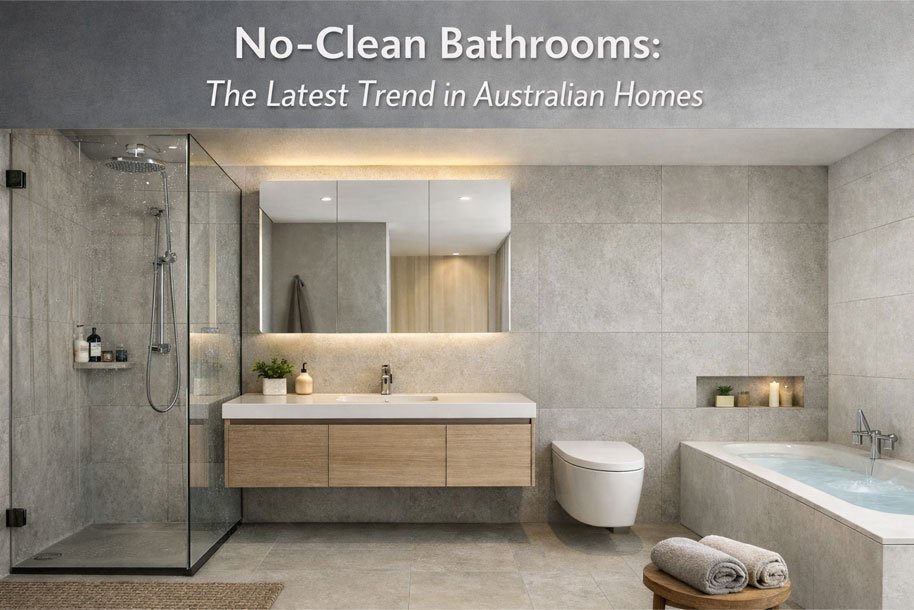
Traditional tiles with grout lines that are quite thick usually trap dirt and moisture leading to a dirty bathroom. So, creating smooth, easily cleanable surfaces is one of the ideas that large format tiles or wall panels suggest. Large-format tiles or wall panels can be used to create a seamless surface that is easy to clean effectively compared to grouted ceramics.
2. Easy to Clean Glass
Glass screens, without a frame, will gather fewer watermarks and soap scum, so the place can stay clean for longer.
3. Wall-Hung Appliances
Wall-mounted toilets along with floating vanities will get rid of the hard-to-reach areas, such that daily cleaning is faster and more effective.
4. Intelligent Drainage
Drainage that is very well thought prevents water from stagnating. This also controls the appearance of stains and mould over time.
5. Minimum Maintenance Finishes
Surfaces with matte and anti-mark finishes are, without a doubt, the most popular choices as they hide smudges and require less frequent cleaning.
6. Built-In Storage
Clean surfaces create a visually noticeable difference. The absence of clutter from surfaces provides two benefits which include simplified cleaning tasks and the creation of a serene and neat and attractive environment.
Long-Term Benefits
Keeping maintenance low while designing a bathroom can bring to the surface some substantial benefits:
- Usage of cleaning time is minimized
- Better hygiene level
- Limitation of maintenance cost for a long time
- The room keeps its visual charm for a long time
For instance, a homeowner that puts their money into high-quality building material, these features are usually seen as being of greater value than just making the space look nice.
Conclusion
The emergence of no-clean bathrooms is a proof that people's way of thinking about renovation has changed. People are no longer simply trying to make a place beautiful, they are also trying to make a place that fits their daily life without any effort.
Should you decide to improve, doing low-maintenance, smart interior design will not only help change the look of your bathroom but will also enhance your daily using experience.