NASA Artemis II Astronauts Moon Mission - Crew, Launch & Return to the Moon Goals
By Admin 06-04-2026 538
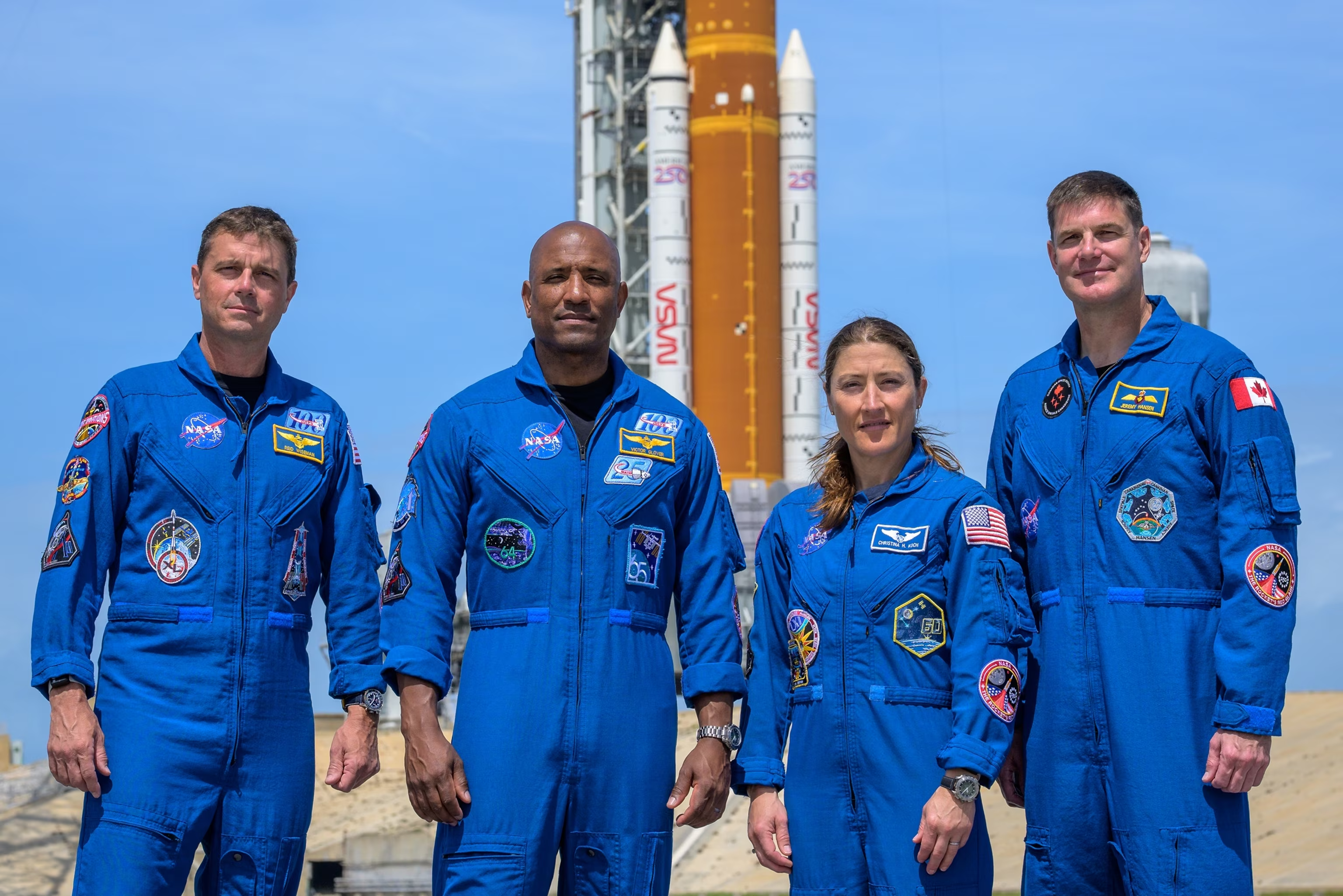
Kicking Off the NASA Artemis II Astronauts Moon Adventure
Man, I get chills just thinking about the NASA Artemis II astronauts moon saga—it's like we're finally circling back to where it all began. This Artemis II moon mission is NASA's first crewed step in ages, firing up the dream of a true return to the moon. They're eyeing a launch sometime late 2025 or early 2026, sending four gutsy NASA moon astronauts farther than anyone's gone since Apollo wrapped up over 50 years ago. The Artemis II crew? That's Reid Wiseman calling the shots as commander, Victor Glover on the stick as pilot, Christina Koch handling specialist duties, and Jeremy Hansen from Canada rounding it out. What a squad—these Artemis program astronauts are rewriting the playbook for space.
They'll strap into the beastly SLS rocket with Orion spacecraft, loop the moon for about 10 days, and test every nut and bolt for what's next.
Getting Up Close with the Artemis II Crew
Let's talk real people behind the Artemis II crew. Reid Wiseman's your steady Navy test pilot type—he's flown Expedition 41, so he's no rookie when it comes to high-stakes stuff. Then there's Victor Glover, who's breaking barriers as the first Black astronaut headed moonward, fresh off piloting Expedition 64.
Christina Koch? She's the record-holder with that insane 328 days on the ISS, and get this—she'll be the first woman on a NASA lunar mission. Jeremy Hansen brings that international vibe as the lone non-American Artemis program astronaut. Down at Johnson Space Center, they're grinding through simulations, practicing Orion tweaks and those epic lunar flybys. You can feel the buzz already.
What the Artemis II Moon Mission Is Really About
At its heart, the Artemis II moon mission is all about proving Orion can handle the wild ride—life support humming, engines firing right, heat shield holding up through hellfire reentry. These NASA moon astronauts will flip switches manually, chat with Earth, and navigate like pros, setting the stage for that big return to the moon.
Picture it: blasting off from Kennedy, four days to the moon, swinging around the dark side for selfies with craters, then splashing down Pacific-style. It's the foundation for Artemis III's landings.
Why These NASA Moon Astronauts Matter So Much
These NASA moon astronauts aren't just reliving Apollo—they're evolving it. The Artemis II crew screams progress: two women, a person of color, and a Canadian partner. No more quick-in-quick-out trips; think Gateway station in orbit, mining water ice at the south pole. It's the NASA Artemis II astronauts moon push that feeds into Mars dreams, showing Orion's got the chops for deep space.
How Artemis Program Astronauts Gear Up
Training for Artemis program astronauts is brutal but fascinating—floating in giant pools to fake spacewalks, spinning in centrifuges till your stomach flips, VR headsets painting lunar scenes. The Artemis II crew drills emergencies, like if power craps out mid-flight. Teaming with ESA, JAXA, CSA, even UAE folks, it's a worldwide effort fueling this return to the moon.
Tough Spots and Cool Tech in the NASA Lunar Mission
No sugarcoating: the NASA lunar mission battles cosmic radiation, finicky cryo fuels, reentry temps over 5,000°F. But Orion's abort rockets and sun-tracking panels? Game-changers. We'll get live feeds, AR overlays—imagine watching from your couch as NASA Artemis II astronauts moon history unfolds.
The Big Ripple from Return to the Moon
Nailing this Artemis II moon mission catapults us to Artemis III landings by 2027, lunar outposts, you name it. NASA moon astronauts like these are sparking kids into STEM, boosting jobs, knitting nations closer. Hit NASA's site for launch buzz—it's gonna be epic.