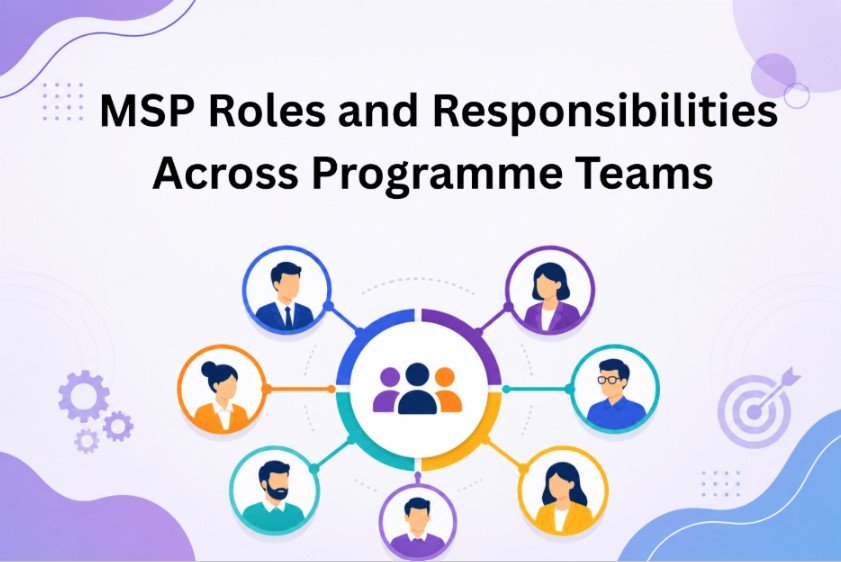
What keeps a programme moving when several projects, teams and business priorities must work together? Success depends on more than plans and deadlines. Each person needs to understand their role, decision making authority and contribution to the wider programme.
MSP Certification can help professionals understand structured programme management and the responsibilities involved in delivering change. Clear MSP roles and responsibilities also improve accountability and coordination across programme teams. In this blog, we will explore the key roles across programme teams and how their responsibilities support successful programme delivery.
Table of Contents
- Key Roles Across MSP Programme Teams
- Core Responsibilities That Keep MSP Programmes Moving
- Conclusion
Key Roles Across MSP Programme Teams
The following roles form important parts of an MSP programme team. Each role contributes to leadership, coordination, delivery or the successful adoption of change:
Sponsoring Group
The Sponsoring Group provides senior-level support for the programme. It represents the organisation’s interests and provides the authority needed to support major programme decisions.
Members help maintain senior commitment throughout the programme. Their involvement also connects programme activity with wider organisational priorities. This gives the programme visible support from senior leadership.
Senior Responsible Owner
The Senior Responsible Owner has overall accountability for the programme. This person provides leadership and acts as the main point of ownership for achieving the programme's intended outcomes.
The role connects strategic goals with programme delivery. MSP Certification can also help professionals develop a clearer understanding of the Senior Responsible Owner and the importance of this role within programme management.
Programme Manager
The Programme Manager coordinates the programme and keeps its different projects and activities connected. This role turns strategic direction into organised programme delivery.
The Programme Manager works closely with project teams and senior leaders. This position is important because individual projects must contribute to the wider programme rather than operate separately.
Business Change Manager
The Business Change Manager connects programme delivery with business change, helping the organisation adopt new capabilities and realise the expected benefits. This role focuses on helping business areas prepare for and adopt new ways of working.
It is particularly important when programme outputs require changes to existing operations. The role helps ensure that completed work creates practical improvements rather than simply producing project outputs.
Programme Officer
The Programme Officer provides practical support across the programme. It helps organise information and supports consistent working practices between different teams.
This role can make complex programmes easier to coordinate. It gives programme leaders and teams access to organised information that supports planning, reporting and decision- making.
Project Managers
Project Managers lead the individual projects that make up the wider programme. They connect project delivery with programme objectives and work closely with the Programme Manager.
Each Project Manager focuses on producing the required project outputs. Their contribution helps ensure that separate projects collectively support the expected programme outcomes.
Core Responsibilities That Keep MSP Programmes Moving
The following responsibilities show what programme teams need to do to maintain control, support delivery and achieve expected benefits:
Setting Programme Direction
Senior programme leaders are responsible for keeping the programme connected with organisational strategy. They make sure teams understand what the programme should achieve and why the change matters.
Clear direction helps individual projects work toward common programme objectives. It also supports better decisions when priorities or business needs change.
Managing Delivery and Dependencies
Programme teams must coordinate activities across related projects. This includes monitoring progress and understanding how delays or changes in one project could affect another.
The Programme Manager works closely with Project Managers to manage these connections. MSP Certification can help professionals understand how coordinated delivery supports stronger control across complex programmes.
Maintaining Governance and Accountability
Clear accountability helps people understand who can make decisions and who owns particular outcomes. Programme teams need suitable controls for reporting, risks, resources and major changes.
Effective programme governance creates this structure. It allows teams to work confidently while keeping important decisions visible to the appropriate leaders.
Supporting Business Change
Programme teams help the organisation prepare for change. New systems, processes or services may require employees to change how they work.
Business Change Managers support this transition and encourage effective adoption. Their involvement helps programme outputs become useful improvements within everyday operations.
Tracking and Realising Benefits
Completing projects does not automatically make a programme successful. Teams must also determine whether the expected programme benefits are being achieved.
Programme teams should monitor benefits throughout the programme. This helps leaders understand whether changes are producing meaningful results and where further action may be required
Conclusion
Successful programmes rely on people knowing what they own, where decisions sit and how their work supports wider change. Clear MSP roles and responsibilities strengthen accountability, communication and benefits delivery across programme teams.
Professionals looking to strengthen their programme management knowledge can explore MSP Certification with The Knowledge Academy, a trusted training provider. Its learning opportunities can help build practical knowledge of MSP roles, responsibilities and structured programme delivery