Manual vs Automated Vehicle Access Control: What Businesses Should Choose
By Boom Barrier 18-04-2026 340
The Shift Toward Smarter Access Control
As businesses grow and infrastructure becomes more complex, managing vehicle access efficiently has become a critical challenge. Many facilities still rely on traditional manual entry systems, while others are rapidly adopting automated solutions to improve security and operational efficiency.
Choosing the wrong system can lead to long-term inefficiencies, security risks, and operational delays. The decision between manual and automated vehicle access control is no longer optional—it directly impacts productivity, safety, and scalability.
Understanding Manual Vehicle Access Control
Manual access control involves security personnel verifying vehicles at entry and exit points using visual checks, logbooks, or basic identification methods.
While this approach may appear simple, it comes with several limitations:
- High dependency on human accuracy
- Slower vehicle processing time
- Increased chances of inconsistent verification
- Lack of real-time data tracking
- Inefficiency during peak traffic hours
In high-traffic environments, manual systems often lead to delays and inconsistencies that affect both security and operations.
What is Automated Vehicle Access Control?
Automated access control systems use advanced technology to manage vehicle entry and exit with minimal human intervention. These systems integrate with tools such as:
- RFID-based authentication
- Automatic Number Plate Recognition (ANPR)
- Smart cards or mobile-based access
- Centralized monitoring platforms
Automation ensures faster, more accurate, and scalable access management.
Key Differences Between Manual and Automated Systems
1. Speed and Efficiency
Manual systems are prone to delays and bottlenecks, especially during peak hours. Automated systems provide instant authentication, significantly reducing entry time and improving traffic flow.
2. Accuracy and Reliability
Manual verification is subject to human error and inconsistency. Automated systems deliver fast, consistent, and reliable access control without dependency on human judgment.
3. Security Level
Manual systems can be bypassed or inconsistently enforced. Automated systems apply strict and uniform access rules, reducing the risk of unauthorized entry.
4. Data and Monitoring
Manual systems lack proper documentation and tracking. Automated solutions generate real-time data, logs, and reports for better visibility and control.
5. Scalability
Manual systems struggle to handle increasing traffic volumes. Automated systems are designed to scale efficiently with business growth.
Cost vs Value: A Practical Perspective
One of the most common concerns is the initial cost of automation. However, businesses that adopt automated access control systems often report significant improvements in operational efficiency and reduced entry delays.
Over time, automated systems provide better value by:
- Lowering operational costs
- Reducing manpower dependency
- Minimizing errors and security risks
- Improving productivity and efficiency
The long-term benefits far outweigh the initial investment.
Why Businesses Are Moving Toward Automation
Modern organizations are prioritizing efficiency, security, and scalability. Automated systems help achieve these goals by:
- Eliminating bottlenecks at entry points
- Ensuring consistent security enforcement
- Providing accurate and real-time insights
- Enhancing overall facility management
This shift reflects the growing demand for smarter and more reliable infrastructure solutions.
Role of Boom Barrier Systems in Automated Access Control
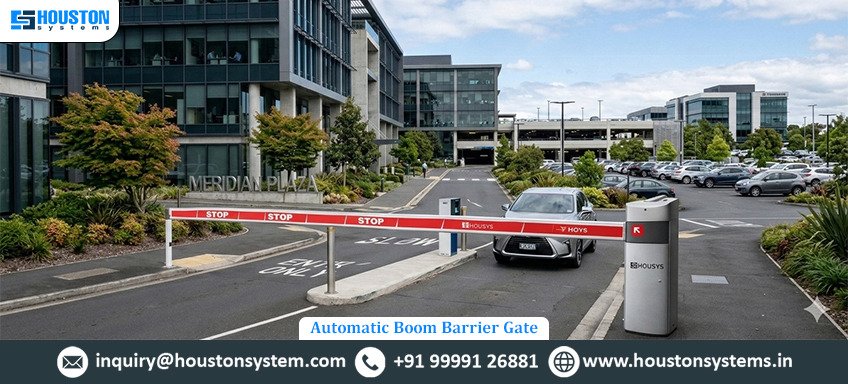
A crucial component of automated systems is the implementation of boom barrier gate solutions. These systems combine physical control with intelligent automation to regulate vehicle movement efficiently.
When integrated with RFID or ANPR technologies, boom barriers offer:
- Controlled and secure vehicle access
- Faster entry and exit processes
- Reduced reliance on manual verification
- Improved traffic flow and security enforcement
They provide a scalable and efficient solution for modern access control needs.
Real-World Scenario: Transition from Manual to Automated Systems
Consider a commercial facility that relied on manual vehicle checks. During peak hours, entry delays extended up to 10–15 minutes, causing congestion and operational inefficiencies.
Before automation:
- Delays due to manual verification
- No real-time tracking
- Inconsistent security checks
After implementing an automated boom barrier system:
- Entry time reduced to under 2–3 minutes
- Traffic flow improved significantly
- Security checks became consistent and reliable
- Operational efficiency increased
This transformation highlights the practical advantages of automation.
Making the Right Choice for Your Business
The decision between manual and automated access control depends on factors such as:
- Traffic volume
- Security requirements
- Budget considerations
- Future scalability needs
However, for most modern facilities, automated systems provide a more reliable, efficient, and future-ready solution.
Conclusion
Manual vehicle access control systems may still work for small-scale environments, but they fall short in high-traffic and security-sensitive facilities. Automated solutions offer clear advantages in speed, accuracy, and scalability.
For businesses aiming to scale efficiently and maintain high security standards, automated access control systems are no longer optional—they are essential.
Choosing the right system today can significantly impact the efficiency, security, and long-term success of your operations.