LED Screen Manufacturers for DOOH Advertising: Choosing the Right Technology
By Eliteinfotech Oman security 01-09-2026 3
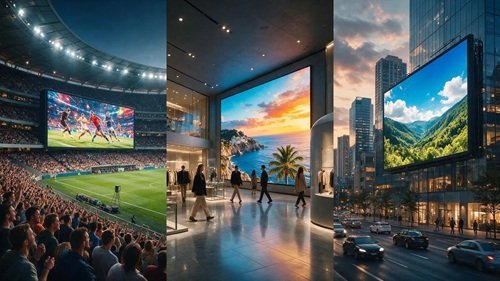
Digital Out-of-Home (DOOH) advertising has transformed how brands communicate with audiences in busy streets, shopping districts, transport hubs, retail destinations, and commercial spaces. Unlike conventional billboards, modern digital displays can deliver dynamic campaigns, scheduled content, video, motion graphics, and time-sensitive messages. But the quality of the advertising experience depends heavily on choosing the right LED Screen Manufacturers. The right partner does more than supply LED modules; it helps businesses select suitable display technology, engineer the installation, manage environmental challenges, and maintain consistent performance over time.
Why LED Technology Has Become Central to DOOH Advertising
DOOH networks need displays that attract attention without compromising reliability. A roadside screen, for example, may operate for extended periods under intense sunlight, temperature fluctuations, dust, humidity, and wind. A display installed inside a premium shopping centre faces a different set of demands, where image refinement, viewing distance, aesthetics, and seamless integration with the surrounding architecture may be more important.
This is where professional LED technology makes a significant difference. High-quality displays can produce strong brightness, precise colour reproduction, smooth video playback, and excellent visibility from different viewing angles. More importantly, the system should remain dependable after installation rather than simply looking impressive on demonstration day.
For advertisers and asset owners, that distinction matters. A display that experiences frequent faults, inconsistent brightness, or poor content playback can quickly become an operational headache.
LED Screen Manufacturers: What Should You Evaluate First?
Choosing between LED Screen Manufacturers should never be based on price alone. A DOOH installation is a long-term investment, and several technical and operational factors deserve attention before a purchase decision is made.
Pixel Pitch and Viewing Distance
Pixel pitch is one of the first specifications to consider. It describes the distance between individual LED pixels and has a direct relationship with image detail.
A large roadside billboard viewed from a considerable distance may not require the same pixel pitch as a high-resolution advertising display positioned close to pedestrians. Selecting an unnecessarily fine pitch can increase project costs, while choosing an excessively large pitch for a close-viewing application can reduce image quality.
The objective is not simply to choose the smallest pixel pitch available. It is to match the display resolution to the physical dimensions, viewing distance, content type, and location.
Brightness for UAE Outdoor Conditions
Outdoor DOOH displays need enough brightness to remain clearly visible in direct daylight. This is particularly important in the UAE, where intense sunlight can make poorly specified screens difficult to read.
However, maximum brightness alone is not the whole story. The display should provide controlled brightness levels so that content remains comfortable and visually balanced during evening and nighttime operation. Automatic brightness adjustment can also help optimise visibility while reducing unnecessary power consumption.
A professional supplier should evaluate the actual environment rather than recommending a generic brightness specification for every project.
Weather Resistance and Structural Engineering Matter
An outdoor LED screen is effectively part of a building or roadside structure. Its enclosure, protection rating, cabinet construction, ventilation, mounting system, and structural support all contribute to long-term performance.
For UAE installations, protection against dust, moisture, heat, and other environmental conditions is particularly important. A suitable outdoor display should be engineered for its intended surroundings, while the supporting structure should be designed according to the installation conditions and applicable safety requirements.
This is one reason professionally installed systems can offer an advantage over simply purchasing LED panels and arranging installation separately. The screen, mounting structure, electrical requirements, control system, and physical environment all need to work together.
Image Quality Is About More Than Resolution
A technically impressive resolution figure does not automatically guarantee a superior advertising display.
Colour consistency, contrast, refresh rate, viewing angle, processing technology, calibration, and module quality all influence what audiences actually see. High refresh rates can be especially valuable when displaying fast-moving video content or when screens are photographed or recorded by cameras.
Content creators also benefit from displays capable of reproducing smooth transitions, detailed graphics, and strong colour differentiation. For premium advertising campaigns, these details can influence whether an advertisement looks polished or appears noticeably inferior to competing digital media.
Reliability Should Be Considered Before the Screen Is Installed
DOOH displays are revenue-generating assets for many operators. Downtime therefore has consequences beyond technical inconvenience.
When comparing LED Screen Manufacturers, ask about component quality, cabinet design, spare-part availability, diagnostics, maintenance procedures, warranty coverage, and technical support. A supplier that can provide responsive service after commissioning may be considerably more valuable than one offering a lower initial quotation.
It is also worth considering serviceability. Modular cabinet and component designs can make maintenance more efficient because technicians can isolate and replace affected sections without unnecessarily disrupting the entire display.
Content Management Makes a Display More Powerful
The physical LED screen is only one part of a DOOH solution. A capable content management and control system allows operators to schedule advertisements, update campaigns, manage playlists, coordinate multiple screens, and display different content at different times.
For advertisers managing multiple locations, centralised control can make campaign administration considerably easier. A business may want breakfast promotions in the morning, retail messaging during the afternoon, and a different campaign during evening traffic. A properly configured digital signage ecosystem can support this type of scheduling.
The control infrastructure should therefore be considered alongside the LED hardware rather than treated as an afterthought.
Installation Quality Can Define Long-Term Performance
Even an excellent LED display can perform poorly if it is installed incorrectly.
Professional installation should cover accurate cabinet alignment, secure mounting, appropriate power distribution, signal management, calibration, ventilation, cable routing, and commissioning. Outdoor installations also require careful consideration of structural loading and accessibility for future maintenance.
For large-format DOOH projects, installation expertise is particularly important because small alignment or calibration issues can become highly visible across a large screen.
How to Compare LED Screen Manufacturers More Intelligently
A useful comparison begins with the application rather than the product catalogue. Define where the screen will be installed, how far the audience will typically stand from it, how many hours it will operate, what type of content it will display, and what environmental conditions it must withstand.
Then compare manufacturers and suppliers across several areas:
- Display specifications and image performance
- Outdoor or indoor suitability
- Pixel pitch recommendations
- Brightness and automatic brightness control
- Weather and environmental protection
- Cabinet and module quality
- Control and content management capabilities
- Installation and commissioning expertise
- Warranty and after-sales support
- Spare parts and maintenance availability
- Energy efficiency and operational costs
- Ability to scale across multiple locations
This approach creates a more realistic picture of total value. The cheapest screen may not remain the least expensive option once maintenance, replacement components, energy consumption, installation complexity, and downtime are considered.
Building a Future-Ready DOOH Network
The strongest DOOH investments are designed with future expansion in mind. A business may begin with one prominent advertising screen and later develop a network across several commercial or high-traffic locations.
Choosing scalable control technology, consistent display specifications, serviceable hardware, and a capable technical partner can make future expansion much easier. It also helps create visual consistency when advertisers run campaigns across multiple screens.
Technology will continue to evolve, but a well-planned installation does not need to become obsolete simply because newer products appear. The key is selecting an appropriate platform and infrastructure that can accommodate changing content requirements and operational needs.
Make Every Pixel Work Harder
For DOOH advertising, the LED screen is more than a digital billboard. It is a communication platform that must capture attention, reproduce content accurately, operate reliably, and withstand the environment in which it is installed.
The best LED Screen Manufacturers and professional technology partners understand that successful projects depend on the complete system: display hardware, engineering, installation, control, maintenance, and long-term support. For businesses investing in digital advertising infrastructure, evaluating these factors together can lead to better performance and fewer costly surprises.
Elite Infotech + LED Screen Manufacturers: turning every pixel into a stronger advertising presence.
Frequently Asked Questions
What should I look for in LED Screen Manufacturers for DOOH advertising?
Look beyond the initial price. Evaluate pixel pitch, brightness, image quality, environmental protection, cabinet construction, control systems, installation capabilities, warranty, spare parts, maintenance support, and the supplier's ability to meet the specific requirements of your location.
Which pixel pitch is best for an outdoor advertising screen?
There is no single pixel pitch that suits every DOOH installation. The correct choice depends primarily on screen size, viewing distance, content requirements, and the environment. A professional assessment can help determine the appropriate specification without unnecessarily increasing project costs.
Are outdoor LED screens suitable for UAE weather?
Purpose-built outdoor LED displays can be designed for demanding environmental conditions, including strong sunlight, heat, dust, and moisture. The screen's protection rating, cabinet construction, ventilation, installation method, and supporting structure should all be selected according to the actual location.
Does brightness affect outdoor LED advertising performance?
Yes. Insufficient brightness can make advertisements difficult to see in strong daylight. At the same time, brightness should be controllable for evening operation. A suitable system balances daytime visibility with appropriate nighttime performance.
Why is professional LED screen installation important?
Professional installation helps ensure correct cabinet alignment, secure mounting, electrical distribution, signal connectivity, calibration, ventilation, and commissioning. For large outdoor displays, structural and environmental considerations make qualified installation particularly important.
How can LED Screen Manufacturers support a growing DOOH network?
A capable supplier can help businesses select scalable display and control technologies, establish consistent specifications across locations, and plan maintenance and spare-part requirements. This can simplify the process of expanding from a single screen to a larger digital advertising network.
Tags : .....