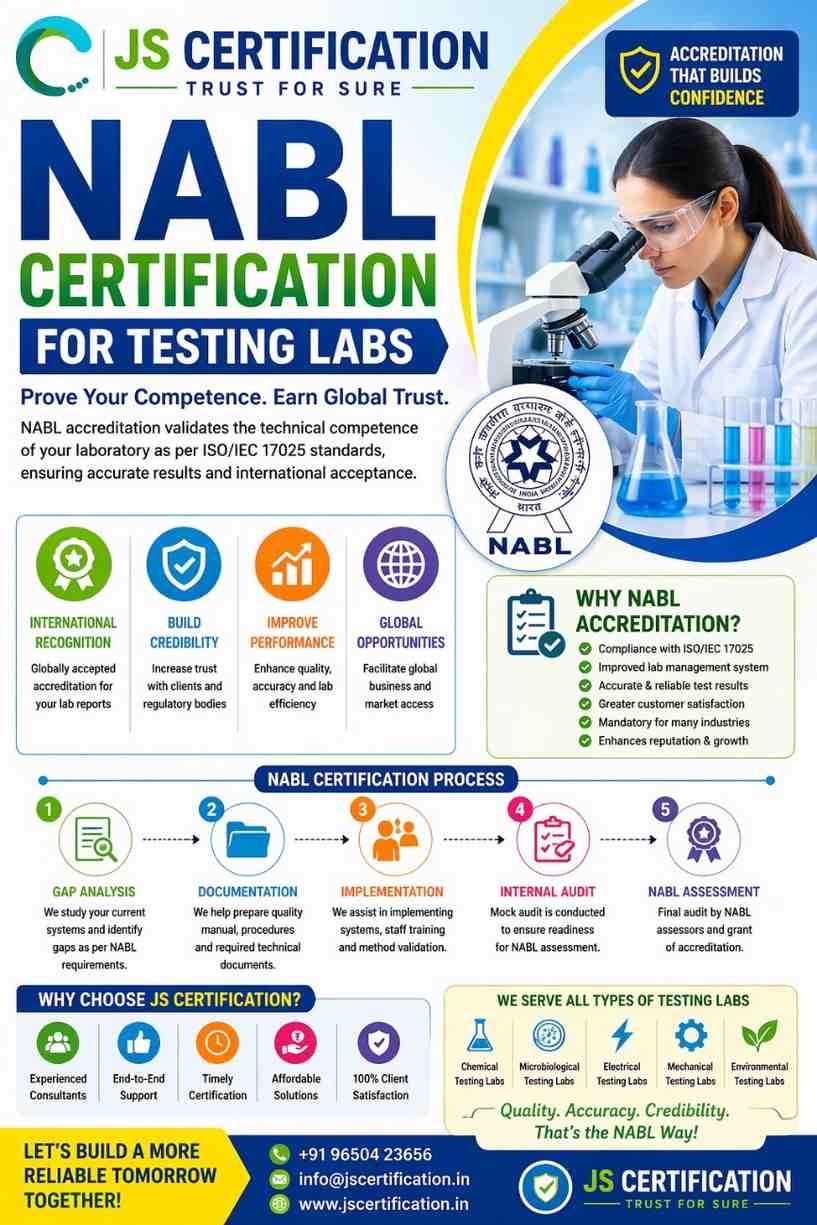
NABL Certification for Testing Labs is an important step for laboratories that aim to establish credibility, accuracy, and consistency in their testing processes. In a time where quality and reliability are closely examined, accreditation helps labs demonstrate that their results meet recognized standards. For many organizations, especially those working in technical and scientific fields, this certification becomes a key part of building trust with clients, regulators, and industry stakeholders.
The process of obtaining NABL Certification for Testing Labs is based on ISO/IEC 17025 standards, which focus on both technical competence and quality management systems. While the objective of accreditation is straightforward, the journey itself involves multiple stages that require careful attention. From understanding requirements to implementing systems and preparing for audits, each step plays a significant role in achieving successful accreditation.
One of the most common challenges laboratories face is understanding where to begin. Questions such as “What documentation is required?” or “How do we prepare for an audit?” often arise during the initial stages. This is natural, as the certification process involves detailed procedures and structured guidelines. Without proper clarity, labs may find it difficult to organize their approach.
The first stage in NABL Certification for Testing Labs usually involves a gap analysis. This means reviewing the current systems and identifying areas that need improvement. Laboratories must ensure that their processes align with NABL standards, which include proper equipment calibration, staff competency, and accurate record-keeping. This stage sets the foundation for the entire process.
Documentation is another critical aspect. Laboratories are required to maintain quality manuals, standard operating procedures, and technical records. These documents serve as proof that the lab follows consistent and reliable practices. Even if a lab has strong processes in place, incomplete or unclear documentation can create issues during assessment. This is why maintaining accuracy and detail is essential.
Once documentation is in place, the next step involves implementing a quality management system. This includes defining procedures, training staff, and ensuring that testing methods are validated. The goal is to create a system where every activity is controlled, monitored, and aligned with NABL requirements. For many labs, this stage requires a shift in how processes are managed internally.
Audit preparation is another important part of the journey. Internal audits are conducted to evaluate whether the lab is ready for the final NABL assessment. This stage helps identify any gaps that may still exist. Addressing these gaps before the official audit improves the chances of successful accreditation. It also gives the team confidence in their systems and processes.
The final stage is the NABL assessment, where external assessors review the lab’s compliance with standards. This includes checking documentation, observing testing procedures, and evaluating staff competency. If all requirements are met, the lab is granted accreditation. However, the process does not end here. Maintaining compliance is equally important, as laboratories must continue to follow guidelines and undergo periodic assessments.
NABL Certification for Testing Labs offers several long-term benefits. Accredited labs are recognized for their technical competence, which enhances their credibility in the market. Clients are more likely to trust results from a certified lab, leading to better opportunities and stronger professional relationships. In many industries, accreditation is also a requirement for participating in projects or contracts.
Another advantage is improved internal efficiency. When a lab follows structured processes and maintains proper documentation, it reduces errors and ensures consistency. This not only improves the quality of results but also makes day-to-day operations more organized.
It is also important to understand that certification is not just about meeting external requirements. It reflects a commitment to quality and continuous improvement. Laboratories that adopt these practices are better prepared to handle changes in regulations and industry expectations.
For many organizations, having the right guidance can make the process easier to manage. Professionals like JS Certification work with laboratories to provide clarity and structured support throughout the journey. Their role is not to replace internal efforts but to guide labs in understanding requirements and implementing them effectively.
In conclusion, NABL Certification for Testing Labs is a structured process that requires careful planning, accurate documentation, and consistent implementation of standards. While it may seem complex at first, a clear and organized approach makes it manageable. By focusing on quality, reliability, and compliance, laboratories can not only achieve accreditation but also strengthen their position in the industry.
Contact Information:
Address: 0, Mau, Mohanlal ganj Lucknow - 226301
Phone: 7905612820
Website page link: https://jscertification.in/nabl-accreditation-consultancy-india/