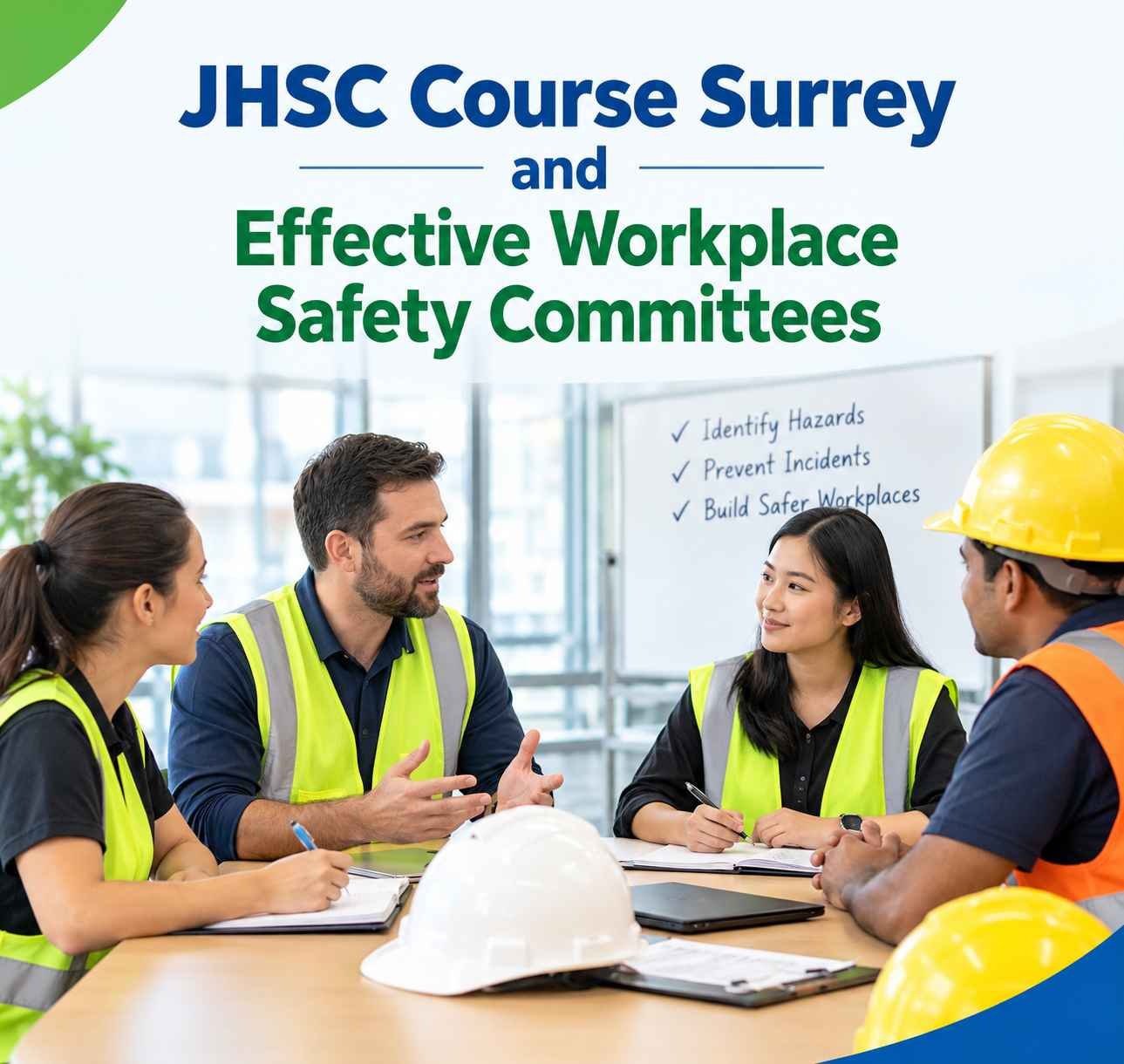
A Joint Health and Safety Committee plays an important role in helping workplaces identify hazards, discuss safety concerns, and encourage practical improvements. For employers and workers in Surrey, proper committee training can provide the knowledge needed to participate effectively in workplace safety activities.
A JHSC course surrey can help committee members understand their responsibilities under British Columbia workplace safety requirements while developing practical skills for inspections, incident investigations, hazard identification, meetings, and safety recommendations.
Understanding the Role of a Joint Health and Safety Committee
A Joint Health and Safety Committee brings worker and employer representatives together to support workplace health and safety. Rather than being responsible for managing every safety issue directly, the committee provides a structured forum for identifying concerns and making recommendations.
An effective committee can contribute to a stronger safety culture by encouraging communication between workers and management. Committee members may discuss workplace hazards, review incidents, participate in inspections, and follow up on safety concerns.
The committee can also help workers understand how safety concerns should be reported and addressed. Regular communication allows potential problems to be identified before they develop into more serious incidents.
Why Committee Training Matters
Committee members need more than a general understanding of workplace safety. They need to know how to perform committee functions properly and how to communicate safety information within their workplace.
A JHSC course surrey provides structured learning around important committee activities. Training can cover topics such as workplace inspections, incident investigations, hazard identification, committee meetings, recommendations, and responsibilities under British Columbia's occupational health and safety framework.
Training is particularly useful for new committee members who may be unfamiliar with the responsibilities associated with their role. It can also help existing members refresh their knowledge and improve the way the committee operates.
Key Responsibilities of an Effective Committee
The effectiveness of a committee depends largely on how consistently members participate in safety activities. Several responsibilities can contribute to successful committee operations.
Workplace Inspections
Regular workplace inspections help identify unsafe conditions, potential hazards, and areas where existing controls may need improvement.
Committee members can participate in inspections by observing work areas, equipment, procedures, and environmental conditions. Findings should be documented and communicated through the appropriate workplace process.
Incident Investigations
When a workplace incident occurs, an investigation can help determine what happened and identify factors that contributed to the event.
Committee members involved in investigations need to approach the process objectively. The purpose is to understand the circumstances and identify ways to prevent similar incidents, rather than simply assigning blame.
Hazard Identification
Hazard identification is another important part of committee work. Hazards can be physical, chemical, biological, ergonomic, or related to workplace processes and conditions.
Committee members should understand how hazards can affect workers and how appropriate controls can reduce risk. Discussions about hazards can also encourage employees to report concerns before an incident occurs.
Building Productive Committee Meetings
Effective meetings require preparation, participation, and follow-up. A committee should have a clear process for discussing workplace safety issues and recording important decisions.
Meeting agendas can include:
- Previous meeting follow-ups
- Workplace inspection findings
- Incident investigation updates
- Reported safety concerns
- Recommendations to the employer
- Training and education matters
- Emerging workplace hazards
- Outstanding corrective actions
Keeping organized records makes it easier to monitor unresolved issues. It also allows committee members to determine whether recommendations have been addressed.
Meetings should provide an opportunity for both worker and employer representatives to contribute. Open communication can help ensure that different workplace perspectives are considered when discussing safety concerns.
Communication Between Workers and Management
A committee can be more effective when workers understand how it operates. Employees should know how to raise safety concerns and what happens after a concern is submitted.
Committee members can help improve communication by sharing relevant safety information with their respective workplace groups. However, communication should be clear and appropriate for the workplace.
Management involvement is also important. When committee recommendations receive timely attention, workers can see that safety concerns are being taken seriously.
This two-way communication can support trust and encourage more employees to participate in workplace safety.
Developing Practical Safety Recommendations
One of the valuable functions of a committee is making recommendations related to workplace health and safety.
Effective recommendations should be specific and connected to an identified concern. Instead of simply stating that a workplace should become safer, a recommendation can identify the particular hazard, describe the concern, and suggest a practical corrective action.
For example, if an inspection identifies a recurring housekeeping issue, the committee could recommend a documented housekeeping procedure, assigned responsibilities, and regular follow-up inspections.
Clear recommendations make it easier for employers to understand what action is being requested.
Understanding Different Workplace Hazards
Workplaces in Surrey can vary considerably. Construction sites, warehouses, manufacturing facilities, offices, healthcare environments, retail businesses, and other organizations may face different safety challenges.
Committee members should therefore understand that hazard identification needs to reflect the specific workplace.
Common areas for consideration may include:
- Slips, trips, and falls
- Manual handling
- Machinery and equipment
- Workplace ergonomics
- Hazardous substances
- Noise exposure
- Workplace violence
- Emergency procedures
- Biological hazards
- Personal protective equipment
The appropriate controls depend on the nature of the hazard and the workplace conditions.
Supporting a Strong Safety Culture
Training alone does not create an effective safety committee. Knowledge needs to be applied consistently through regular participation and communication.
A committee can contribute to workplace safety by encouraging employees to report hazards, discussing safety issues during meetings, reviewing corrective actions, and helping promote awareness.
An effective committee should also avoid treating safety as a one-time activity. Workplace conditions can change when equipment, processes, staffing, or work environments change. Continuous attention helps committees remain relevant.
Choosing Training That Fits Workplace Needs
When selecting committee training, employers and workers should consider whether the program addresses the practical responsibilities associated with committee membership.
A JHSC course surrey may be useful for organizations seeking structured training that covers both regulatory knowledge and practical committee activities.
Participants should look for training that clearly explains committee roles, workplace inspections, investigations, hazard identification, meetings, recommendations, and other relevant responsibilities.
Flexible learning options may also make training easier to coordinate for individual committee members and workplace groups.
Benefits for Employers and Workers
Well-trained committee members can provide value to both employers and workers.
For employers, an active committee can provide another structured channel for identifying workplace safety concerns and monitoring corrective actions.
For workers, the committee provides a formal opportunity to raise safety issues and participate in discussions about workplace health and safety.
Training can also help committee members communicate more confidently and understand how their role fits within the broader workplace safety system.
Creating an Effective Committee Over Time
Committee effectiveness develops through consistent participation. New members should understand their responsibilities, while experienced members can continue developing their knowledge through ongoing education and workplace experience.
Committees can periodically review their own performance by considering questions such as:
- Are meetings occurring regularly?
- Are safety concerns being documented?
- Are recommendations followed up?
- Are inspections being completed?
- Are incident investigations reviewed appropriately?
- Do workers understand how to raise concerns?
- Are unresolved issues being tracked?
These questions can help identify areas where committee processes could be improved.
Conclusion
Effective Joint Health and Safety Committees depend on knowledgeable members, clear communication, regular meetings, practical inspections, and meaningful follow-up. Training provides committee members with a foundation for understanding their responsibilities and participating constructively in workplace safety activities.
For organizations seeking structured committee education, a JHSC course surrey can help participants develop practical knowledge related to inspections, investigations, hazard identification, meetings, recommendations, and workplace safety responsibilities.
When training is combined with active participation from workers and management, committees can become an important part of an organization's ongoing approach to workplace health and safety.
Tags : JHSC course surrey