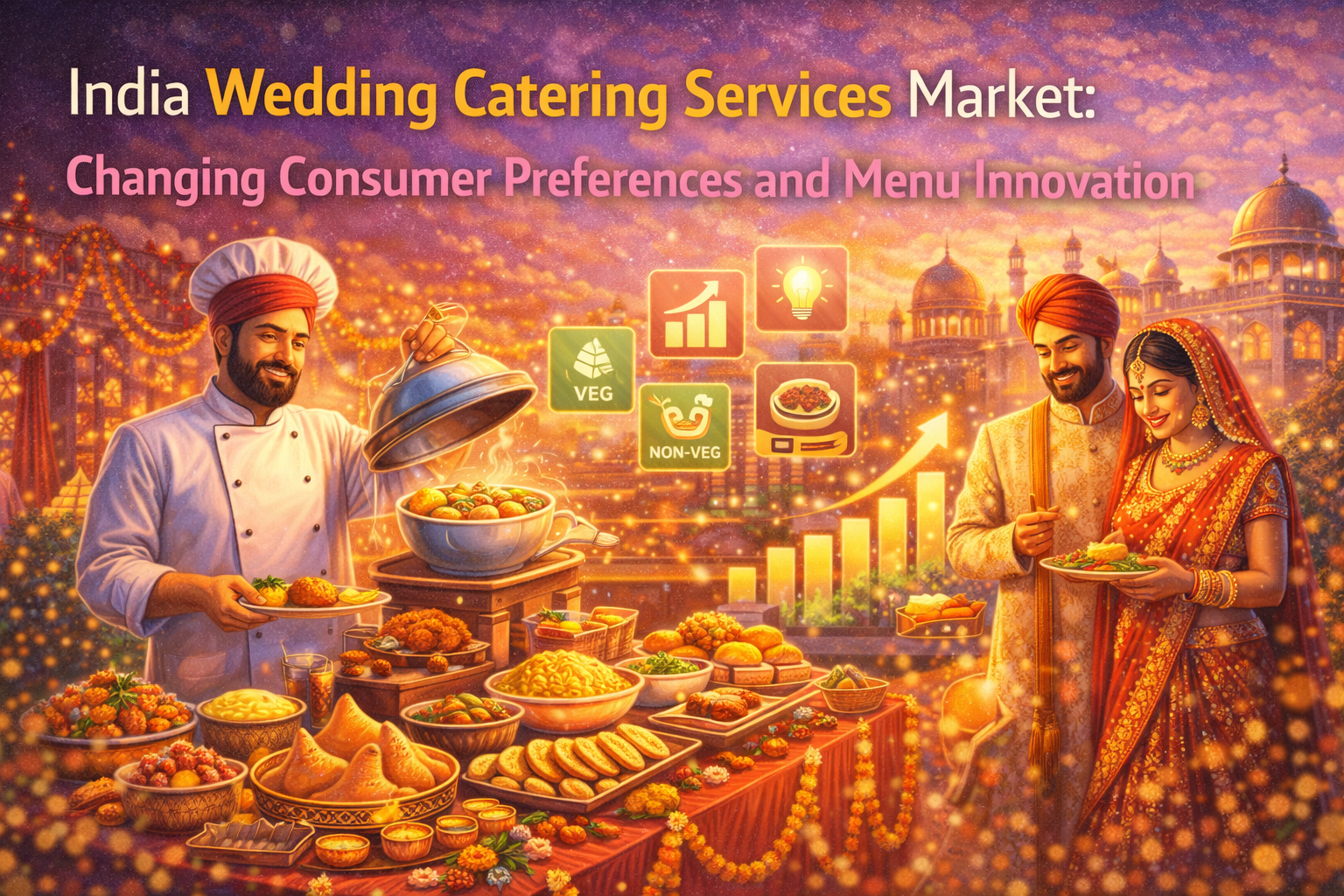
India Wedding Catering Services Market: Changing Consumer Preferences and Menu Innovation
By Jackson Harris 08-01-2026 108
With millions of weddings being held in India annually, the country has some of the largest food service markets related to events in the world. Weddings in India are no longer events restricted to a single day. Currently, many of them are extended events involving pre-wedding ceremonies, reception events, as well as post-wedding events.
Cities like Delhi, Mumbai, Bengaluru, and Ahmedabad observe a steady increase in the number of registered marriages. The direct reason for such an increase is the Rise in the Demand for catering services that can manage large guest turnout while maintaining good quality. Even medium-sized cities witness wedding events with a turnout of thousands.
These days, families are also expecting caterers to handle logistics, sanitation, human resources, and display. With the rise in these expectations, the unorganized players find it hard to compete. This trend favors the development of the professional or branded catering company.
Destination Weddings and New Service Formats
Destination weddings have changed how catering services operate in India. Locations such as Udaipur, Jaipur, Goa, and hill destinations in Uttarakhand attract couples seeking curated experiences. These weddings often rely on outsourced caterers who can operate across cities and manage supply chains efficiently.
After this shift, the India Wedding Catering Services Market has seen growing demand for flexible service models. Caterers now offer end-to-end solutions that include menu planning, equipment transport, staff accommodation, and coordination with event planners.
Cloud kitchens also play a supporting role. They cater to smaller events like cocktail nights, brunches, or private family gatherings during wedding weeks. This hybrid approach allows caterers to scale services without expanding physical infrastructure.
Menu Innovation Driven by Regional and Cultural Preferences
Menu design is actually one of the focuses of wedding planning. This is due to the fact that families demand foods that exhibit their cultural identity. This entails high demand for regional foods.
Caterers have also begun to provide authentic food options like the Kashmiri wazwan dinner, the Rajasthani thali, the South Indian banana leaf meal, and the Punjabi tandoor segment.
On the other hand, the pool party menus continue to expand. Most weddings feature a mix of Indian fare and international dishes such as pasta bars, Asian grills, and international dessert offerings. In this way, the hosts have the ability to cater to guests of diverse ages.
The best catering companies have invested in culinary research and professional chefs to ensure a flavor profile at various scales. Culinary narrative and display are now as much part of the consideration as the flavor.
Cost Pressures and Pricing Challenges for Caterers
Food inflation presents a major challenge for wedding caterers. Prices of vegetables, pulses, dairy, and cooking oils fluctuate throughout the year. Since food accounts for a large share of event costs, even small price changes affect profitability.
Caterers manage this risk by revising menus, sourcing locally, and negotiating bulk contracts with suppliers. Some also introduce seasonal menus to control input costs while maintaining quality.
After navigating these challenges, the India Wedding Catering Services Market continues to grow as families prioritize food quality over excess décor spending. Value-driven mid-range catering remains the most stable segment, supported by India’s large middle-class population.
Segmentation Trends Shaping Demand Patterns
Mid-range weddings dominate catering demand across India. These events balance scale and affordability, making them the most frequent category. Average wedding budgets have risen steadily, but most families still prefer cost-controlled celebrations.
Fusion and multi-cuisine menus lead food preferences. Guests now expect variety within a single event. Caterers respond by offering customizable menu packages that combine regional, continental, and global options.
Distribution channels also evolve. Direct on-site catering remains dominant for large weddings, while outsourced services and event management tie-ups gain traction for destination events. This diversification allows caterers to serve multiple customer segments efficiently.
Leading Companies and Competitive Landscape
The wedding catering industry includes both legacy players and modern boutique firms. Established brands benefit from scale, vendor networks, and experienced teams. Newer entrants focus on creativity, presentation, and niche positioning.
Blue Sea Bespoke Catering stands out in the premium segment with curated menus and luxury service standards. Its work in large-format weddings has shaped high-end catering expectations in major metros.
Anupam Caterers & Decorators serves a broad customer base across Tier I and Tier II cities. Its integrated service model appeals to families seeking convenience and reliability.
Grandeur By Avantika focuses on boutique and destination weddings. The company emphasizes presentation, personalization, and gourmet experiences, aligning with premium wedding trends.
Other notable players include The Rustic Table, Savoury Soirée, Fossetta Gourmet Catering, Jaffer Bhai’s Delhi Darbar Catering, Moets Catering Service, Morya Caterers, and Venus Caterings. Competition encourages service innovation and consistent quality upgrades.
Regional Outlook and Long-Term Market Direction
North India leads wedding catering demand due to high wedding volumes and larger guest lists. Delhi NCR alone hosts hundreds of thousands of weddings during peak seasons. Rajasthan strengthens this dominance through destination weddings in heritage venues.
Western India follows closely, driven by Mumbai, Ahmedabad, and Pune. Southern states show steady growth, supported by urban expansion and rising disposable incomes.
Looking ahead, professionalization will define market success. Caterers who adapt to menu innovation, cost control, and service flexibility will gain long-term advantage. Digital bookings, vendor partnerships, and sustainable practices will further shape the industry’s future.