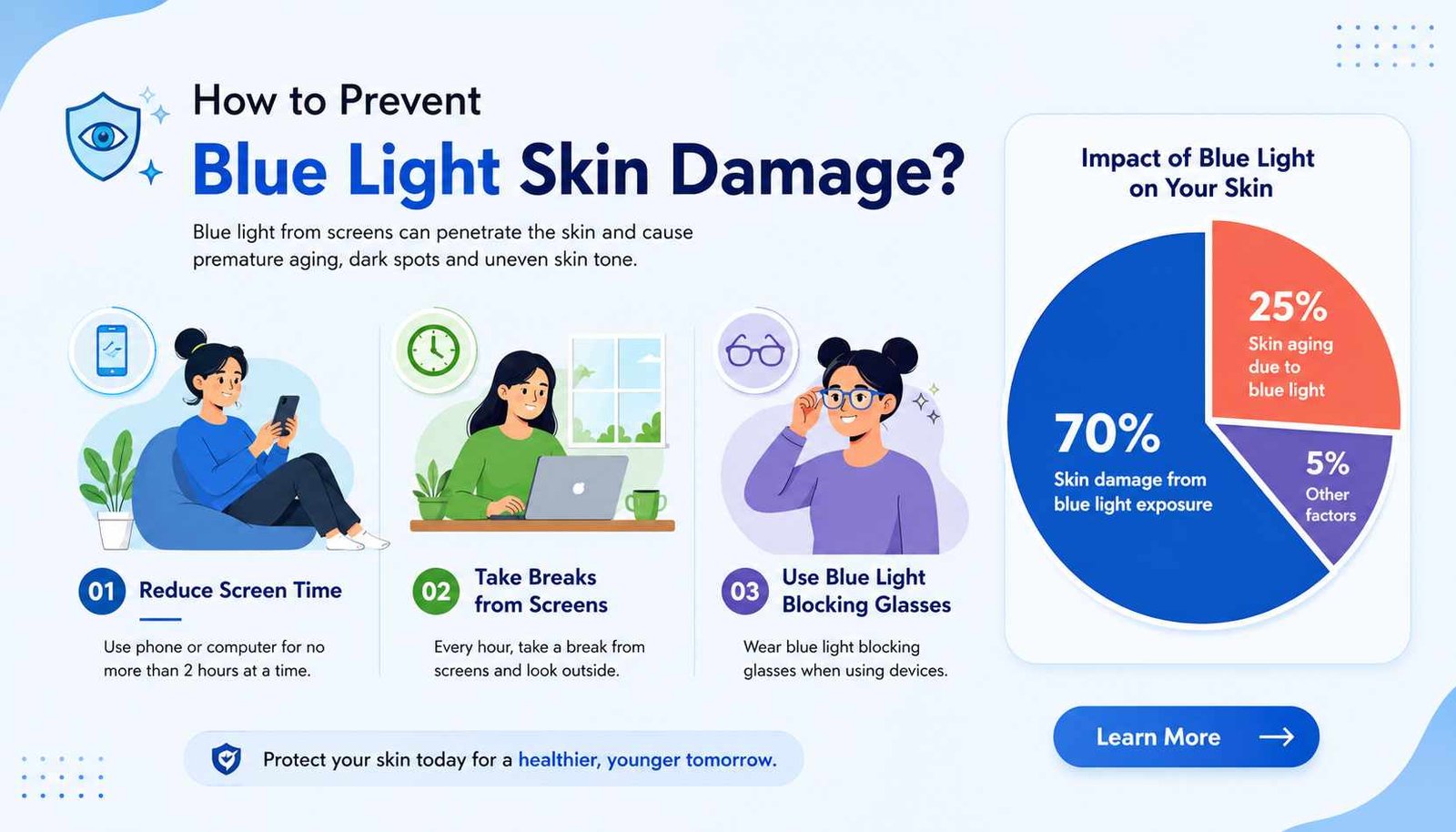
If your day starts with a phone screen and ends with a laptop glowing in a dark room, you're not alone. The average person now spends over seven hours a day staring at digital screens and while we've gotten used to talking about "blue light" in terms of eye strain and sleep disruption, there's a quieter conversation happening in dermatology circles: what is all that screen time doing to your skin?
This is where skincare for long screen days becomes less of a trend and more of a necessity. Blue light, or High-Energy Visible (HEV) light, doesn't just come from the sun, it's emitted by your phone, tablet, computer monitor, and even LED lighting. And unlike UV rays, it penetrates deeper into the skin, potentially contributing to premature aging, pigmentation, and a weakened skin barrier over time.
Let's break down what blue light actually does to your skin, and more importantly, how to protect it without upending your entire routine.
What Is Blue Light, and Why Does It Matter for Your Skin?
Blue light sits on the visible light spectrum, with a short wavelength and high energy. Unlike UVA and UVB rays, which are filtered somewhat by clouds and glass, blue light passes through both meaning your skin is exposed whether you're outdoors or sitting by a sunny window with your laptop open.
Dermatological research has increasingly pointed to blue light as a contributor to:
Oxidative stress triggering free radicals that break down collagen and elastin
Hyperpigmentation especially in those with medium to deep skin tones, where blue light exposure has been linked to worsening melasma and dark spots
Weakened skin barrier leading to increased sensitivity, dryness, and inflammation
Premature aging signs fine lines, dullness, and loss of skin elasticity over time
The catch is that this damage is cumulative and largely invisible day-to-day, which is exactly why it's so easy to overlook.
Signs Your Skin Might Be Reacting to Screen Exposure
Before diving into prevention, it helps to know what blue light damage can actually look like:
Dull, tired-looking skin despite adequate sleep
New or worsening dark spots, particularly on the cheeks and forehead
Increased redness or sensitivity by the end of a workday
Fine lines appearing earlier than expected, especially around the eyes
If any of this sounds familiar, it's worth adjusting your routine not by adding a dozen new products, but by being intentional about a few key steps.
How to Prevent Blue Light Skin Damage
1. Choose an Antioxidant-Rich Serum
Since blue light damage is largely driven by oxidative stress, antioxidants are your first line of defense. Vitamin C, vitamin E, niacinamide, and ferulic acid all help neutralize free radicals before they can break down collagen. Applying an antioxidant serum in the morning, before makeup or sunscreen, gives your skin a protective buffer for the day ahead.
2. Don't Skip SPF Even Indoors
Many people still believe sunscreen is only necessary when they're outside, but broad-spectrum SPF is one of the most effective tools against blue light exposure too. Look specifically for sunscreens formulated with iron oxides or tinted mineral formulas, as these offer better protection against visible light compared to standard sunscreens, which are mostly designed for UV rays.
3. Strengthen Your Skin Barrier
A compromised barrier makes skin more vulnerable to every kind of environmental stressor, including blue light. Incorporate barrier-supporting ingredients like ceramides, hyaluronic acid, and peptides into your routine, particularly in your moisturizer. Strong, well-hydrated skin is simply more resilient.
4. Add a Blue Light Screen Filter
This one isn't skincare, but it matters. Reducing your direct exposure at the source through screen filters, blue-light-blocking glasses, or built-in "night mode" settings on your devices cuts down on the total dose your skin receives during long work sessions.
5. Reapply Protection During the Day
If you're working an 8-hour shift in front of a screen, one morning application of SPF or antioxidant serum won't carry you through the entire day. Keep a lightweight SPF mist or reapplication powder at your desk for a midday top-up, especially if you sit near a window.
6. Support Your Skin at Night
Nighttime is when skin repairs itself, so this is the ideal window to use retinoids, peptides, or repair-focused serums that help reverse cumulative damage. Pair this with a rich moisturizer to lock in hydration overnight.
7. Take Real Screen Breaks
The 20-20-20 rule (every 20 minutes, look at something 20 feet away for 20 seconds) is usually recommended for eye health, but it also reduces prolonged close-range exposure to your screen's light source, a small habit that adds up.
Building a Simple Screen-Day Skincare Routine
You don't need an elaborate ten-step routine to protect against blue light. A streamlined approach might look like this:
Morning: Cleanser → Antioxidant serum → Moisturizer → Broad-spectrum SPF (tinted mineral if possible)
Midday: SPF touch-up, especially if near a window or under strong indoor lighting
Evening: Cleanser → Repair serum (retinoid, peptide, or niacinamide) → Barrier-support moisturizer
Consistency matters more than complexity here. The goal is to build small, repeatable habits that protect your skin daily, not just when you remember.
The Bottom Line
Blue light won't cause the dramatic sunburn UV rays can, which is exactly why it's easy to dismiss. But for anyone spending long hours in front of screens which, in 2026, is most of us protecting your skin from this invisible stressor is becoming as routine as protecting it from the sun. A few thoughtful additions to your existing skincare routine can go a long way toward keeping your skin resilient, even, and healthy for the long run.
FAQs:
1. Does blue light really damage skin, or is this just marketing hype?
There's genuine dermatological research showing blue light contributes to oxidative stress, pigmentation, and collagen breakdown, particularly with prolonged, repeated exposure. It's not as aggressive as UV damage, but over years of daily screen use, the cumulative effect is considered meaningful enough that dermatologists now factor it into skincare recommendations.
2. Can regular sunscreen protect against blue light?
Not always. Traditional chemical sunscreens are primarily designed to block UV rays and often let visible light, including blue light, pass through. Mineral sunscreens containing iron oxides offer better protection against blue light specifically, so checking your SPF's ingredient list is worth it if screen exposure is a daily concern.
3. Do blue light glasses help protect the skin too?
Blue light glasses are designed to reduce eye strain and protect the eyes, not the skin directly. However, reducing your overall exposure to blue light through glasses, screen filters, or device settings can indirectly lower the cumulative dose your skin receives as well.
4. Is blue light damage worse for certain skin tones?
Research suggests that individuals with medium to deeper skin tones may be more prone to blue-light-induced hyperpigmentation, since melanin-rich skin tends to react more visibly to this type of light exposure. This makes antioxidant protection and mineral SPF especially valuable for these skin types.
5. How long does it take to see the effects of blue light on skin?
Blue light damage tends to be cumulative rather than immediate, so visible effects like dullness, uneven tone, or fine lines usually build up gradually over months or years of regular exposure rather than appearing overnight.
6. What ingredients should I look for in blue-light protective skincare?
Key ingredients include antioxidants like vitamin C, vitamin E, niacinamide, and ferulic acid, along with barrier-supporting ingredients such as ceramides and hyaluronic acid. Tinted mineral sunscreens with iron oxides add an extra layer of defense specifically against visible light.
7. Can I skip SPF if I work from home and rarely go outside?
It's not recommended. Blue light from screens and indoor lighting still reaches your skin whether you're outdoors or not, so a daily broad-spectrum SPF remains one of the most effective protective steps, even for people who work entirely indoors.