Dogs naturally look for opportunities to chase, sniff, chew, explore, and interact with the people around them. Giving them regular opportunities to play can add variety to the day while supporting both physical activity and mental stimulation.
For owners building a more engaging daily routine, fur friend care offers practical products for different kinds of play. The key, however, is understanding what your own dog enjoys rather than simply filling a basket with toys.
Why Everyday Play Matters
A walk is an important part of many dogs’ routines, but enrichment does not have to stop when you return home. Short play sessions throughout the day can encourage movement and give dogs something interesting to focus on.
This is especially useful during bad weather, busy workdays, or periods when outdoor activity is limited. A few minutes of fetch in a safe space, a gentle tug session, or an interactive activity can break up long stretches of inactivity without requiring an elaborate setup.
Different Dogs Enjoy Different Kinds of Play
Some dogs immediately run after anything that rolls or bounces. Others prefer carrying soft toys, pulling on a rope, searching for treats, or spending time investigating an interactive object. Age, size, energy level, and personality can all influence these preferences.
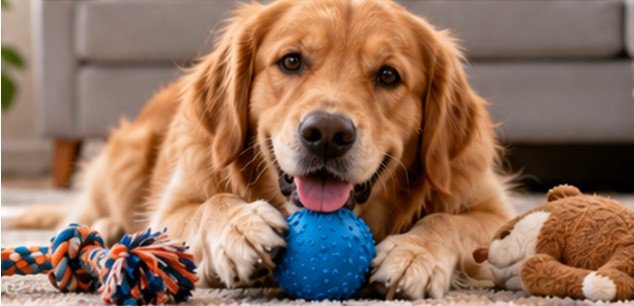
Watch how your dog behaves during play. If they repeatedly return to a ball, chasing may be particularly rewarding. A dog that loves pulling and carrying may enjoy tug-style options, while a curious pet that likes searching for food may respond better to enrichment activities.
A varied selection of dog toys can make it easier to experiment with different play styles and discover what keeps your dog interested.
Rotate Toys Instead of Offering Everything at Once
One simple way to make familiar items feel interesting again is rotation. Instead of leaving every toy available all week, keep a few accessible and switch them periodically.
This does not require constantly buying new products. Reintroducing an item after it has been put away for several days can sometimes renew a dog’s curiosity. Rotation also makes it easier to inspect toys for worn material, loose pieces, or damage before returning them to play.

Turn Playtime Into Time Together
Not every activity needs to keep a dog entertained independently. Some of the most enjoyable games are shared with an owner. Fetch, gentle tug, hide-and-seek with an appropriate toy, and simple search games create opportunities for interaction while adding movement to the day.
Keeping sessions short can work particularly well for dogs that lose interest quickly. You can finish while the activity is still enjoyable and return to it later rather than pushing a dog to continue playing.
Choose Toys With Safety and Size in Mind
A toy should be appropriate for your dog’s size and play habits. Items that are too small may be unsuitable for larger dogs, while oversized products can be difficult for small dogs to carry or manipulate.
Strong chewers may also need different materials from gentle players. Check toys regularly and remove anything that has become badly torn, cracked, or loose. When introducing an unfamiliar interactive product, supervision can help you understand how your dog uses it before deciding whether it is suitable for independent play.
Small Changes Can Make the Day More Interesting
A good enrichment routine does not need to be complicated. Try combining a walk with a short game, rotating familiar toys, introducing an occasional search activity, or setting aside a few minutes for interactive play.
The best routine is one your dog genuinely enjoys and that fits naturally into your schedule. By paying attention to their preferences and offering a healthy mix of movement, exploration, and shared play, everyday life can become more varied and engaging for both of you.