Over the past ten years, the field of web development has undergone significant change. Technologies that facilitate quick, scalable, and effective web application development are in high demand from both developers and businesses. The MEAN stack, a full-stack JavaScript framework that integrates MongoDB, Express.js, Angular, and Node.js, is one of the most widely used solutions available today.
Developers may create dynamic, high-performing web apps using JavaScript only by utilizing the MEAN stack, which handles client-side, server-side, and database administration. By providing information about the MEAN stack's elements, benefits, real-world application, and best practices for creating reliable web applications, this blog examines how to use it efficiently. Enroll in the MEAN Stack Training at FITA Academy to gain expert guidance, hands-on experience, and in-depth knowledge of MongoDB, Express.js, Angular, and Node.js. This program equips you with the skills needed for a successful career in full-stack web development, enabling you to build dynamic, scalable, and modern web applications for industries like e-commerce, IT services, and enterprise solutions.
Overview of Components
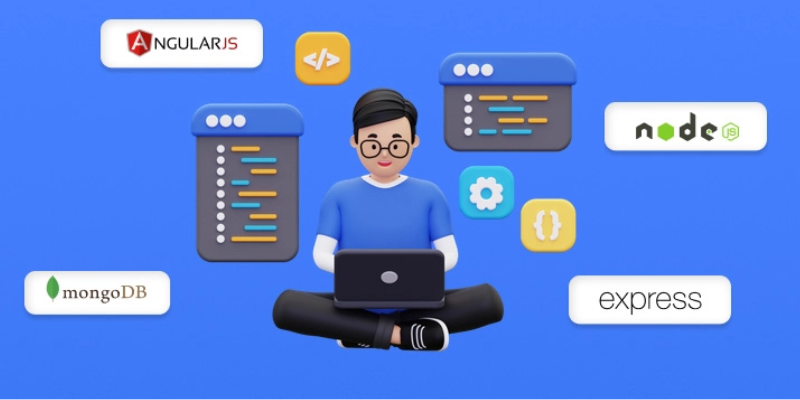
A JavaScript-based technological stack called the MEAN stack was created to make web application development more efficient. Every element has a specific function in creating contemporary web applications. The NoSQL database MongoDB is perfect for scalable applications because it stores data as adaptable documents that resemble JSON. Express.js is a simple, quick web framework for Node.js that manages APIs, server-side functionality, and routing.
A front-end framework called Angular lets programmers make responsive, dynamic single-page applications (SPAs). Lastly, the server-side JavaScript runtime Node.js enables event-driven, asynchronous programming for quick, scalable server solutions. MEAN's primary benefit is its single-language methodology, which enables developers to use JavaScript throughout the stack. This consistency speeds up development, improves teamwork, and makes debugging easier.
Advantages for Web Development
The MEAN stack has various benefits that make it a favorite choice for developers. First, teams may work more effectively on the client and server sides by reducing context switching by adopting a single language throughout the stack. Second, its scalability is outstanding; Node.js's asynchronous architecture and MongoDB's document format enable applications to expand without compromising performance. Third, the stack is fully open-source, which lowers expenses while gaining from a vibrant community. Kickstart your full-stack development career by enrolling in MEAN Stack Training in Chennai, where you’ll gain hands-on experience with MongoDB, Express.js, Angular, and Node.js, equipping you with the skills to build dynamic, scalable, and modern web applications for industries like IT, e-commerce, and enterprise solutions.
Furthermore, the MEAN stack speeds up development because Express simplifies backend API design and Angular makes front-end UI building easier. Applications function properly even when there is a lot of traffic because Node.js handles asynchronous requests effectively. All of these benefits combine to make MEAN the perfect choice for projects at both the startup and enterprise levels.
Setting Up for MEAN Stack
Setting up the proper environment is essential before beginning development. Installing Node.js and npm, which run the server and control dependencies, should come first. Install MongoDB after that, either locally or using cloud-based tools like MongoDB Atlas. Install the Angular CLI for the frontend to streamline component building, project scaffolding, and routing administration.
Next, configure Express.js in your Node.js app to manage routing and server logic. Selecting the appropriate IDE is just as crucial. Excellent assistance for JavaScript development, debugging, and project management is offered by programs like Visual Studio Code, WebStorm, or Sublime Text. Development goes more smoothly, debugging is simpler, and integration throughout the stack is seamless in an environment that is properly configured.
A Simple Web Application Using MEAN
A few essential processes are involved in developing a simple MEAN stack application. Start by creating a package.json file with npm init to initialize your Node.js project. Installing the required dependencies, such as the Express, Angular, and MongoDB drivers, comes next. Configure an Express server to handle routes and API endpoints in a server.js file. Next, ensure correct database communication by connecting to MongoDB using either native drivers or Mongoose.
Utilize Angular CLI to create front-end modules, services, and components. Use HTTPClient for API calls to bind your frontend to the backend. Lastly, test CRUD operations and run the server and frontend concurrently to ensure that data transfers between MongoDB and Angular without hiccups. This methodical approach illustrates the end-to-end integration of MEAN in a practical application.
Best Practices for Scalability
In MEAN applications, scalability and performance are essential. To start, use MongoDB indexing to speed up queries for big datasets. Reduce the frequency of database queries by implementing caching techniques like Redis. Lazy loading in Angular speeds up initial load times and improves user experience by loading components only when needed. Learners who enroll for MEAN Stack Training can develop strong skills in MongoDB, Express.js, Angular, and Node.js, gain hands-on project experience, and enhance their opportunities for a successful career in full-stack web development, building dynamic, scalable, and modern web applications for IT, e-commerce, and enterprise solutions.
Utilize Node.js's asynchronous functions on the server side to manage numerous requests effectively and avoid blocking. Reduce network overhead and speed up response times by combining API calls. Developers can create scalable, high-performance apps that can handle thousands of users while preserving dependable, quick performance by adhering to these best practices.
Common Challenges and How to Overcome Them
MEAN stack development can be difficult, despite its benefits. For instance, the ideas of modules, services, and dependency injection in Angular can be too complex for novices to understand. To get around this, practice frequently, use official material, and adhere to tutorials.
Queries may lag while working with huge datasets in MongoDB. Indexing, aggregation pipelines, and appropriate schema architecture can all help to maximize performance. In Node.js, asynchronous programming can lead to callback hell; instead, use Promises or async/await to keep your code legible and cleaner. Lastly, maintain consistent API contracts, apply appropriate validation, and carry out exhaustive testing to guarantee smooth frontend-backend integration.
Integrating Services with MEAN Stack
The functionality of your MEAN application can be significantly improved by integrating external services. To handle safe transactions for payments, use APIs such as PayPal or Stripe. Use Firebase Authentication, JWT, or OAuth to implement authentication for user security and login.
Node.js packages from npm offer extra functionality like email notifications, file uploads, or image processing, while cloud services like AWS, Google Cloud, or Azure may manage storage, compute, and database hosting.Through these integrations, developers may take advantage of the modular and adaptable architecture of the MEAN stack while increasing the capabilities of their applications.
Tips for Improving Workflow
Strong collaboration and workflow processes are essential for MEAN development to be successful. Start with version control using Git and programs like GitHub or GitLab to facilitate productive teamwork. Utilize agile methodologies, like Scrum or Kanban, to effectively prioritize features and track advancement.
To guarantee quality and maintainability, promote code reviews. For repeated tasks like bundling or minification, use task automation tools like Webpack, Gulp, or npm scripts. To find problems early, use end-to-end testing using Protractor and unit testing with Jasmine or Karma. When technological best practices and effective project management are combined, teams may produce reliable, superior MEAN apps quickly.
Conclusion
With its single-language environment covering frontend, backend, and database management, the MEAN stack is a potent tool for contemporary web development. Developers may create scalable, effective, and maintainable online apps by comprehending its components MongoDB, Express.js, Angular, and Node.js and putting best practices for setup, performance, and integration into practice.
Using the MEAN stack enables your team to innovate more quickly, streamline development, and confidently produce high-performing web apps, regardless of whether you are a startup looking to launch a new product or an enterprise looking for flexible and affordable solutions.
Tags : MEAN