Ever wondered how some businesses manage their foot traffic so effortlessly? Have you noticed those sleek entry systems at gyms, offices, and train stations that seem to know exactly who should be let through? And have you considered how much simpler your own access control could be with the right system in place?
Choosing the right turnstile gate for your business isn't just about picking something that looks good at the entrance. It's about finding a solution that fits your security needs, handles your daily traffic, and works within your budget. Whether you're running a corporate office in Sydney, a manufacturing plant in Melbourne, or a fitness centre in Brisbane, the turnstile gate you select can make a real difference to your operations.
In this guide, we'll walk you through everything you need to know about turnstile gates. From understanding how they work to exploring the different types available, we'll cover the key features to look for and the common mistakes to avoid. By the end, you'll have a clear picture of what will work best for your specific situation—and you'll be ready to make a smart investment that pays off for years to come.
What Is a Turnstile Gate and How Does It Work?
The Basic Mechanics Behind Turnstile Gates
A turnstile gate is essentially a physical barrier that controls the flow of people entering or exiting a space. Think of it as a gatekeeper that only lets authorised individuals through, one at a time. The basic concept is simple: the gate remains locked until someone presents valid credentials, then it unlocks briefly to allow passage.
Most turnstile gates operate using a combination of mechanical and electronic components. When you tap your access card, scan your fingerprint, or enter a code, the system verifies your credentials. Once approved, a signal releases the locking mechanism, allowing the rotating arms or panels to move.
Key Components of a Modern Turnstile Gate System
Today's turnstile gate systems include several essential parts working together. The main housing contains the mechanical barriers—whether rotating arms, glass panels, or full-height bars. The access control reader connects to your chosen verification method, be it RFID cards, biometrics, or QR codes.
Behind the scenes, a control unit processes the data and communicates with your broader security network. Sensors detect when someone passes through, preventing tailgating and ensuring accurate counting. Plus, most systems include manual override options for emergencies.
Types of Turnstile Gates: Finding Your Perfect Match
Full-Height Turnstile Gates
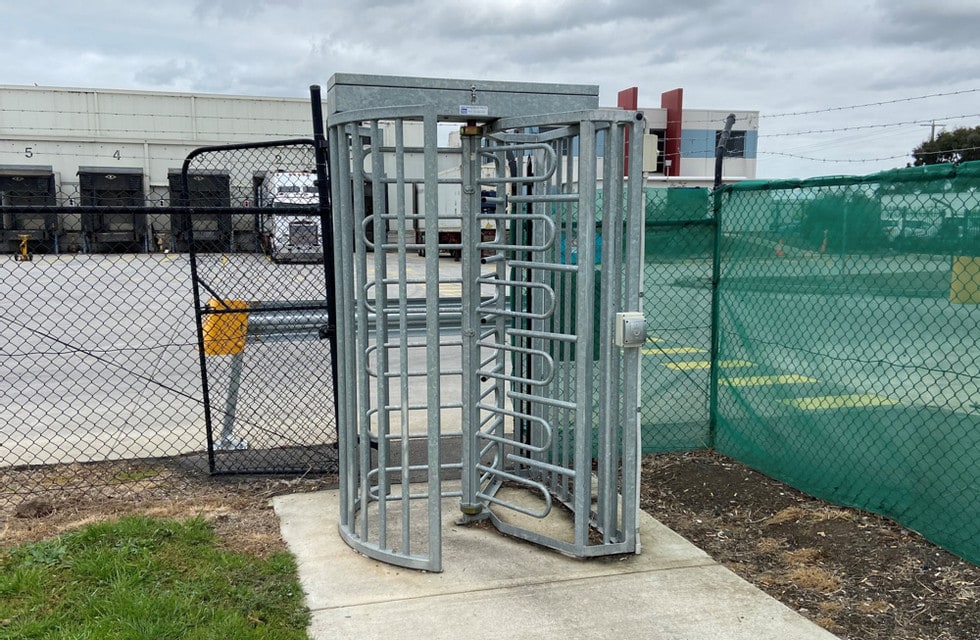
Full-height turnstiles are the heavy-duty option for maximum security. Standing around 2.1 metres tall, they create a complete barrier from floor to ceiling. You'll often spot these at construction sites, prisons, and high-security facilities where preventing unauthorised access is absolutely critical.
These units are virtually impossible to climb over or crawl under. They work brilliantly in outdoor settings too, as they're built tough to withstand harsh weather conditions.
Waist-Height and Tripod Turnstile Gates
Waist-height turnstiles sit at approximately hip level, offering a balance between security and aesthetics. Tripod turnstiles feature three rotating arms and are incredibly popular in office buildings, gyms, and public transport stations across Australia.
They're cost-effective, easy to install, and handle high traffic volumes efficiently. While they won't stop a determined intruder who's willing to jump over, they're perfect for managing everyday access control where extreme security isn't the primary concern.
Optical Turnstile Gates and Speed Gates
For businesses wanting a more sophisticated look, optical turnstiles and speed gates deliver style alongside functionality. These systems use infrared sensors to detect passage rather than physical barriers. Glass panels retract smoothly, creating an elegant entrance experience.
Speed gates are particularly popular in corporate lobbies and upscale commercial buildings. They process people quickly—often handling 25-30 people per minute—while maintaining accurate access control. They're also wider than traditional turnstiles, making them wheelchair-friendly.
What Are the Benefits of Installing a Turnstile Gate?
Enhanced Security and Access Control
The most obvious benefit is improved security. A turnstile gate creates a physical checkpoint that people must pass through. Combined with credential verification, you know exactly who enters your premises and when they do it.
This deters unauthorised access and creates an audit trail for investigations if needed. You're not relying on human security guards alone, which means consistent enforcement around the clock
Improved Crowd Management and Cost Savings
Managing foot traffic becomes significantly easier with turnstile gates. During busy periods, they create orderly queues and prevent bottlenecks. In emergency situations, many systems can be configured for free exit, ensuring safe evacuation.
Long-term, turnstile gates reduce labour costs. While you might still need security personnel, you won't need as many stationed at entry points. The initial investment typically pays for itself within a few years through reduced staffing expenses and prevented security incidents.
Accurate Attendance and Visitor Tracking
Modern turnstile gate systems integrate seamlessly with time and attendance software. Every entry and exit gets logged automatically, eliminating buddy-punching and providing accurate records for payroll processing.
For visitor management, you can issue temporary credentials and track exactly when guests arrive and leave. This data proves invaluable for fire safety compliance and understanding your facility's usage patterns.
How Do I Choose the Right Turnstile Gate for My Business?
Assessing Your Security Requirements
Start by honestly evaluating your security needs. What are you protecting? A data centre requires different measures than a community swimming pool. Consider whether you need to prevent all unauthorised access or simply deter casual intruders.
Think about integration with other security systems too. Do you need CCTV connectivity? Will the turnstile gate need to work alongside existing alarm systems? Understanding these requirements upfront saves headaches later.
Understanding Traffic Flow and Physical Space
How many people pass through your entrance during peak times? A busy factory shift change demands high-throughput equipment, while a small office might cope fine with a single unit. Underestimating capacity leads to frustrating queues and employee dissatisfaction.
Measure your available space carefully. Full-height turnstiles need more room than compact tripod units. Consider ceiling height, floor conditions, and proximity to other doors or obstacles. Also think about accessibility—you'll likely need a separate accessible entry point that complies with Australian disability standards.
Budget Considerations Without Compromising Quality
Turnstile gate prices vary dramatically based on type, features, and build quality. While it's tempting to choose the cheapest option, remember that this equipment needs to function reliably for years. Poor-quality units break down frequently, creating security gaps and ongoing repair costs.
Set a realistic budget that accounts for installation, integration with existing systems, and ongoing maintenance. Sometimes spending more upfront on a durable turnstile gate saves money over the equipment's lifetime.
Which Industries Benefit Most from Turnstile Gates?
Corporate and Commercial Settings
Office buildings across Australia increasingly rely on turnstile gates for secure, efficient access control. They create a professional first impression while ensuring only authorised personnel and registered visitors enter the workspace.
In multi-tenant buildings, different companies can maintain separate access permissions through a single turnstile gate system. This flexibility makes managing complex occupancy arrangements straightforward.
Recreational Facilities and Public Transport
Gyms and fitness centres use turnstile gates to verify membership instantly. Members simply scan their cards or use biometrics, eliminating the need for front desk staff to manually check every entry. Stadiums employ similar systems for ticket validation.
Public transport hubs—train stations, ferry terminals, and bus interchanges—depend heavily on turnstile gate technology. These systems process thousands of commuters daily while validating tickets and collecting fare data automatically.
Manufacturing and Industrial Sites
Safety and security go hand-in-hand in industrial environments. Turnstile gates ensure only trained, authorised workers enter hazardous areas. They also provide accurate headcounts during emergencies, helping safety officers account for everyone on site.
What Features Should I Look for in a Turnstile Gate?
Integration and Durability
Make sure any turnstile gate you consider integrates with your existing security infrastructure. Check compatibility with your current access cards, software systems, and network setup. Retrofitting incompatible equipment gets expensive quickly
For outdoor installations or dusty industrial environments, durability matters immensely. Look for stainless steel construction, appropriate IP ratings for weather resistance, and proven performance in similar Australian conditions.
Accessibility and Smart Technology
Australian businesses must comply with disability access requirements. Your turnstile gate installation should include accessible options—typically wider speed gates or separate entry points—that accommodate wheelchairs, mobility aids, and prams.
Consider future-proofing with smart technology options. Biometric readers, facial recognition, and mobile phone credentials are becoming increasingly standard. Choosing equipment that supports these features means you won't need a complete replacement when upgrading later.
Common Mistakes to Avoid When Buying a Turnstile Gate
Many businesses underestimate their traffic volume, resulting in bottlenecks during peak periods. Others focus solely on price, ending up with unreliable equipment that fails at critical moments. Ignoring maintenance requirements leads to unexpected breakdowns and security vulnerabilities.
Don't forget about user experience either. If your turnstile gate system frustrates employees and visitors daily, it creates a negative impression of your business.
How Much Does a Turnstile Gate Cost?
Prices range from around $2,000 for basic tripod units to $15,000 or more for high-end optical speed gates. Full-height security turnstiles typically fall between $5,000 and $10,000. Installation, integration, and ongoing maintenance add to these figures.
Request quotes from multiple suppliers and compare like-for-like specifications. The cheapest quote isn't always the best value.
Installation and Maintenance: What to Expect
Professional installation typically takes one to three days depending on complexity. Expect some disruption to your entrance area during this period. Good suppliers provide comprehensive training for your staff.
Regular maintenance keeps your turnstile gate operating reliably. Budget for annual servicing and occasional repairs. Most suppliers offer maintenance contracts that provide peace of mind and priority response times.
Making the Smart Choice for Your Business
Selecting the right turnstile gate comes down to matching your specific requirements with the available options. Consider your security level needs, traffic volumes, available space, and budget. Don't rush this decision—the equipment you choose will serve your business for many years.
The benefits are clear: improved security, efficient crowd management, accurate tracking, and long-term cost savings. When chosen correctly, a turnstile gate system becomes an invaluable part of your operations rather than just another expense.
Take your time, ask plenty of questions, and work with reputable suppliers who understand Australian business needs. Your future self will thank you for making a thoughtful, informed choice today.
Tags : Turnstile Gates