How to Build an AI Companion Platform Like Candy AI: Features, Cost, and Business Model
By Rosie Martin 20-08-2026 104
Artificial intelligence is changing how people interact with digital platforms. Instead of using AI only for search, productivity, or customer support, users are increasingly turning to AI companions for personalized conversations and interactive experiences. The AI companion apps market is also expanding, with research projecting continued growth as generative AI, personalization, and multimodal interactions improve.
For entrepreneurs, this creates an opportunity to build platforms that combine conversational AI, personalized characters, voice interaction, and other engaging features. One approach is developing a Candy AI Clone that takes inspiration from the functionality of established AI companion platforms while introducing a unique business concept.
Why AI Companion Platforms Are Becoming Popular
Traditional chatbots generally focus on answering questions or completing specific tasks. AI companion platforms take a more personalized approach by creating ongoing interactions based on user preferences and conversation history.
Modern AI companions can support text, voice, and multimodal interactions. Personalization and memory can also make conversations feel more consistent between sessions. These capabilities are helping AI companions expand beyond simple chatbots into entertainment, education, lifestyle, gaming, and other specialized use cases.
For startups, the opportunity lies not only in creating another general-purpose chatbot but in identifying a specific audience and delivering an experience designed around its needs.
What Is a Candy AI Clone?
A Candy AI Clone is a customizable AI companion platform inspired by the core concept of Candy AI. It can allow users to interact with AI-powered virtual characters through natural conversations and personalized experiences.
The goal is not simply to copy an existing application. Instead, entrepreneurs can use the concept as a foundation and customize the platform's interface, characters, features, monetization model, and target audience.
For example, a business could develop an AI companion platform focused on entertainment, fictional characters, interactive storytelling, language practice, or other specialized experiences.
Essential Features of a Candy AI Clone
A successful AI companion platform needs more than a basic chat interface. The following features can create a more engaging experience.
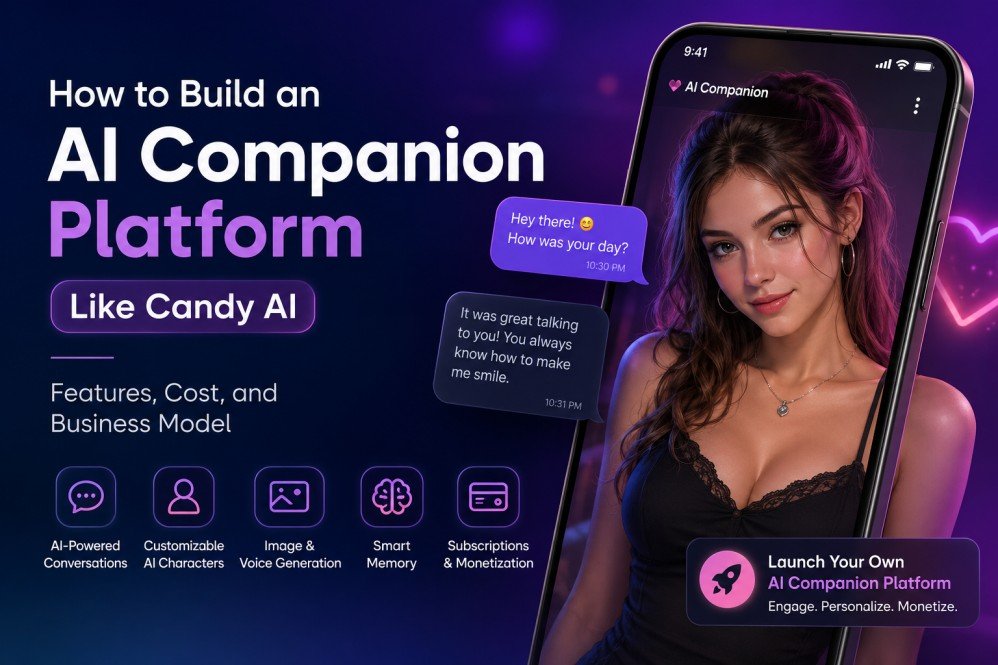
AI-Powered Conversations
Natural-language conversations are the foundation of an AI companion platform. Users should be able to communicate naturally while the AI generates contextually relevant responses.
AI Character Personalization
Character customization can allow users to select personalities, communication styles, interests, and other attributes. Giving users control over their preferred AI personalities can make the experience more engaging.
Image and Voice Generation
Multimodal capabilities can take an AI companion beyond text. Depending on the platform's purpose and applicable policies, users can interact through generated images or voice conversations.
Conversation Memory
Memory allows the system to retain relevant information from previous interactions. This can make future conversations more personalized instead of treating every session as completely new.
Subscription and Payment Options
A flexible monetization system can include free access with premium features, subscription plans, credits, or usage-based pricing. The right model depends on the target audience and operating costs.
How Much Does It Cost to Build a Candy AI Clone?
The cost of developing an AI companion platform varies significantly depending on its complexity.
A basic platform with text-based AI conversations and user accounts generally requires less investment than a solution with advanced character creation, voice interaction, image generation, long-term memory, moderation, analytics, and multiple payment options.
Other factors include UI/UX design, AI model and API costs, backend infrastructure, mobile app development, security, testing, and ongoing maintenance.
Entrepreneurs should therefore define the minimum viable product first and gradually introduce advanced capabilities based on user demand.
White-Label vs. Custom AI Companion Platform
Businesses generally have two development approaches: building a platform completely from scratch or using a white-label solution.
A custom platform offers greater control over the technology, user experience, integrations, and long-term product roadmap. However, it can require more development time and resources.
A white-label Candy AI Clone can provide a faster starting point for businesses that want to launch under their own brand. Branding, interface elements, features, and monetization options can be customized according to the business model.
The best option depends on budget, launch timeline, technical requirements, and the level of customization required.
How to Launch Your Own AI Companion Platform
Launching an AI companion platform starts with identifying a target audience and defining the product's core purpose. Next, businesses should select essential features, choose the appropriate AI technologies, design the user experience, and develop the platform.
Security, privacy, age restrictions where applicable, content moderation, and responsible AI practices should be considered from the beginning. AI companion platforms can involve highly personal conversations, making responsible data handling particularly important.
After testing the MVP, businesses can analyze user behavior, improve AI responses, introduce additional features, and optimize monetization.
Final Thoughts
The growing interest in personalized AI experiences is creating new opportunities for entrepreneurs. However, success requires more than replicating an existing application. A strong AI companion platform should have a clear target audience, useful personalization, engaging interactions, responsible moderation, and a sustainable monetization strategy.
Whether a business chooses custom development or a white-label solution, starting with a focused product and expanding according to user feedback can make the development process more manageable. With the right strategy, an AI companion platform can become a scalable digital product rather than simply another chatbot.