Someone who ran a content agency in Bangalore shared something at an industry meetup last year that stuck with most people in the room. She said her team had spent three years building one of the better recipe blogs in the country: good photography, solid writing, and a genuine audience. Then AI search arrived and their traffic fell off a cliff. Not slowly. Quickly.
"We still rank," she told the room. "We just don't get clicked anymore."
Nobody laughed. Most people in that room knew exactly what she was talking about.
Something Fundamental Shifted
There is a phrase that has been quietly circulating among digital marketers, SEO professionals, and content strategists over the past eighteen months. The death of the click. It sounds dramatic and honestly, people who first heard it probably rolled their eyes a little.
But spend any time looking at traffic data from content-heavy websites over the past two years and the drama starts to feel justified.
What happened, researchers and practitioners have explained, was not a gradual evolution of search. It was a structural change in what search actually did. For decades, search engines had one job: find documents that matched a query and show them in ranked order. The user did the reading. The user made the judgment. The website got the visit.
AI search flipped that arrangement. Now the system does the reading, makes a judgment, synthesizes an answer, and presents it directly. The user gets what they came for. The website gets nothing.
The death of the click, analysts have argued, was not a metaphor. For certain categories of content informational queries, how-to questions, definition requests, comparison searches, click-through rates had fallen to levels that would have been unthinkable three years ago. The clicks weren't going somewhere else. They were simply not happening.
So Where Does That Leave Brands and Publishers?
The instinct, understandably, was panic. Several practitioners noted that the first reaction from most of their clients when they saw traffic declining was to assume something had gone wrong: a penalty, a technical issue, a competitor doing something aggressive.
When it became clear that nothing had gone wrong in the traditional sense, that rankings were intact, that there were no manual actions, that the content was still being indexed, a different kind of concern set in. One that was harder to fix with a checklist.
What those brands were confronting, observers explained, was the reality that appearing in AI search was a different problem from ranking in traditional search. Not entirely unrelated but different enough that strategies built entirely around the old model were leaving real visibility on the table.
The question that followed how does a brand actually appear in AI search results rather than simply being invisible behind them was one that practitioners said had taken a while to get clear answers to. Those answers, they noted, were still evolving. But a picture had emerged.
Understanding What AI Search Is Actually Reading
Before getting into what to do, several researchers said it was worth being clear about what AI search systems were actually doing when they encountered content because the answer was less intuitive than most people assumed.
AI search systems were not reading content the way a human editor would, they explained. They were not responding to tone, brand personality, or the quality of the writing in any subjective sense. What they were doing was processing signals, practitioners said patterns in how content was structured, attributed, sourced, and connected to other credible sources and using those signals to decide whether a piece of content was worth drawing from when synthesizing an answer.
The death of the click had created an environment, analysts argued, where the goal was no longer to get someone to visit a page. The goal was to become the source that the AI system trusted enough to cite, summarize, or base its answer on. That was a meaningfully different objective, they said and it required thinking about content, credibility, and digital presence in ways that most brands had not previously needed to consider.
What Actually Gets a Brand Into AI Search Results
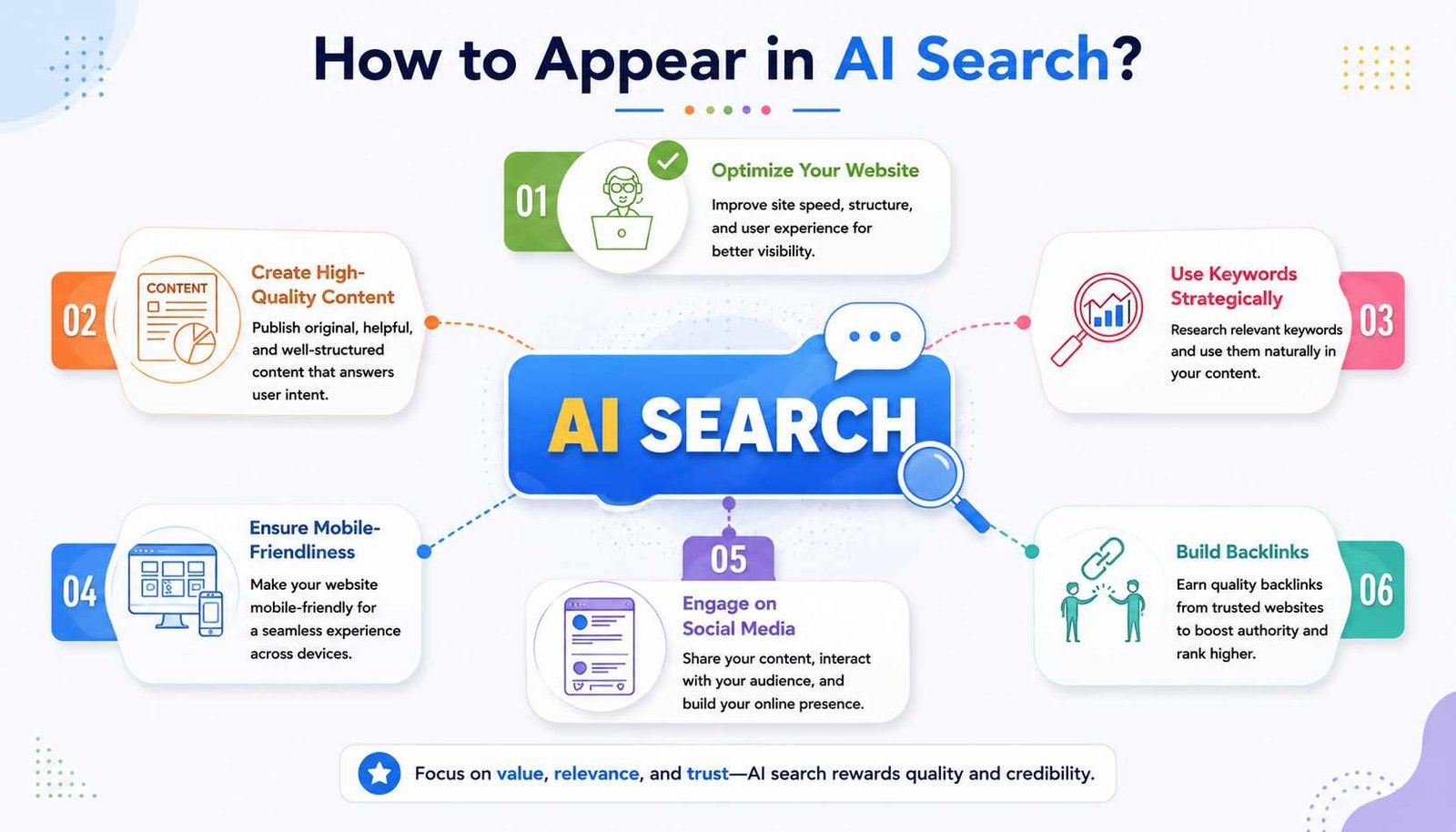
Practitioners who had spent time studying this question, some through direct experimentation, some through analyzing which sources consistently appeared in AI-generated answers described several factors that seemed to matter consistently, they said.
Structured, Direct Answers Near the Top of Content
One of the most consistently observed patterns, researchers noted, was that content which answered questions directly and early was more likely to be drawn from than content that buried the answer after extensive preamble.
This wasn't entirely new, they acknowledged featured snippets had rewarded direct answers for years. But the stakes were higher now, they argued. An AI system synthesizing an answer from multiple sources was making rapid judgments about which sources were most directly useful. Content that made the AI work hard to find the answer was less likely to be chosen than content that surfaced it clearly, they explained.
Practitioners described this as answer-first writing, they noted a structural discipline that put the most direct, useful response at the beginning of each section rather than at the end of a lengthy buildup. It felt counterintuitive to writers trained in traditional essay structure, they acknowledged. But it worked, they said.
Demonstrated Expertise Over Time
Several analysts pointed to what they described as the credibility depth problem, they noted. AI systems making judgments about which sources to trust were not evaluating individual pieces of content in isolation, they explained. They were assessing the broader body of evidence how consistently a source had published on a topic, whether that content had been cited by others, whether the authorship was clear and credible, whether the source had a track record of accuracy.
This meant, practitioners argued, that a single well-written article was unlikely to break through regardless of its quality. What created genuine visibility in AI search was sustained, consistent, expert-attributed content over time, the kind of track record that told an AI system this was a source worth trusting, they said.
The death of the click had made this more urgent, they noted, not less. When the payoff for being cited was appearing in an AI answer rather than receiving a visit, the credibility threshold for being chosen was arguably higher than it had ever been, they argued.
Original Data and Proprietary Insights
Something practitioners had observed repeatedly, they said, was that AI systems showed a notable preference for citing content that contained information not available elsewhere.
Original research, proprietary survey data, first-hand case studies, and unique analysis were the types of content that AI systems reached for when synthesizing answers, analysts explained. Content that restated what could already be found in ten other places was less useful to a synthesis system than content that added something genuinely new to the conversation, they said.
This had practical implications for content strategy, researchers noted. Investing in original research, even modest surveys, even small-scale studies produced content with a shelf life and citation potential that generic informational pieces simply couldn't match, they argued. The death of the click had made original insight more valuable, not less, they concluded.
Clear Authorship and Attribution
A pattern that came up consistently in practitioner observations was the role of authorship signals, they noted. Content clearly attributed to named individuals with demonstrable expertise in the relevant subject area was more likely to appear in AI-generated answers than anonymously published content or content attributed to generic brand voices, analysts said.
This connected to how AI systems assessed credibility, researchers explained. A named author with a track record published elsewhere, cited by others, with credentials that matched the subject matter provided a credibility signal that anonymous content simply couldn't, they said. Author pages, contributor bios, and cross-platform author presence were all described as signals worth investing in, practitioners noted.
Consistent Entity Signals Across the Web
Several researchers described what they called the entity coherence problem, they said. AI systems were not just reading individual pieces of content, they were building models of entities, they explained. A brand, a person, an organization was understood by AI systems as an entity with attributes, associations, and a track record, they noted.
When the signals about that entity were consistent across the web with the same name, the same area of expertise, the same positioning across website, social profiles, published articles, citations, and mentions AI systems could build a clear, confident model of what that entity was and what it was authoritative about, practitioners argued.
When signals were inconsistent, different positioning in different places, unclear expertise areas, conflicting information the entity model became fuzzy, they said. A fuzzy entity model was less likely to be drawn confidently, analysts concluded.
This was one of the more underappreciated implications of the death of the click era, observers noted. Brands had always known that consistency mattered for human audiences. What was becoming clear was that it mattered even more for machine audiences and the consequences of inconsistency were harder to see until they showed up as invisible in AI answers, they said.
Technical Signals That Machines Actually Read
Practitioners were consistent on one point that sometimes surprised their clients, they noted technical SEO had not become less important in the AI search era. If anything, they argued, it had become more important in specific ways.
Structured data markup schema that told AI systems exactly what type of content a page contained, who wrote it, what it was about, and how it related to other content was described as a direct communication channel between publishers and AI systems, researchers said. Rather than leaving an AI system to infer what a piece of content was, structured data stated it explicitly, they explained.
Page speed, mobile optimization, and clean crawlability all determined whether AI systems could access and process content in the first place, practitioners noted. Content that AI systems couldn't efficiently read couldn't appear in AI answers, they said regardless of how good it was.
The Channels That Still Drive Clicks
Amidst all of this, several analysts were careful to note that the death of the click was not total, they said. It was concentrated in specific query types primarily informational and had left other areas largely intact.
Transactional searches for someone ready to buy, book, or sign up still drove clicks, they noted. Local searches for someone looking for a nearby business or service still drove clicks. Brand searches for someone looking for a specific company or person by name still drove clicks. These areas had not been disrupted the way informational content had, analysts observed.
The practical implication, several practitioners said, was that brands needed to think about their search presence in layers. Informational content should be optimized to appear in AI answers not to drive clicks, but to build authority and brand recognition that eventually fed those other channels. Transactional and local content should still be optimized for traditional ranking signals because clicks were still the outcome there, they explained.
Building for the New Visibility
Several practitioners who had worked through this with clients described a mindset shift that they said was harder than the tactical changes, they noted.
The old model had been legible. Write content, rank, get traffic, measure visits. The new model required accepting that some of the most valuable visibility appearing as the cited source in an AI-generated answer seen by thousands of people might not show up in traffic analytics at all, they said.
Building for that kind of visibility meant treating content as evidence of expertise rather than bait for clicks, analysts argued. It meant investing in author credibility, original research, structured data, and entity consistency not because those things produced immediate traffic but because they built the kind of signal profile that AI systems trusted over time, they said.
The death of the click, some observers noted, had not killed the value of being visible. It had just separated visibility from traffic in a way that required new metrics, new strategies, and perhaps most importantly a longer time horizon than most content strategies had previously demanded, they concluded.
FAQs:
Q1. Did traditional SEO still matter if AI search wasn't sending clicks?
A1. Practitioners said yes though the reason had shifted, they noted. Traditional ranking signals still influenced which sources AI systems trusted and drew from, analysts explained. A brand that ranked well was more likely to appear in AI answers than one that didn't, they said the relationship between ranking and visibility had changed but hadn't disappeared.
Q2. How long did it typically take to start appearing in AI search answers?
A2. Researchers said there was no reliable timeline, they noted it depended heavily on how established the brand's credibility signals already were. Brands with existing authority in a topic area reported seeing results faster, analysts observed. Those starting from scratch described it as a months-long process of consistent signal building, they said.
Q3. Was paid search a workaround for the death of the click?
A3. Some practitioners said yes for transactional intent, they noted paid search still drove clicks for commercial queries. But for informational visibility in AI answers, paid search wasn't a factor, analysts said. AI systems drew from organic credibility signals, not ad spend, they explained.
Q4. Did social media presence influence how AI systems read a brand?
A4. Researchers said it contributed indirectly, they noted. Social presence added to the entity signal profile that AI systems used to build a model of a brand, analysts explained. Consistent, credible social content reinforced the same expertise signals that website content built, they said though it was rarely cited directly in AI answers.
Q5. Was video or audio content indexed by AI search systems?
A5. Practitioners said increasingly yes, they noted transcripts from video and podcast content were being processed by AI systems, analysts explained. Brands that published transcripts alongside audio and video content were making that material machine-readable, they said, extending their signal footprint beyond written content alone.
Tags : The Death of the Click