How Hardware and Software Work Together in Access Control Systems
By sunilkumar housysgroup 27-04-2026 405

The Real Challenge Behind Modern Access Control
Modern access control systems often appear advanced—equipped with biometrics, smart cards, and centralized dashboards. Yet behind the scenes, many of these systems struggle with a fundamental issue:
Poor communication between hardware and software.
In real-world environments, even a fraction-of-a-second delay between system components can disrupt entry flow, create bottlenecks, and reduce overall reliability.
Access control doesn’t fail because of weak devices.
It fails because systems don’t communicate efficiently under real conditions.
Two Core Layers: Execution vs Intelligence
At the foundation of every access control system are two tightly connected layers:
Hardware (Execution Layer)
Hardware is responsible for enforcing decisions physically. It includes:
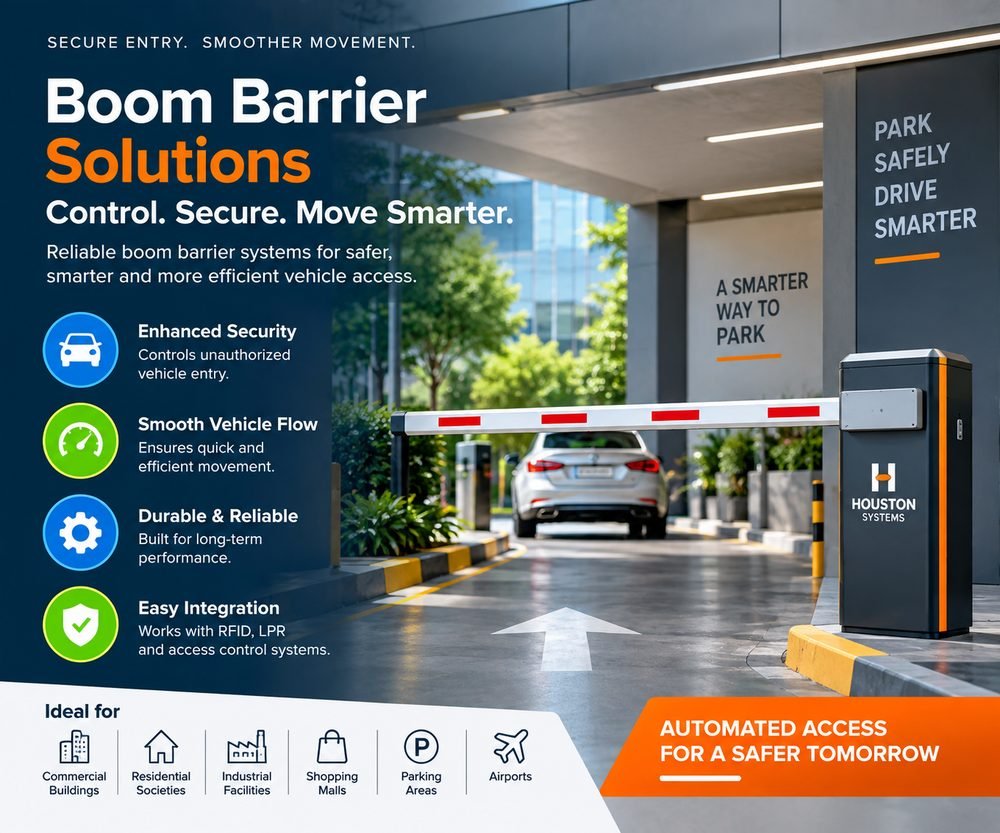
- Entry control devices (barriers, gates)
- Card readers and biometric scanners
- Controllers that manage device behavior
Controllers act as the decision bridge, receiving input from devices and communicating with backend systems to execute actions in real time.
Software (Intelligence Layer)
Software provides the logic and control framework. It:
- Stores user identities and permissions
- Defines access rules and schedules
- Logs and analyzes entry data
- Provides administrative control through dashboards
This layer ensures that access control is not just reactive—but intelligent and measurable.
The Integration Layer: Where Systems Become Functional
The real effectiveness of an access control system lies in how these layers interact.
A typical real-time workflow looks like this:
- A credential is presented (RFID, biometric, etc.)
- The reader captures the input
- The controller processes and forwards the data
- The software verifies permissions via database rules
- A response is sent back instantly
- The hardware enforces the decision
This entire loop depends on fast, reliable communication between components.
What Happens When Integration Breaks Down
In poorly integrated systems, even small inefficiencies can create major issues:
- Delays in access approval due to network latency
- Mismatched data across different entry points
- Inconsistent access decisions in distributed systems
- Increased dependency on manual overrides
In high-traffic environments, these issues quickly escalate into security gaps and operational disruptions.
Real-World Insight: Latency and Synchronization Matter
In large facilities, access control systems must operate under pressure:
- Peak entry hours
- Simultaneous authentication requests
- Multi-location synchronization
Even minor delays in communication between controllers and software can result in:
- Entry bottlenecks
- User frustration
- Reduced system trust
This is why modern systems rely on real-time synchronization protocols and efficient API communication to maintain consistency across all access points.
Centralized vs Distributed Architectures
Integration design plays a critical role in performance.
Centralized Systems
- Decisions are processed through a central server
- Easier to manage and monitor
- May introduce latency in large-scale deployments
Distributed Systems
- Controllers make localized decisions
- Faster response times
- Requires strong synchronization across nodes
In enterprise environments, hybrid models are often used to balance speed, control, and reliability.
Beyond Access Control: Expanding the Ecosystem
Modern access control systems no longer operate in isolation.
They integrate with:
- Visitor management platforms
- Workforce attendance systems
- Building management systems
This creates a connected infrastructure where access control becomes part of a broader operational ecosystem.
Many organizations are now adopting modern entry management systems that unify hardware execution with software intelligence to ensure consistent performance across all entry points.
Designing Systems That Scale Without Breaking
Scalability in access control is not just about adding more devices—it’s about maintaining system integrity as complexity increases.
A well-integrated system allows:
- Seamless expansion across multiple locations
- Real-time data synchronization
- Consistent policy enforcement
Without strong integration, scaling often leads to fragmentation rather than improvement.
Final Perspective: Integration Defines System Performance
Access control systems are often judged by the devices they use—but their real strength lies in how those devices communicate.
Hardware executes.
Software decides.
Integration ensures they operate as one system under real-world conditions.
Without integration, systems remain disconnected.
With integration, they become reliable, scalable, and intelligent.
How Hardware and Software Work Together in Access Control Systems