A floor that passes visual inspection can still fail acoustic testing. That’s the problem specifiers run into again and again. The build-up looks right on paper, the finishes are correct, and yet pre-completion sound testing comes back showing impact noise transmission well above what Building Regulations require. More often than not, the cause traces back to one thing. The floor wasn’t properly decoupled from the structure. This is precisely the gap that floating floor systems are designed to close, and understanding how they work and where acoustic floor isolation mats fit into that picture saves a lot of remedial cost further down the line.
What Is a Floating Floor System?
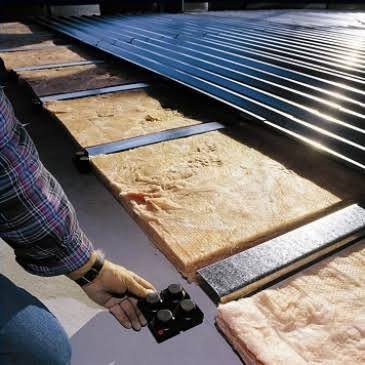
A floating floor system separates the finished floor from the structural slab using a layer of resilient material, rather than fixing it directly to the concrete. The typical build-up runs as follows. Structural slab, resilient isolation layer, then the floating deck or screed carrying the floor finish above it.
The floating layer is not attached to the slab in a rigid manner, meaning impact and vibration energy does not easily pass through from the slab to the floating layer, unlike a conventional acoustic underlay, which can help to muffle footfall at the surface but has no effect on the structural path below. The two may appear to be almost identical on a spec sheet, but in real-world usage, they address different challenges.
Why Standard Flooring Doesn’t Solve Impact Noise
Noise moves through a building in two distinct ways, and conflating them is where a lot of specifications go wrong. Airborne sound, such as voices, music, or traffic, responds reasonably well to insulation and sealed partitions. Structure-borne sound doesn’t. It’s generated by direct contact, such as footsteps, dropped objects, plant vibration, or bass. That energy enters the slab at the point of impact and can travel considerable distances through a rigid structure before re-emerging as a problem somewhere else entirely.
This is why adding mass to a ceiling below, or upgrading insulation, so often fails to resolve a footfall or vibration complaint raised after occupation. The treatment is targeting the wrong stage of the noise path. If energy is entering the structure directly, it has to be intercepted there. That principle is the entire premise behind floating floor systems, and it’s why they’re specified over surface-level fixes in noise-sensitive projects.
Left unresolved, this shows up as failed pre-completion testing under Approved Document E and tenant disputes on residential schemes, or a studio and adjoining unit that simply can’t operate at the same time. All three are considerably more expensive to fix once screed has gone down than they are to specify correctly at design stage.
How Floating Floor Systems Work
The mechanism is usually explained through a mass-spring damper model. The floating deck behaves as the mass, the resilient layer as the spring, and the system as a whole absorbs and damps vibration energy rather than transmitting it.
In practice, this depends on resilient isolation components, such as rails, mounts, or acoustic floor isolation mats, sitting between the slab and the floating layer, compressing slightly under load and flexing in response to vibration frequency. Every floating floor system has to be matched to the load it will carry, the frequency range it needs to isolate, and the deflection the isolation layer will undergo over the life of the building. Specify these incorrectly, and the system either underperforms from day one or degrades faster than the design life assumes.
Acoustic Floor Isolation Mats vs. Full Floating Floor Systems
Not every application calls for the same scale of solution, and this is where the distinction between acoustic floor isolation mats and full engineered floating floor systems matters for specification decisions.
Isolation mats and pads are the lighter-duty option, suited to moderate loads and more localised isolation requirements. Applications can include acoustic floating floors, plant rooms, machinery bases, steelwork isolation, and other situations where resilient support is required. They're straightforward to install and sit within a shallower zone, which matters on refurbishment projects where ceiling heights are already tight.
Full floating floor systems, built around engineered stud or rail components, are a different order of solution. These get specified where performance has to be met against a tested standard rather than a general improvement. Recording studios, cinemas, performance venues, and party floor separation on mixed-use schemes are typical examples, particularly where even low-frequency bass transmission has to be controlled.
Getting this wrong in either direction causes real problems. Acoustic floor isolation mats under-specified for a studio brief will not pass testing, while a fully engineered system over-specified for a low-load domestic separating floor adds cost and depth the project doesn't need. The load, the target frequency range, and the available construction depth should drive the choice, not habit or whatever was used on the previous project.
What Affects Floating Floor Performance on Site
Four factors consistently determine whether a floating floor performs as specified:
Load: Isolation components must be matched to the actual weight carried, including the floor build-up itself, not just estimated occupancy loads.
Vibration Frequency: Isolation materials perform differently across frequency ranges, so the system needs to suit the type of noise being controlled, not just its intensity.
Floor Build-up Depth: Available construction depth often constrains which system is feasible, and this needs resolving with M&E coordination early, not discovered on site.
Installation Quality: A correctly specified system still fails if isolation is bridged, whether that's a screw through the resilient layer, a rigid perimeter fixing, or skirting bonded to both floor and wall.
In practice, installation details are just as important as product selection. A floating floor is only as good as its weakest junction. Perimeter isolation strips, service penetrations, and threshold details all need the same discipline as the main build-up, or the whole point of decoupling is undermined by a single rigid bridge.
How to Choose the Right System
Before defaulting to a previous project’s specifications, it’s worth working through the actual requirements. What load does the floor need to carry in service? What frequency range is the noise problem concentrated in? How much floor depth is genuinely available without compromising the space above? And does the project need to demonstrate compliance with specific requirements, such as those set out in Approved Document E for separating floors?
It's also worth treating generic performance claims with some scepticism. A resilient product with no published load capacity, deflection data, or acoustic test results is difficult to specify with any confidence, and harder still to defend if a completed floor fails testing. Wherever possible, base the specification on tested, published performance figures for both full floating floor systems and any acoustic floor isolation mats being considered, rather than approximate manufacturer assurances.
Conclusion
Structure-borne noise and vibration persist because they don't respond to the fixes that work for airborne sound. Floating floor systems address the transmission path directly, decoupling the finished floor from the structure so impact energy has nowhere to travel. Whether that means acoustic floor isolation mats for a lighter-duty application or a fully engineered stud and rail build-up for a tested performance target depends on load, frequency, and available depth. The principle holds across every scale. Separate the floor from the structure properly, at every junction, and the noise problem doesn't have anywhere left to go.