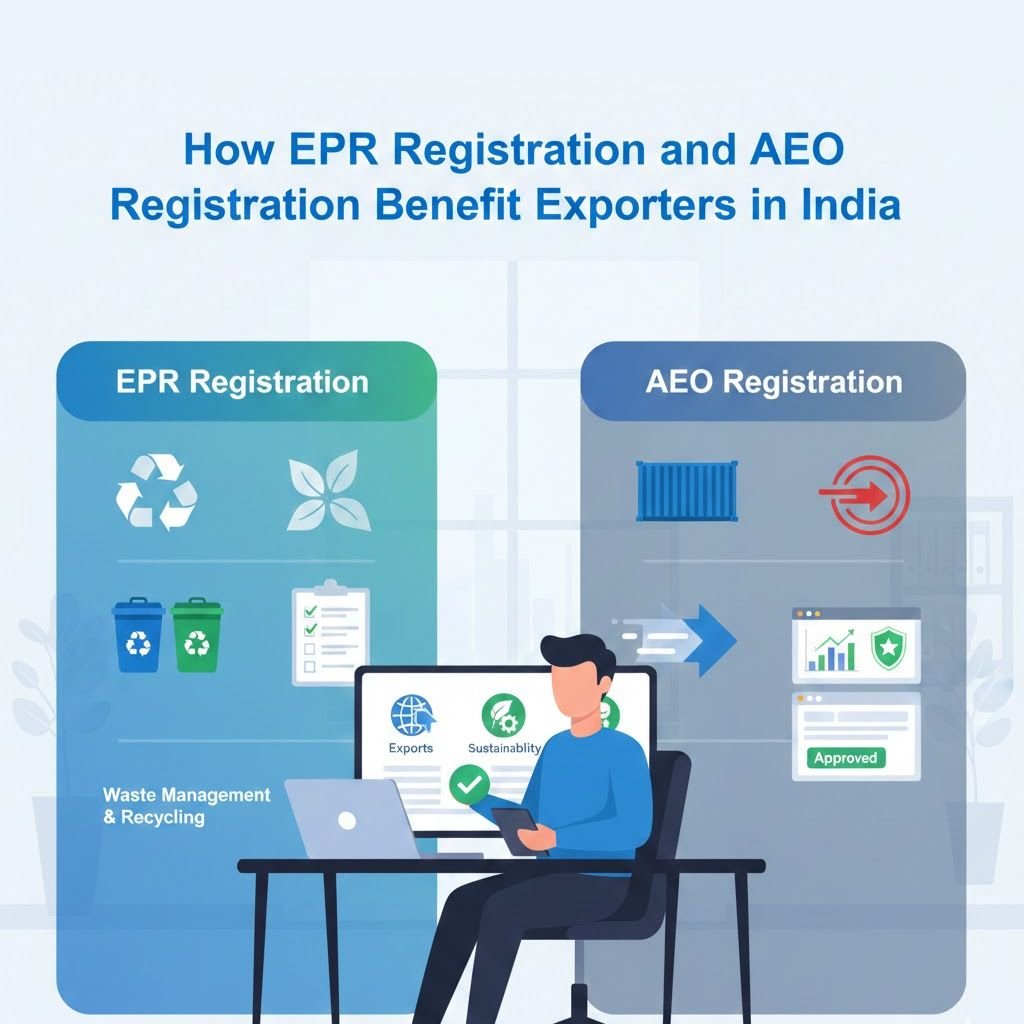
In today’s regulatory environment, businesses must stay compliant with trade and environmental laws to operate smoothly and sustainably. Two critical registrations that exporters and manufacturers in India must understand are EPR Registration (Extended Producer Responsibility) and AEO Registration (Authorized Economic Operator). Both play distinct but equally important roles in ensuring legal compliance, operational efficiency, and international credibility.
This article will guide you through what these registrations entail, their benefits, eligibility criteria, and best practices, helping you make informed decisions for your business.
Understanding EPR Registration
EPR (Extended Producer Responsibility) is a mandate under the Plastic Waste Management Rules, 2016, and similar environmental laws for other materials like e-waste and packaging. The concept ensures that producers, importers, and brand owners are responsible for the collection, recycling, and environmentally safe disposal of the products they place in the market.
Why EPR Registration Matters
• Legal compliance: EPR Registration is mandatory for businesses that manufacture or import prepackaged goods. Non-compliance can attract penalties, product recalls, or legal action.
• Environmental accountability: Registration ensures companies are actively participating in sustainable practices by managing the lifecycle of their products.
• Enhanced reputation: Demonstrating compliance with environmental standards can strengthen your brand image with consumers, partners, and international stakeholders.
Key Requirements for EPR Registration
- Submit detailed information about the business, including type of products, annual turnover, and estimated waste generated.
- Develop an EPR plan specifying how you will manage post-consumer waste, including recycling and collection targets.
- Ensure timely submission of EPR Annual Returns detailing progress in waste management and compliance with regulatory standards.
Example: A packaged snack manufacturer must register for EPR to legally sell its products. The company must then implement waste collection or recycling programs and report the results to the authorities annually.
What is AEO Registration?
AEO (Authorized Economic Operator) Registration is a program initiated by the Directorate General of Foreign Trade (DGFT) under the Ministry of Commerce. It is designed to recognize businesses that demonstrate high standards of compliance with customs, security, and international trade regulations.
Benefits of AEO Registration
• Faster customs clearance: Businesses with AEO status enjoy priority processing at ports and airports, reducing delays in imports and exports.
• Reduced inspection rates: AEO-certified companies are considered low-risk and therefore face fewer physical or document inspections.
• Enhanced credibility: Being AEO-certified strengthens a company’s reputation among international partners and simplifies trade agreements.
Eligibility Criteria
- Business must have a proven record of compliance with customs regulations.
- Demonstrated financial solvency and robust internal control systems.
- Operational history of at least three years with consistent trade volumes.
Example: An electronics exporter can apply for AEO Registration. Once approved, shipments can pass through customs faster, reducing lead times and improving supply chain efficiency.
How EPR and AEO Registration Complement Each Other
While EPR Registration focuses on environmental responsibility and domestic regulatory compliance, AEO Registration emphasizes international trade efficiency and risk management. Businesses dealing with export-import operations can benefit by having both:
- Regulatory confidence: Compliance with domestic environmental laws and international trade regulations ensures seamless operations.
- Operational efficiency: AEO registration reduces customs delays, while EPR compliance mitigates environmental penalties.
- Brand image: Demonstrates a commitment to sustainability and trade integrity, which can attract global partners.
Steps to Complete EPR and AEO Registration
For EPR Registration:
- Identify the category of products you manufacture or import (plastic, e-waste, or other prepackaged goods).
- Prepare a detailed EPR plan including collection, recycling, and disposal methods.
- Submit the application online via the Central Pollution Control Board (CPCB) portal.
- Pay applicable fees and obtain the registration certificate.
- Maintain records and submit EPR Annual Returns to demonstrate compliance.
For AEO Registration:
- Ensure your business meets eligibility criteria: compliance history, financial stability, and operational maturity.
- Submit an application through the DGFT portal, including required documents and self-assessment.
- Facilitate an on-site audit by customs authorities if requested.
- Receive AEO certification and enjoy benefits such as priority clearance, reduced inspections, and improved global trade standing.
Best Practices for Maintaining Compliance
• Regular monitoring: Track both environmental and trade compliance metrics regularly to avoid violations.
• Internal audits: Conduct periodic internal checks on EPR implementation and customs processes to ensure adherence.
• Documentation: Maintain detailed records of EPR actions, export-import transactions, and customs clearances to support audits.
• Professional guidance: Engage trade compliance consultants or environmental experts to simplify registration and reporting.
• Training employees: Educate staff on compliance requirements and processes to ensure smooth operations.
Conclusion
Both EPR Registration and AEO Registration are not just legal obligations—they are strategic tools that enhance operational efficiency, sustainability, and credibility. Businesses that proactively comply with these frameworks can reduce risks, improve supply chain performance, and gain competitive advantages in international markets.
If your company is involved in manufacturing or exports, take action today: complete your EPR Registration to meet environmental responsibilities and secure AEO Registration to streamline your trade operations. Compliance now means smoother operations, reduced risks, and a stronger market presence tomorrow.
Tags : EPR Registration AEO Registration