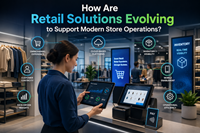
Retail store operations are on the verge of radical transformation. This is because store chains have expanded geographically, with rapid execution across all retail sectors.
Such shifts have led to a new retail tech environment. Modern solutions need to positively impact stores. They should direct store operations, ensure uniformity, and offer real-time insight into store activity.
To understand what modern retail execution really needs, we should look directly at how store operations have changed. Retail solutions need to evolve in the coming year to truly support modern store operations.
What Changed in Store Operations?
The most significant change in store operations is expectations. A few years ago, stores primarily functioned as transactional endpoints, places where inventory was received, displayed, and sold. As digital commerce accelerated, stores briefly became “digital extensions,” supporting online visibility and basic fulfilment.
Today’s store operates as an omnichannel execution hub. It supports selling, fulfilment, returns, customisation, exchanges, and customer service, often simultaneously. Customers may browse in-store while comparing prices online, check availability across nearby locations, or choose delivery, pickup, or modification options in the same visit.
Fulfilment is one of the major functions of physical retail, with 52% of consumers saying that they want products to be delivered to a local store where they can repair or customise products.
Modern retail solutions are being tested on their ability to support this multi-role, multi-channel store reality, not just traditional sales operations.
Why Traditional Retail Solutions Are Under Pressure?
Traditional solutions were designed for a different method of working. They focus on stability, periodic reporting, and central control. But they struggle to address the dynamic realities of modern store operations.
One key challenge is fragmentation. Retail technology has grown organically over time, resulting in separate tools for inventory, audits, workforce management, analytics, and logistics. On average, retail workers need to juggle 16 different tools and spend only 28% of their time in customer service.
As a result, traditional solutions are constantly under pressure, not because they are obsolete, but they were never designed to manage continuous execution across a more distributed network of stores.
How Are Retail Solutions Evolving?
Stores will no longer be purely physical or digital—they are phygital decision environments.
Customers routinely check alternative products, online prices, reviews, and availability while standing inside the store. This behaviour fundamentally changes store dynamics. The in-store experience must now complement and correct digital information in real time.
The first major shift is from monitoring to guiding execution. Instead of simply tracking what happened, modern solutions help teams understand what needs to happen next. They guide store associates through tasks, flag deviations early, and bring clarity to priorities during the day, and do not wait till the end of the week.
The second transformation is from siloed tools to connected workflows. Retail solutions are expected to work together. They will link inventory movements, store tasks, audits, and approvals into smooth operational flows. This setup reduces manual handoffs and makes sure that issues found in one area trigger actions in another.
There is also a growing emphasis on context and roles. Modern retail tech recognises that store managers, regional leaders, and brand teams require different perspectives and levels of detail. Retail analytics solutions are becoming more focused on action. They provide insights that require an immediate response, rather than just describing situations.
Adopting platforms like Proceso, which are designed to sit closer to day-to-day store execution rather than acting as reporting systems. The focus is less on technology novelty and more on enabling stores to execute with clarity, speed, and accountability at scale.
Where Modern Store Support Really Stands Today?
Retailers need to focus more on the solutions that support store operations proactively and practically.
Modern Store Support needs to be characterised with real-time visibility. So, leaders can see task completion, compliance status, and operational health across locations without waiting for manual updates.
Another focus is on consistency. Retail solutions need to enforce brand standards and operational processes while allowing flexibility for local realities. The balance is critical for brand managers who want uniform execution without stifling store-level responsiveness.
Another defining feature is clear accountability. Contemporary retailing solutions help ensure that ownership is clearly defined, indicating who needs to act, in what manner, and against which information. This increases the clarity of the floor and accelerates problem-solving.
Retail analytics tools today have evolved from basic reporting into an activity supportive of making decisions. These tools are involved in steps toward replenishment and better execution, and they facilitate faster decisions in retail.
Conclusion
The development of retail technology mirrors the change in how the management of the store operates. As complexity grows on the shop floor, the industry is looking for technologies that can support execution at scale, not just isolated tasks.
Automation platforms reflect a growing emphasis on execution-first retail systems, where workflows, visibility, and accountability are built around how stores operate, rather than how data is retrospectively reviewed.
Retailers that succeed will be those that recognise this shift early, investing in new-age solutions that evolve alongside their operations. The future of store operations belongs to organisations that focus not just on visibility, but on how effectively work gets done at scale.