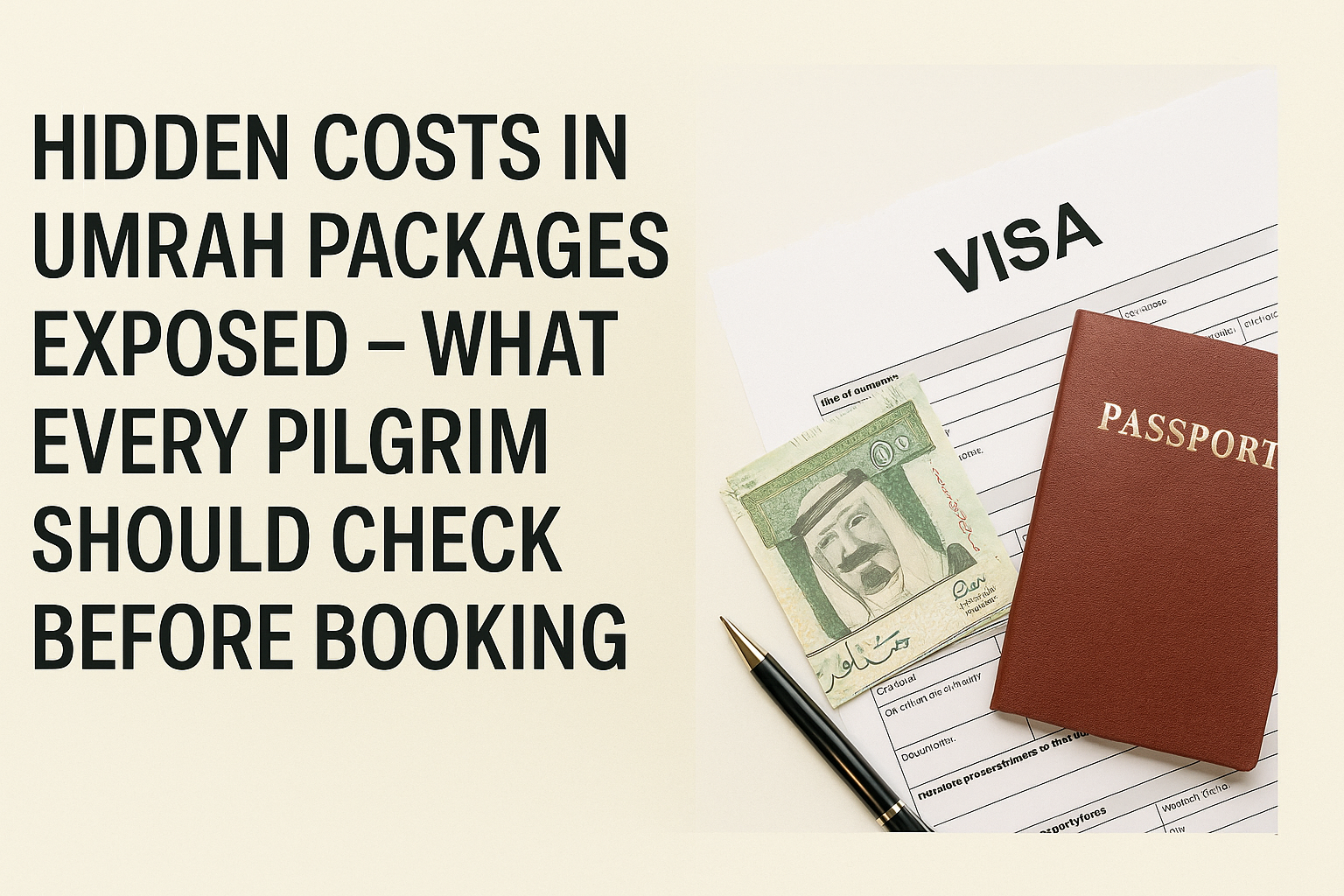
Hidden Costs in Umrah Packages Exposed – What Every Pilgrim Should Check Before Booking
By Muhammad Umer Zahid 12-11-2025 109
Performing Umrah is one of the most spiritual journeys for Muslims across the world. Every year, thousands of pilgrims plan their sacred visit to Makkah and Madinah through organized Umrah packages that include travel, accommodation, visa processing, and transportation. But while most packages appear affordable at first glance, many pilgrims later realize they’ve paid far more than expected due to hidden costs that were never clearly mentioned at the time of booking. Understanding these extra expenses before confirming your package can save both your money and peace of mind.
1. The Real Price vs. Advertised Price
Many travel companies promote Umrah packages using eye-catching prices that seem lower than competitors. However, these prices often exclude necessary costs such as visa fees, airline taxes, transportation within Saudi Arabia, or even hotel service charges. Some agencies highlight the “starting from” price that only applies to the most basic and limited option. When you finalize your booking, the actual price can increase by 20–40% depending on your choices. Always confirm the final total after including taxes, surcharges, and add-ons before making any payment especially if you’re comparing the best Umrah packages available online.
2. Flight Timing and Fare Variations
Another hidden factor that affects your Umrah cost is airfare. Many packages show fixed prices assuming the cheapest available flights. But airline fares fluctuate daily based on demand, season, and route. If your travel dates don’t match the agency’s quoted schedule, you may need to pay extra. Similarly, indirect flights with long layovers are cheaper, while direct flights from your city may cost significantly more. Before confirming the package, ask whether airfare is included and if you can choose your preferred airline or schedule.
3. Hotel Location and Distance from Haram
The location of your accommodation plays a huge role in overall comfort and cost. Packages that claim to include “5-star hotels” may actually book properties several hundred meters away from the Haram. This means you’ll either have to walk long distances or pay additional charges for shuttle services. The closer a hotel is to Masjid al-Haram or Masjid al-Nabawi, the higher its real market value. When comparing packages, verify the exact hotel name, distance in meters, and available transportation options. It’s worth paying slightly more upfront than facing hidden transport costs every day.
4. Transportation Inside Saudi Arabia
Most pilgrims assume their Umrah package includes transport between Makkah, Madinah, Jeddah Airport, and Ziyarat locations. However, some low-cost packages only provide airport transfers, while inter-city travel or local sightseeing is excluded. If you plan to visit historical places or travel between cities, clarify whether the bus or private car is included and if the cost covers both ways. Hidden transportation fees can easily add hundreds of riyals to your total expense.
5. Meal Plans and Food Costs
A surprising hidden cost many first-time travelers overlook is food. Many Umrah packages advertise “breakfast included” but not lunch or dinner. Eating out daily in Makkah or Madinah can quickly become expensive, especially for families. Even small restaurants near the Haram charge premium prices. If your package offers full-board or half-board options, ask about the type of meals, serving location, and additional charges for kids. Having clarity saves you from unplanned daily spending.
6. Group Size and Sharing Rooms
The cost of an Umrah package depends heavily on how many people share one room. Advertised prices usually apply to quad occupancy (4 people in a room). If you’re traveling as a couple or solo pilgrim, you’ll have to pay extra for double or single occupancy. This difference can be significant, so always check whether the quoted price is per person based on sharing or private accommodation. Knowing this in advance prevents last-minute budget shocks.
7. Visa Processing and Insurance Fees
Some agencies mention “visa included” but later add service fees for processing, insurance, or document handling. Saudi regulations now require pilgrims to have mandatory travel insurance, which adds an additional cost if not already part of the package. Always ask for a breakdown of visa and insurance costs separately, and ensure your agency uses the official Saudi e-visa system to avoid hidden agent commissions.
8. Currency Exchange and Payment Method
A less obvious hidden cost lies in exchange rates. If you’re paying in your local currency while the agency pays suppliers in Saudi Riyals, a small difference in conversion rates can add up. Some agencies also charge a “service fee” for card or online payments. Before transferring funds, confirm the exact payable amount in your currency and avoid unnecessary transfer charges.
9. Ziyarat (Holy Site Visits)
Many pilgrims expect visits to sacred sites in Makkah and Madinah to be part of every package. In reality, most low-budget packages exclude Ziyarat tours or limit them to one short visit. If you wish to explore all the major sites such as Jabal al-Noor, Masjid al-Qiblatayn, and Uhud Mountain, ask whether transportation and guide fees are included. Otherwise, you may have to hire private vehicles locally at higher rates.
10. Seasonal Price Differences
Umrah prices vary significantly depending on the Islamic calendar. During Ramadan, Rabi-ul-Awwal, or school holidays, hotel and flight costs surge due to high demand. Some agencies show general prices but don’t specify that peak season surcharges apply. Always confirm whether your quoted rate covers the actual month of travel. Travelers who book early or plan off-season often get better deals from verified agencies offering the best Umrah packages for families and individuals.
11. Extra Services After Arrival
Once you arrive in Saudi Arabia, you may encounter unexpected charges such as porter services, SIM cards, or additional luggage fees. While these may seem small individually, they accumulate quickly. Experienced travelers recommend keeping a small budget for miscellaneous expenses, especially if you’re traveling with family or elders.
How to Avoid These Hidden Costs
- Always ask for a complete written cost breakdown (visa, flights, hotels, meals, transport).
- Choose trusted, licensed travel agencies that specialize in Umrah packages.
- Read customer reviews and verify hotel ratings on Google Maps before paying.
- Avoid paying full advance without a detailed invoice.
- Compare at least three different package providers for transparency.
- Check refund or rescheduling policies in case of emergency delays.
FAQs
Q1: How can I make sure my Umrah package price is final?
Always demand a written quote including all taxes, flights, visa fees, and transportation. Ask for “no hidden charges” confirmation via email before paying.
Q2: Is it cheaper to book Umrah yourself or through an agent?
Booking through an agent often provides better coordination and group rates. However, if you compare prices carefully, self-booking can sometimes reduce costs provided you understand the visa and hotel process well.
Q3: Why do hotel distances matter so much in Umrah packages?
Because walking long distances daily in large crowds can be exhausting, especially for elders. Hotels near the Haram cost more but save time, energy, and local transport money.
Q4: What’s the best time to find cheaper Umrah packages?
Off-season months like Muharram, Safar, or after Ramadan usually offer lower prices with similar services.
Q5: Can I customize an Umrah package to fit my budget?
Yes, many agencies allow customized plans. You can select hotel type, flight class, or meal preferences to adjust total cost while maintaining comfort.