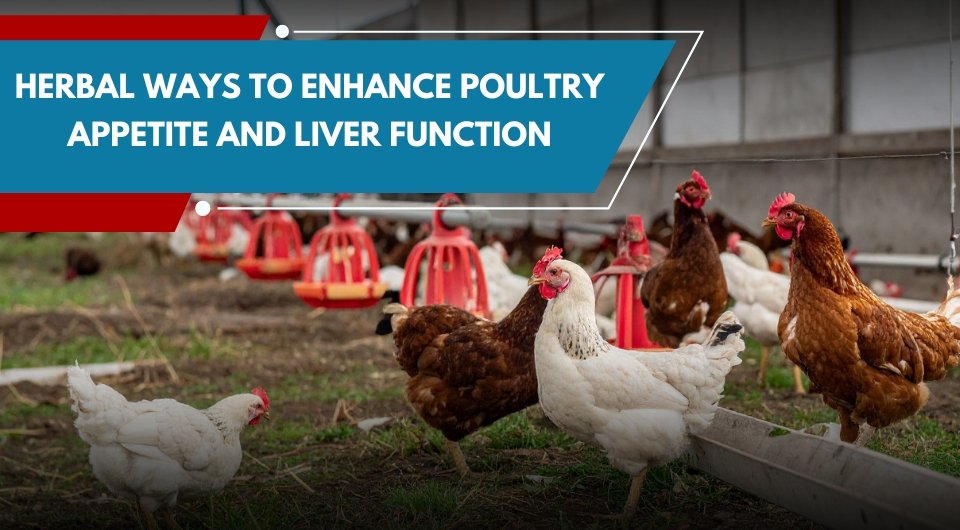
In the case of the poultry farmers and poultry business owners, good liver health and feed consumption of the birds are the basics of productivity. Appetite drives growth, egg production, and feed efficiency. The liver, in the meantime, is a key gland in metabolism, purification, immunity and processing of nutrients. When the liver performance becomes weak, the birds might lose their appetite, the feed is not used well and the performance becomes low.
With the growing issue of chemical residues, health, and sustainability increases, natural (herbal) products to help maintain appetite and liver activity become more appealing. This paper explores the ability of herbs to increase poultry appetite in a natural way together with good management as well as liver functioning. We also present the fact that Varahvet Liver Tonic for poultry, having a totally herbal and chemical free formula that is supported by the entire R&D, is manufactured in the first PNG ecological plant in UP (with 1-L+ bottle capacity per day), which can become a powerful weapon in your poultry health arsenal.
1. Why Liver activity and Appetite are important in Poultry.
1.1 Appetite: The Place of Beginning of Productiveness.
The amount of feed to feed poultry is determined by appetite. Growth is retarded and fewer eggs or eggs of lesser quality are laid by the layers without adequate feed consumption.
It is frequently the cause of a bad appetite which then leads to disease, malnutrition, stress, or even liver damage. Therefore, appetite is a measure and a motor of the flock's health.
The liver plays a role in the Poultry health.
The poultry liver has numerous important functions:
- Store fats and lipids, synthesize glycogen; process proteins and amino acids.
- Fat digestion through the production of bile.
- Carbohydrate, lipid, and protein metabolism Metabolic regulation.
- Immune functions, antioxidant functions, to aid in defense against oxidative stress.
In case of the liver being stressed or damaged, a number of issues may occur: the decreased appetite, the decreased feed conversion, the fatty liver (particularly in layers), the higher mortality, the lower egg production or quality, etc.
2. Habitual Causes of Stress and Dietary Causes of Loss of Appetite in Poultry.
In order to feed poultry using herbal tonics or feed additives, it is a good thing to know what the reason behind appetite suppression or liver heavy work is. Key stressors include:
Mycotoxins in feed (e.g. aflatoxin, ochratoxin) - These are harmful to the liver cells, slow down appetite.
Low quality of feed or poor balance of diets: Deficiency of some amino acids, vitamins (in particular, B-vitamins), trace minerals.
Fatty liver syndrome / Fatty Liver Hemorrhagic Syndrome (FLHS) in layers: Is a condition that is the result of too much fat in the liver.
Heat / Environmental stress - Elevated ambient temperatures increase metabolic activity and oxidative stress.
Disease or immune challenge - Experiencing the burden of infections; stressors such as vaccination, density of high density.
Exposure to toxins / chemical residues - Pesticides, polluted water, etc.
Identifying and managing these stressors is equivalent to using supplementing herbs.
3. Herbs and Natural Compounds That Increase Appetite and Promote Liver Performance.
There are a few plant-based medications and herbs that have been shown for folk efficacy in stimulating the appetite and protecting the liver. The following are the ones with evidence, modes of action, and recommendations.
Milk Thistle (Silybum marianum) removes phosphorus and iron excessively; thus, dosage must be adjusted based on the patient's condition (SAE, 2019).
Includes silymarin that is a strong antioxidant and hepatoprotector. Helps regenerate liver cells, prevent damage of mycotoxins and oxidative stress.
Poultry studies indicate that milk thistle seed or extract in the diet aids in reducing liver damage in poultry fed contaminated diets. In case of a restoration of health, appetite is inclined to get better.
3.2 Herbal Blends Garlic, Ginger, Turmeric, Green Tea.
Mixed herbs which include garlic, ginger, green tea and turmeric have proven to protect liver enzymes in poultry, reduce high serology markers, and enhance antioxidant position.
PMC
Garlic is also said to possess appetite stimulant, antimicrobial and immune stimulating effects.
3.3 Rosemary, Boldos and Other Hepatic Herbs.
Herbs such as rosemary have been observed to contain a detoxifying property, which assists the liver to process toxins and oxidative stress.
Milk thistle, rosemary, boldo etc. are natural hepatoprotective agents used in the discussion of the topic of plants to the rescue of the liver in poultry production.
3.4 Phytogenics and Herbaceous Mixtures.
Phytogenic feed additives (PFAs) are herbs, essential oils, bitter, saponins, flavonoids and other plant-based compounds that are used to induce appetite, better gut health and overall performance.
Herbaceous mixtures have also been found to reduce lipid deposition in the liver, enhance antioxidant activity and increase the feed consumption.
3.5 Other Practical / Traditional Sources of Useful Herbs.
Parsley, basil, mint, dill, oregano etc. may be useful in taste/smell, slight digestion promotion, and appetite.
Nettle, comfrey, purslane etc. provide micronutrients (iron, vitamins) and aid overall wellbeing of the body that indirectly promotes appetite and liver activity.
4. How Herbs Work: Modes of Action
Understanding how herbs and herbal formulations act helps in use, dosage, design.
5. Government of Management to be added to Herbal Support.
Nothing will assist, however, but herbal tonics and herbs and with proper management the greatest results will be secured:
5.1 Feed Quality Assurance
Consume high-quality and clean food, dry and clean food; test mycotoxins.
Use no rancid fats, bad grains.
5.2 Balanced Nutrition
The diet must be sufficient in terms of protein and amino acids (methionine, cysteine, and especially), B-vitamins, choline, trace minerals (zinc, copper, selenium, etc.). These contribute to the metabolic process of fats and liver toxification.
Maintain the energy expenditure and fats at moderate levels (in particular the layers) to avoid the danger of fatty liver.
5.3 Stress Reduction
Shading, air conditioning during hot weather.
Minimize dealing with stress, congestion, and the sudden environment.
5.4 Environmental and Clean Drinking Water.
Fresh water is good, clean and it helps in metabolism; eliminates toxin consumption.
Hygienic rubbish, constant washing so as to prevent contagion.
5.5 Early Detection and Surveillance.
Monitor the watery drops that might be a symptom of a problem; feed supplement intake per day.
Condition of feathers, condition of note drop, behavior.
Measure liver enzymes where possible, or use blood tests in business.
6. Varahvet Herbal Approach Liver Tonic for poultry: To Approach the Appetite and Liver Health.
In this regard, it is here that Varahvet, with its product Varahvet Liver Tonic for poultry, enters and how it fits the above principles.
6.1 What is Special about Varahvet Liver Tonic for poultry.
All-natural, totally herbal, no chemicals formula: Pure ingredients are not harmful to the liver due to no chemicals and artificial additives.
Backed by extensive R&D formulation: The tonic is based on research that uses herbs and compounds; these help in the liver detoxification, antioxidants and assist in metabolism.
Made in an environmentally-friendly and sound manner: Produced at the first PNG green plant of UP; the 1-L+ bottle is filled every day, which will ensure that the product will be on-site, will be produced regularly, and it will be of quality.
These properties make Varahvet Liver Tonic for poultry a fit in the modern poultry farms which demand a good performance and safety.
6.2 Benefits Farmers Can Expect
The farmers can see the following results after having added Varahvet Liver Tonic for poultry to their flocks:
- Better intake of feed especially after exposure to stress (heat, vaccination, change of feed).
- Improved feed ratio (higher level of weight gain or eggs to the unit feed).
- Reduced incidents of hepatic complications (fatty liver, loss of production).
- Greater consistency in even environmental or feed problems.
- Increased mortality, lower mortality, better health, of flock.
6.3 Suggested Use Protocols
To maximize benefit:
Prevention: Tonic is to be administered in case of the stress that is predicted to take place - heat waves, change of feeds, laying onset, after vaccination.
Corrective Use: When there is reduced food consumption, coldness, impaired pecking, reduced egg laying.
Interaction with Herbs / Herbal Diets: Interactions with herbal feeding (parsley, basil, garlic etc.) and Liver Tonic for poultry result in synergy.
Frequent Observation: Feed consumption, egg production, weight gain, mood / behavior; compare pre introduction of Liver Tonic for poultry and post introduction of Liver Tonic.
7. Case Study and Research Knowledge.
Some of the studies justify the value of herbal tonics or components to the health and digestion of chicken liver.
Also in a study of herbal blend (garlic, ginger, green tea, turmeric) in laying hens it was found that the herbal blend had protection effects against liver enzyme and improved health indicators.
Milk thistle is once again and again cited to prevent mycotoxin in poultry liver as well as to improve blood health which has often been interpreted to elevated appetite and growth.
These are what the chicken farmers are used to observing, i.e., when the health of the bird is renewed, the appetite is revived, the food is consumed more economically, and the work of the bird is enhanced.
9. Practical Advice: Areas of Use, Dosage, Safety.
These are the tips of the practical advice on how to use herbs, safety, and the necessity of using them in diets.
Inclusion of Herbs: A considerable amount of herbs can be added to food in a dry / powdered form or could be added to water (when soluble). Garlic (in small amounts), basil, oregano, rosemary, parsley.
Single herbs do not work as well as a combination of the herbs because they have synergy.
Dosage: This is dependent on herb and form; the recommendations of the products have been proven, however, as always, take herb recommendations, which have been proven, or take dosage prescription by the veterinarian. Overuse of some of the herbs could result in poisoning or side effects.
Check on purity: Do not work with impure sources of herbs. Dry properly; avoid mold.
Conclusion
Of course, it is not a luxury to increase the appetite of poultry and support the working of the liver and is a natural necessity of profitable, productive and sustainable poultry business. Birds are better fed and their liver is firm hence food is utilized better, produce eggs in normal quantities and the rate of death is lower and farmers earn more.
Balanced diets and stress management can be a significant difference compared to herbs like milk thistle, garlic, turmeric, rosemary, and phytogenic mixtures, and good management. Such products as Varahvet Liver Tonic for poultry manufactured in the first environmentally friendly plant (high capacity) in UP that has a properly developed formulation which is herbal and has no chemicals or any other chemicals and is an effective, safe and environmentally friendly solution can be used to help the poultry farmers to improve the appetite and liver support in chickens.
Tags : Liver Tonic for poultry