From Low-Carbon Materials to Efficient Buildings: Construction Is Entering a New Design Era
By Adam Williamson 15-08-2026 155
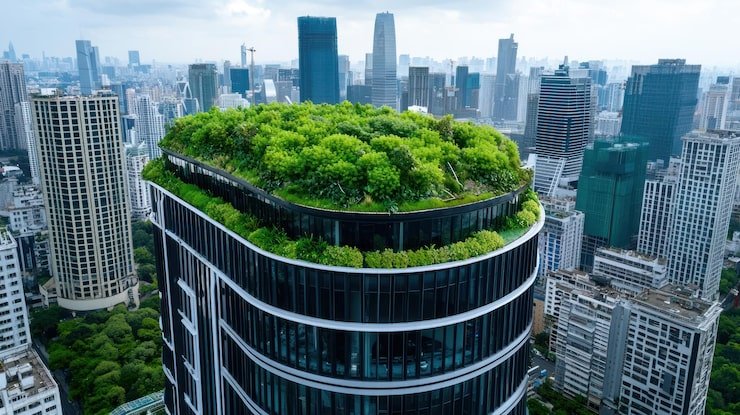
The building sector is undergoing a fundamental shift as governments, developers, architects, engineers, and material producers pay greater attention to the carbon generated across a building’s entire lifecycle. Energy-efficient operation remains important, but attention is increasingly extending to emissions associated with cement, steel, insulation, construction, renovation, and eventual demolition. This whole-life approach is changing how buildings are designed, specified, constructed, and managed.
According to a Vyansa Intelligence report, the low-carbon building market was valued at USD 587 billion in 2025 and is projected to reach USD 1.22 trillion by 2032, representing a 11.02% CAGR during 2026–2032.
Buildings Have Become Central to Global Decarbonization
Reducing emissions from buildings has become an important component of international climate strategies because the sector combines substantial energy consumption with significant material requirements.
The UN Environment Programme’s 2025–2026 Global Status Report for Buildings and Construction states that buildings and construction account for around 37% of global CO₂ emissions and nearly half of global material extraction. The report also notes that around half of the buildings expected to exist in 2050 have yet to be built or renovated.
For a low-carbon building market analysis, this creates a significant opportunity to address emissions before they become embedded in future building stock.
Whole-Life Carbon Is Changing Building Design
Low-carbon construction increasingly considers two interconnected sources of emissions: operational and embodied carbon.
Operational emissions come from energy used for heating, cooling, lighting, and building services. Embodied carbon is associated with materials and construction processes, including manufacturing, transportation, installation, maintenance, and end-of-life activities.
The World Green Building Council promotes a whole-life carbon approach that addresses both operational and embodied emissions rather than concentrating exclusively on building energy consumption.
These detailed industry insights explain why carbon considerations are moving into earlier stages of architectural and engineering decisions.
Cement and Steel Are Under Greater Scrutiny
Concrete and steel are fundamental to modern construction, but their production is emissions-intensive. UNEP reports that materials such as cement and steel are responsible for approximately 18% of building-related CO₂ emissions.
Reducing material-related emissions can involve optimized structural design, lower-carbon cement formulations, recycled steel, material reuse, alternative construction materials, and more efficient manufacturing.
The objective is not simply to substitute one material for another. Designers increasingly need to consider performance, durability, availability, cost, structural requirements, and lifecycle emissions together.
Energy-Efficient Buildings Remain Essential
Reducing embodied carbon does not diminish the importance of operational efficiency. Buildings continue consuming energy throughout decades of use, making heating, cooling, ventilation, lighting, and appliances important components of lifecycle performance.
UNEP reports that the buildings and construction sector consumes approximately 32% of global energy.
For a low-carbon building industry report, this reinforces the importance of insulation, efficient glazing, passive design, efficient HVAC equipment, heat pumps, smart controls, and renewable electricity.
Smart Technology Can Reduce Operational Consumption
Digital building-management technologies can improve visibility into how energy is actually being consumed.
Sensors and intelligent controls can monitor temperature, occupancy, ventilation, lighting, and equipment performance. Building-management software can then adjust systems according to real operating conditions rather than fixed assumptions.
UNEP identifies demand-response systems and energy-management software among technologies helping optimize energy consumption and reduce peak demand.
This makes digitalization an increasingly important component of low-carbon building strategies.
Building Codes Are Becoming More Influential
Regulation can accelerate the transition by establishing minimum performance requirements for new construction and renovation.
Building energy codes can influence insulation, glazing, heating and cooling efficiency, renewable-energy integration, and other design decisions. Some jurisdictions are also moving beyond operational energy toward whole-life carbon measurement.
The latest low-carbon building industry analysis therefore needs to consider regulatory development alongside technology adoption because building codes can influence thousands of individual projects simultaneously.
Embodied Carbon Measurement Is Becoming More Structured
One important development is the increasing use of lifecycle carbon assessment.
WorldGBC describes whole-life carbon assessment as a method covering both operational and embodied emissions throughout a building’s lifecycle. Its Net Zero Carbon Buildings Commitment has also introduced mandatory embodied-carbon reporting for applicable completed projects from signatories.
Better measurement allows developers to compare structural systems, construction materials, and design alternatives before major procurement decisions are finalized.
Renovation Is as Important as New Construction
Low-carbon buildings are not limited to newly constructed properties. Existing buildings represent an enormous installed base that will remain occupied for decades.
Energy renovations can include insulation improvements, efficient windows, heating and cooling upgrades, heat pumps, building controls, and renewable-energy systems. Structural renovation can also extend asset life and potentially avoid emissions associated with demolition and complete reconstruction.
This creates opportunities across engineering services, construction materials, energy equipment, digital technologies, and building retrofits.
Green Building Certification Is Expanding
Certification systems provide another mechanism for assessing building performance and communicating sustainability characteristics.
The latest UNEP assessment reports that green building certifications have nearly tripled over the past decade.
Certification can encourage developers to consider energy, water, materials, indoor environmental quality, waste, and other sustainability factors within a more structured framework.
For low-carbon building market research, increasing certification activity illustrates how environmental performance is becoming more visible within property development and investment decisions.
Circular Construction Can Reduce Material Requirements
A lower-carbon built environment also requires closer attention to material efficiency.
Designing buildings for durability, adaptability, repair, reuse, and eventual disassembly can reduce demand for newly manufactured materials. Reusing structural components and incorporating recycled inputs can further lower resource requirements where technically appropriate.
This approach connects carbon reduction with the broader circular economy, where materials remain productive for longer rather than becoming waste after a single building lifecycle.
Low-Carbon Construction Is Becoming a Whole-System Challenge
The transition toward lower-carbon buildings cannot be achieved through one material or technology. It requires coordinated decisions covering architecture, structural engineering, material selection, energy systems, construction practices, digital controls, renewable power, renovation, and end-of-life planning.
The strongest approach is increasingly based on whole-life performance: reducing operational energy while simultaneously addressing the carbon embedded in materials and construction.
As carbon measurement improves and building policies become more ambitious, developers and designers will have greater incentives to consider emissions from the earliest design decisions through decades of operation. Low-carbon construction is consequently becoming less about isolated green features and more about redesigning how buildings are conceived, constructed, operated, renovated, and eventually reused.