Some artists become famous because of museums. Others become famous because their work appears everywhere—from city walls and designer stores to galleries, fashion campaigns, and the homes of collectors around the world. KAWS is one of the rare artists who has successfully done all of this.
Born Brian Donnelly, KAWS started his creative journey with graffiti and street art. Over the years, he transformed his simple cartoon-inspired drawings into a powerful visual language recognized across the globe. His famous characters, including COMPANION and CHUM, have become symbols of contemporary art, street culture, and modern collecting.
But how did an artist who began by drawing on walls become one of the biggest names in contemporary art? The answer is a fascinating story of creativity, experimentation, and knowing how to connect with popular culture.
The Early Life of Brian Donnelly
KAWS was born in Jersey City, New Jersey, in 1974. From a young age, he was interested in drawing and creating visual ideas. Like many young artists, he explored different styles before developing the identity that would later make him famous.
He eventually studied illustration at the School of Visual Arts in New York City, where he earned a Bachelor of Fine Arts degree. His education gave him strong technical skills, but the streets of New York gave him something equally important: a connection to urban culture.
After graduating, Donnelly worked in animation. This experience became important because it exposed him to the world of cartoons, characters, and commercial imagery. Instead of seeing popular characters simply as entertainment, he began thinking about how familiar images could be changed and given new meanings.
That idea would become a major part of KAWS's artistic identity.
From Graffiti to the Name KAWS
Before KAWS became a famous gallery artist, he was deeply involved in graffiti and street art.
During the 1990s, he began using the name KAWS and creating work around New York City. His art stood out because he did more than simply write his name on walls. He interacted with existing advertisements and public images, often adding his own characters or changing familiar figures.
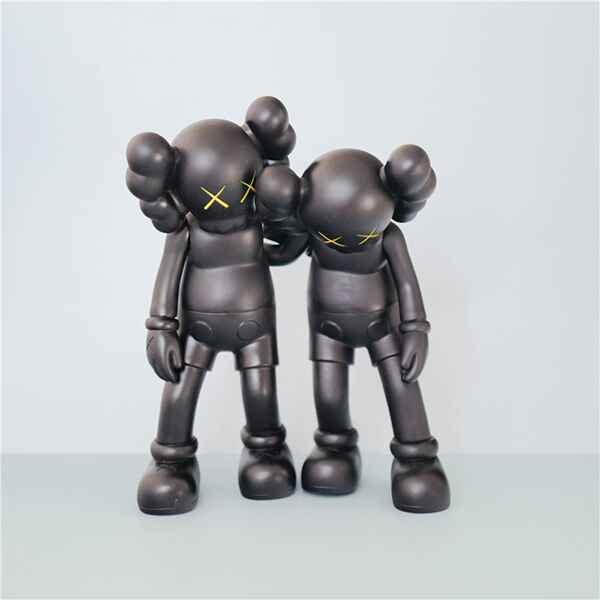
One of his most recognizable visual ideas was the use of “XX” marks over the eyes. This simple symbol became closely connected with KAWS's artwork.
His street art was playful, mysterious, and sometimes humorous. It also challenged the way people viewed advertising and popular imagery. Instead of separating fine art from everyday culture, KAWS began bringing the two worlds together.
The Birth of COMPANION
One of the biggest turning points in KAWS's career was the creation of COMPANION.
The character has a cartoon-like appearance, large ears, gloved hands, and the artist's famous crossed-out eyes. At first glance, COMPANION looks friendly and playful. But there is often something more emotional hiding beneath its simple design.
Sometimes COMPANION appears lonely, thoughtful, sad, or even exhausted. This mixture of cute design and deeper emotion helped the character connect with people.
COMPANION eventually moved beyond walls and drawings. KAWS began producing sculptures, paintings, and collectible figures featuring the character.
This was the beginning of something much bigger.
KAWS and the Rise of Collectible Art
KAWS understood something that many traditional artists overlooked: people wanted to own and interact with art, not just look at it inside a museum.
He began creating limited-edition figures and collectibles. These objects turned his characters into physical pieces that fans could collect.
The popularity of KAWS collectibles helped create a bridge between fine art, streetwear, toys, and design. A KAWS figure could sit on a collector's shelf while also being connected to the larger world of contemporary art.
This approach changed how many younger audiences viewed art collecting. For them, contemporary art was no longer something distant or intimidating. It could be colorful, playful, fashionable, and accessible.
KAWS Enters the World of Fashion
KAWS's influence expanded rapidly through collaborations with major brands and designers.
His recognizable characters appeared on clothing, accessories, shoes, toys, and other products. Collaborations helped introduce his artwork to millions of people who may never have visited a contemporary art gallery.
One of the most important relationships in his career was with MEDICOM TOY, whose BE@RBRICK figures helped establish KAWS as a major name in collectible culture.
He also collaborated with major fashion and lifestyle brands, bringing his distinctive artwork into the world of streetwear and luxury fashion.
These partnerships were not simply about putting a famous character on a product. They showed how modern artists could move between different creative industries while maintaining a recognizable identity.
KAWS and Popular Culture
Another important reason for KAWS's success is his relationship with popular culture.
His work often plays with characters and images that feel familiar. Rather than creating completely unfamiliar worlds, he takes inspiration from the visual language people already know from cartoons, advertising, toys, and entertainment.
This makes his work instantly recognizable.
At the same time, KAWS changes those familiar ideas. The crossed-out eyes, exaggerated shapes, and emotional poses can make a playful character feel strangely human.
This balance between nostalgia and modern art is one of the secrets behind his global appeal.
From Street Artist to Museum Star
KAWS eventually moved far beyond the streets where his career began.
His paintings and sculptures have been displayed in major galleries and museums around the world. His large-scale sculptures have attracted huge audiences, while exhibitions dedicated to his work have introduced new generations to his artistic universe.
One of the most memorable examples of his global reach was KAWS: HOLIDAY, a project that placed a huge COMPANION sculpture in different locations around the world.
Seeing a giant KAWS character in a public space created a powerful experience. It showed how his art could work outside traditional galleries and become part of the everyday environment.
Why KAWS Became Globally Famous
KAWS's success did not happen because of one painting or one collaboration. It came from his ability to build a complete visual world.
His characters are simple enough to recognize instantly, but flexible enough to appear in paintings, sculptures, toys, clothing, digital projects, and large public installations.
He also understood modern culture. KAWS operates comfortably between street art, contemporary art, pop culture, fashion, design, and collectible toys.
Most importantly, he developed a style that feels like his own.
In an art world filled with countless images competing for attention, having a recognizable visual identity is incredibly valuable.
The Lasting Legacy of KAWS
The journey of KAWS is more than a story about becoming a successful artist. It is a story about how the definition of art has changed.
He proved that an artist does not have to choose between the gallery and the street, between fine art and commercial design, or between serious artistic ideas and popular culture.
KAWS built bridges between all of these worlds.
His journey from graffiti-covered streets to international exhibitions demonstrates the power of having a unique vision and staying committed to it. What began with drawings in New York eventually became a global creative empire filled with paintings, sculptures, collaborations, collectibles, and unforgettable characters.
Today, KAWS remains one of the most recognizable figures in contemporary art. His work continues to attract art collectors, streetwear fans, designers, and people who simply enjoy seeing something familiar transformed into something completely new.
Tags : Kaws Kaws Playeras Kaws Air Jordan