Flap Barrier Manufacturer in India: Features, Applications & Buying Guide
By Houston System 28-09-2026 10
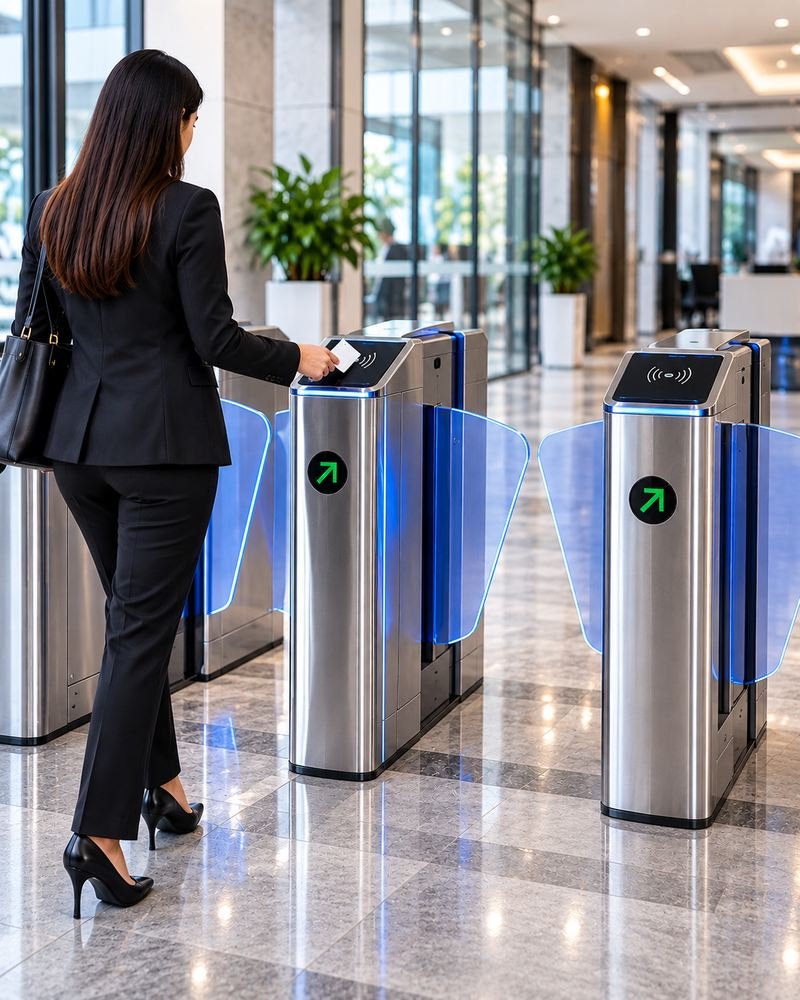
Modern organizations need reliable systems to control pedestrian movement while maintaining smooth and convenient access. Flap barriers are widely used for this purpose in corporate offices, commercial buildings, metro stations, educational institutions, industrial facilities, and other controlled-access environments.
A flap barrier combines physical access control with technologies such as RFID, QR codes, biometric readers, and access-control software. Choosing the right Flap Barrier Manufacturer in India can help organizations achieve reliable operation, better security, and compatibility with their existing access-control infrastructure.
What Is a Flap Barrier?
A flap barrier is an automated pedestrian access-control gate that uses motorized panels or flaps to regulate entry and exit.
The barrier remains closed until an authorized credential is verified. After successful authentication, the flaps open to allow the user to pass and then automatically close.
This makes flap barriers suitable for locations where organizations need controlled pedestrian access without creating a completely enclosed passage.
How Does a Flap Barrier Work?
A typical flap barrier access process works as follows:
User Identification → Credential Verification → Access Granted → Flaps Open → User Passes → Flaps Close
The system can receive authorization from RFID cards, biometric readers, QR codes, barcode scanners, or an integrated access-control system.
Access records can also be connected to centralized software for monitoring and reporting, depending on the system configuration.
Key Features of Flap Barriers
1. Fast Operation
Flap barriers are designed for efficient pedestrian movement, making them suitable for locations with regular or high user traffic.
2. RFID Integration
RFID readers can be integrated with flap barriers to provide convenient access for employees, members, students, and authorized personnel.
3. Biometric Integration
Flap barriers can also be configured with biometric access systems such as fingerprint or facial-recognition devices.
4. Anti-Tailgating
Depending on the configuration, sensors can help detect unauthorized attempts to follow an authorized user through the barrier.
5. Two-Way Access
The system can be configured to control both entry and exit, allowing organizations to manage movement in both directions.
6. Emergency Operation
Emergency-release functionality can allow the passage to open when required during emergency situations.
7. Access-Control Integration
Flap barriers can integrate with centralized access-control systems to manage authorization and monitor entry and exit activity.
8. Modern Design
Their compact and professional appearance makes flap barriers suitable for corporate receptions, office entrances, commercial buildings, and other modern environments.
Where Are Flap Barriers Used?
Flap barriers can be installed in various locations, including:
- Corporate offices
- IT parks
- Commercial buildings
- Industrial facilities
- Educational institutions
- Hospitals
- Residential communities
- Metro and transit facilities
- Airports
- Stadiums
- Gyms and fitness centers
- Government buildings
- Restricted-access areas
The appropriate system depends on pedestrian traffic, security requirements, available space, and integration needs.
RFID Flap Barrier for Access Control
RFID-based access control is commonly used in offices and other facilities where employees or authorized users require quick entry.
Each authorized user can be assigned an RFID card or credential. When the card is presented to the reader, the access-control system verifies the credential.
If access is approved, the flap barrier opens automatically. After the user passes through, the barrier closes and returns to its controlled state.
This process can help organizations combine physical access control with electronic user authentication.
Biometric and QR-Based Flap Barrier Access
Modern access-control environments may require multiple authentication methods.
Depending on the configuration, flap barriers can work with:
- Fingerprint readers
- Facial-recognition systems
- QR-code scanners
- Barcode readers
- RFID cards
- Proximity cards
- Access-control software
This flexibility allows organizations to select an authentication method according to their operational requirements.
Flap Barrier vs Tripod Turnstile
Both flap barriers and tripod turnstiles are designed for pedestrian access control, but their physical design and applications can differ.
A tripod turnstile uses three rotating arms, while a flap barrier uses motorized panels that open and close to regulate passage.
Flap barriers are often selected where organizations want a modern entrance appearance and controlled pedestrian movement. Tripod turnstiles can be suitable for locations where a compact mechanical access-control solution is required.
The selection should depend on pedestrian volume, available space, security requirements, aesthetics, and access-control integration.
How to Choose a Flap Barrier Manufacturer in India
Before selecting a manufacturer or supplier, organizations should evaluate several factors.
Construction Quality
Check the materials, mechanical components, finish, and overall construction quality of the equipment.
Operating Speed
Consider the expected pedestrian traffic and choose a configuration capable of handling the required volume.
Access-Control Compatibility
Confirm compatibility with existing RFID, biometric, QR, or centralized access-control systems.
Safety Features
Look for appropriate sensors and emergency-release functionality to support safe operation.
Integration
The flap barrier should be capable of integrating with the organization's access-control infrastructure where required.
Installation Support
Professional installation and configuration can help ensure that the system operates correctly after deployment.
Warranty and Maintenance
Check warranty terms, availability of spare parts, technical support, and maintenance services before purchasing.
Customization
Some installations may require specific configurations, finishes, reader integration, or software connectivity.
Flap Barriers for Corporate Security
Corporate offices often require a balance between security and convenience. A flap barrier can help create a controlled entrance while maintaining a professional appearance.
When integrated with employee access cards or biometric authentication, the system can help organizations regulate authorized access and maintain electronic entry records.
For larger facilities, multiple lanes can be deployed to manage pedestrian movement during peak periods.
Flap Barrier Buying Checklist
Before purchasing a flap barrier, buyers should consider:
- ✔ Construction material
- ✔ Barrier dimensions
- ✔ Passage width
- ✔ Operating speed
- ✔ Expected pedestrian traffic
- ✔ RFID compatibility
- ✔ Biometric compatibility
- ✔ QR/barcode compatibility
- ✔ Anti-tailgating functionality
- ✔ Emergency operation
- ✔ Access-control integration
- ✔ Installation support
- ✔ Warranty
- ✔ Spare-parts availability
- ✔ Maintenance support
Final Thoughts
A flap barrier can provide controlled pedestrian access while supporting modern authentication technologies such as RFID, biometrics, QR codes, and centralized access-control systems.
Organizations looking for a Flap Barrier Manufacturer in India should evaluate their pedestrian traffic, security requirements, integration needs, installation environment, and long-term maintenance requirements before selecting a system.
A properly selected and configured flap barrier can become an important component of a modern pedestrian access-control solution.
Frequently Asked Questions
What is a flap barrier?
A flap barrier is an automated pedestrian access-control gate that uses motorized panels to regulate entry and exit.
Can flap barriers work with RFID?
Yes. Flap barriers can be integrated with RFID readers and access-control systems for authorized pedestrian entry.
Can a flap barrier support biometric access?
Yes, depending on the system configuration, biometric readers can be integrated with flap barriers.
Where are flap barriers commonly used?
They are commonly used in corporate offices, commercial buildings, industrial facilities, educational institutions, hospitals, transportation facilities, and other controlled-access locations.
Are flap barriers suitable for high-traffic areas?
They can be suitable for high-traffic environments when the appropriate model and configuration are selected according to expected pedestrian volume.
What should I consider when choosing a flap barrier manufacturer?
Consider construction quality, operating performance, access-control compatibility, safety features, installation support, warranty, spare parts, and after-sales service.