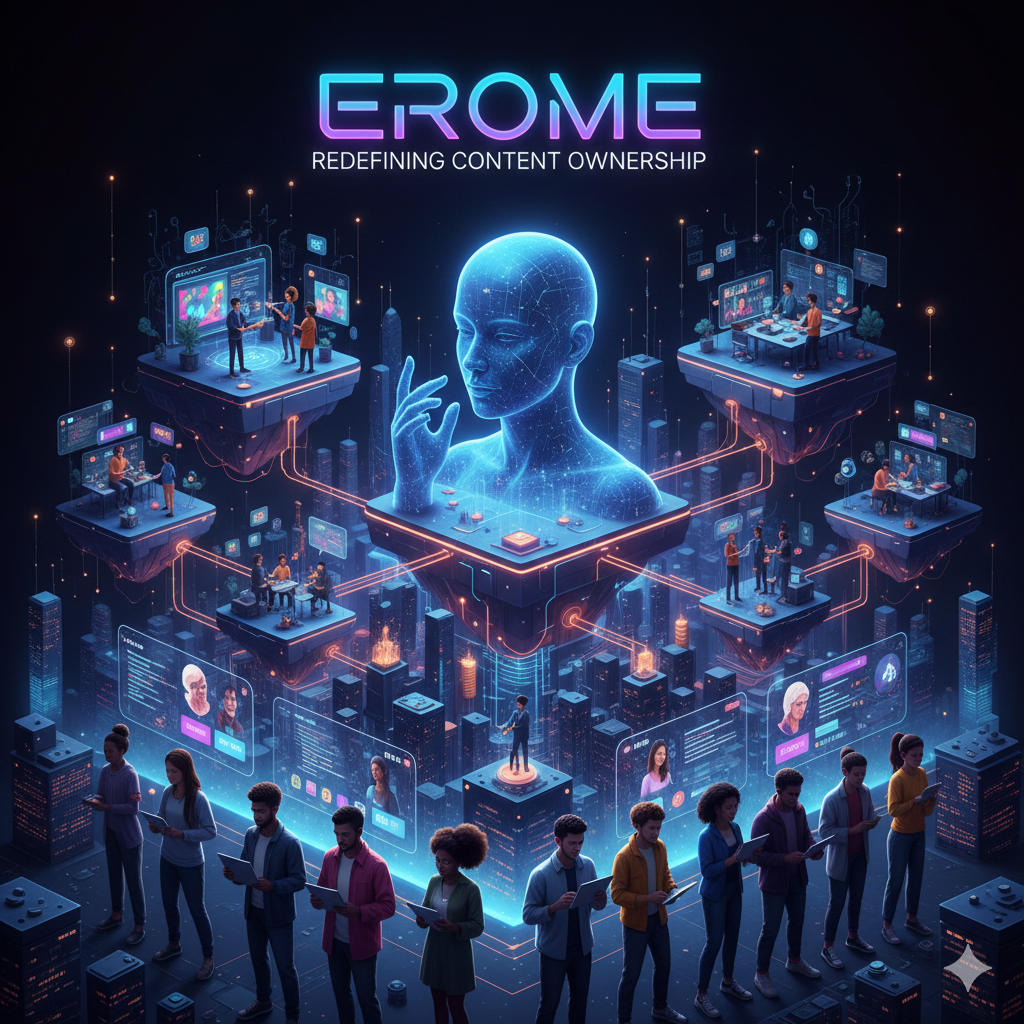
The creator economy has empowered individuals to build audiences and monetize their passions. Yet, for many content creators, especially in adult-oriented spaces, traditional platforms present significant challenges: restrictive content policies, demonetization, and a lack of direct control. This landscape has given rise to alternative platforms like Erome, which reflect a growing desire to redefine what content ownership truly means. While often operating in complex legal and social territories, examining Erome's model provides insight into a broader shift—a push for creator autonomy, direct audience relationships, and a more unfiltered form of digital entrepreneurship.
The Traditional Platform Problem: Lack of Control
For creators, mainstream social media and content platforms are a double-edged sword. They offer massive reach but come with strict, often opaque community guidelines. A creator can build an audience overnight and lose it just as quickly if their content is flagged or banned. Furthermore, monetization is at the platform's discretion, leading to unpredictable income. This model leaves creators feeling like tenants on someone else's land, with little security or true ownership over their work and community.
Platforms like Erome emerged, in part, as a reaction to this dynamic. They often position themselves as spaces with more permissive content policies, appealing to creators who feel marginalized or unfairly restricted by larger sites. The core appeal is the promise of autonomy—the ability to create and share content according to the creator's own terms, not an advertiser-friendly corporate policy. This taps directly into the foundational principle of the creator economy: the individual as a sovereign business.
The Erome Model: A Different Approach to Ownership
So, how does a platform like Erome attempt to redefine ownership? Its approach typically centers on a few key differentiators from mainstream social networks.
First, it often emphasizes direct content control. Creators may have more freedom to post the content they wish without fear of it being algorithmically suppressed for being "non-family friendly." Second, the financial model can differ. While many such platforms are free, they may facilitate direct tipping or integrate with external payment processors, allowing money to flow more directly from fan to creator without a corporate intermediary taking a large cut.
However, it's crucial to understand that using Erome does not equate to full legal ownership in the traditional copyright sense. True ownership means having the power to license, sell, and fully protect your intellectual property, which is governed by a platform's Terms of Service. The redefinition here is more about operational ownership—control over the creative act and direct distribution—within the boundaries the platform sets.
The Trade-offs: Autonomy vs. Safety and Sustainability
Choosing a platform like Erome involves significant trade-offs. The autonomy and permissiveness that attract creators come with inherent risks. These platforms often have fewer resources for robust content moderation, creator support, and technical security than large corporations. This can expose creators to higher risks of content theft, harassment, or having their work shared without consent beyond the platform.
Furthermore, the long-term sustainability of such models is always a question. The very lack of restrictive policies can attract illegal or non-consensual content, which jeopardizes the entire platform's existence. For a creator, building a business on a foundation that could abruptly vanish presents a profound risk. Therefore, while Erome and similar sites represent a push for redefined ownership, they also highlight the ongoing tension between absolute creative freedom and the need for a safe, stable, and legally compliant digital ecosystem.
The Future: What Creators Are Demanding
The existence and use of platforms like Erome send a clear message to the broader tech industry: a segment of creators demands more control. The future of the creator economy may lie in hybrid models that learn from this demand. We might see more mainstream platforms offering verified "creator-led" spaces with different monetization rules, or a rise in decentralized platforms built on blockchain technology that give creators verifiable ownership and portability of their content.
Ultimately, Erome is a symptom of a larger evolution. It represents the continuous push within the creator economy to shift power from the platform to the person, challenging us to ask: What does true digital ownership look like, and how can it be achieved responsibly?