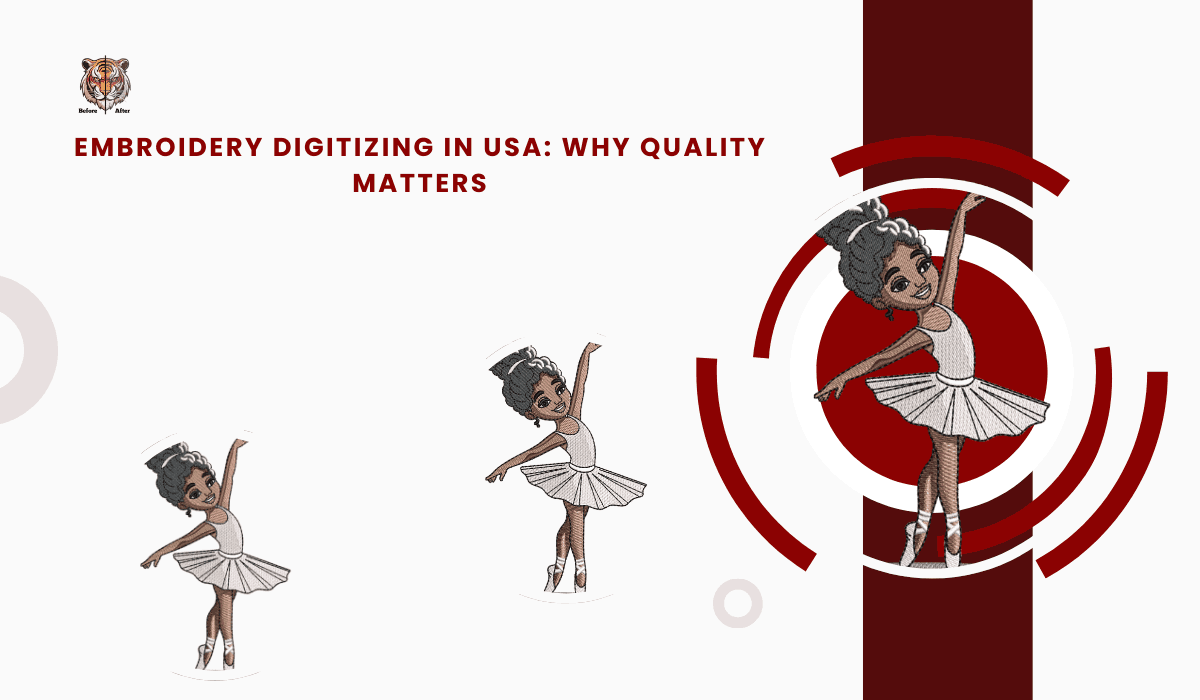
In commercial embroidery, quality is not optional. Whether producing branded uniforms, promotional merchandise, or retail apparel, precision directly affects the final product’s appearance and durability. Many businesses underestimate how much digitizing influences the finished stitch-out, yet Embroidery Digitizing In USA plays a central role in ensuring designs translate correctly from screen to fabric. When digitizing is handled professionally, embroidery machines run smoothly, thread breaks decrease, and logos maintain their original proportions across different materials.
Poor digitizing, on the other hand, often leads to puckering, misalignment, thread density problems, and inconsistent results. For businesses that rely on brand presentation, these issues can damage credibility and increase production costs.
Understanding the Role of Digitizing in Professional Embroidery
Embroidery digitizing is more than converting artwork into a machine-readable format. It is a technical process that determines stitch type, stitch direction, density, underlay, pull compensation, and sequencing. Each of these elements directly affects how the design behaves on fabric.
Professional digitizers consider:
Fabric type and thickness
Garment stretch and stability
Machine speed and capability
Thread type and color transitions
Without proper planning, even high-end embroidery machines cannot produce clean results.
Why Quality Matters in Commercial Production
Accuracy Preserves Brand Identity
Corporate logos require strict adherence to brand guidelines. Slight distortions in spacing, stitch direction, or proportions can make a logo look unprofessional. High-quality digitizing ensures:
Clean edges
Proper alignment
Balanced density
Accurate text readability
When designs are digitized correctly, every production run maintains visual consistency.
Machine Efficiency and Reduced Downtime
Thread breaks and needle damage often result from incorrect density or poor stitch sequencing. Professional digitizing minimizes:
Excessive trims
Jump stitches
Overlapping stitches
Thread tension imbalance
In high-volume production environments, small technical errors can multiply quickly. Quality digitizing helps maintain stable machine performance and consistent output.
Fabric-Specific Adjustments Improve Durability
Different fabrics respond differently to stitches. For example:
Caps require careful underlay and pull compensation.
Performance fabrics need lighter density to avoid distortion.
Heavy jackets require balanced fill to prevent stiffness.
Professional digitizers adjust settings according to fabric behavior, ensuring designs remain durable after washing and long-term use.
The Difference Between Basic and Professional Digitizing
Entry-Level Digitizing
Basic services often rely on automated software presets. While suitable for simple designs, automated approaches typically ignore fabric characteristics and production requirements. This can lead to:
Puckering
Gaps between stitches
Uneven coverage
Poor scalability
Professional-Level Digitizing
Experienced digitizers manually adjust stitch paths and compensation values. They test designs in real production scenarios, ensuring files are optimized before final delivery. This level of attention supports:
Large-scale production
Multi-head machines
Consistent repeat orders
Professional digitizing focuses not only on appearance but also on production efficiency.
Real-World Example: Corporate Uniform Production
Consider a company ordering 5,000 branded polo shirts for nationwide staff. If the digitized file contains density errors, even a minor flaw will repeat across all garments. That can mean:
Wasted garments
Increased labor costs
Delayed delivery schedules
When digitizing is handled properly from the beginning, production moves efficiently, and quality remains consistent across all pieces.
Compliance with Industry Standards and Expectations
Professional embroidery providers in the United States often follow strict production standards. Clients expect:
Consistent stitch quality
Accurate logo reproduction
Fast turnaround times
Reliable communication
Digitizing quality directly influences all of these expectations. Businesses that prioritize professional digitizing build long-term trust with clients.
How to Identify High-Quality Digitizing Services
When evaluating a service provider, look for:
Manual digitizing (not fully automated software output)
Experience with multiple fabric types
Sample stitch-outs for quality review
Knowledge of commercial embroidery machines
Willingness to adjust files after testing
Professional providers treat digitizing as a technical craft, not just a file conversion task.
Long-Term Cost Benefits of Quality Digitizing
Some businesses choose low-cost digitizing services to reduce expenses. However, repeated corrections, production delays, and damaged garments often cost more in the long run.
Quality digitizing offers:
Lower thread consumption
Reduced machine wear
Fewer rejected pieces
Higher client satisfaction
Over time, this improves profit margins and operational stability.
Conclusion
Professional embroidery results depend heavily on the quality of digitizing. While machines and threads play an important role, the stitch file determines how well a design performs in real production conditions. Embroidery Digitizing In USA provides technical precision, fabric-specific adjustments, and production-ready optimization that protect both brand integrity and operational efficiency. For businesses focused on long-term growth and consistent quality, investing in professional digitizing is a practical and strategic decision.
FAQs
1. What makes professional embroidery digitizing different from automatic conversion?
Professional digitizing involves manual adjustments to stitch type, density, underlay, and compensation. Automatic conversion often lacks these fabric-specific refinements.
2. Why is fabric type important in embroidery digitizing?
Different fabrics stretch, compress, and react to stitching differently. Proper adjustments prevent puckering, distortion, and thread breakage.
3. Can poor digitizing damage embroidery machines?
Yes. Incorrect density and stitch sequencing can cause thread breaks, needle wear, and machine downtime.
4. Is high-quality digitizing worth the higher cost?
Yes. It reduces production errors, improves consistency, and saves money over time by minimizing rework and waste.
5. How can I test the quality of a digitized file?
Request a sample stitch-out on the intended fabric before large-scale production. This reveals potential density or alignment issues early.