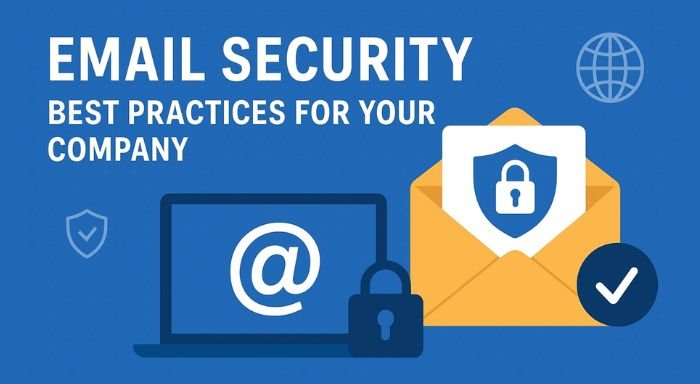
One of the communication tools that are highly used in businesses is the emails. Business people use emails to exchange valuable files, deliver contracts, communicate with customers, and negotiate the projects. However, on the same note as your house has a lock in order to ensure it is safe, your company email should as well have a lock. Your email system can be exposed to hackers, spammers and other cybercriminals in case you are not keen. That is why it is very important to use these reliable solutions such as Extract Mails and read Email Security Best Practices for Your Company.
This guide will describe the concept of email security, why it is important and the most effective measures that your company can implement to ensure that your emails are not compromised. Nothing to fret about--we will make it simple and easy, and even an 8th grader can do it.
What is Email Security?
Email security means protecting your email system and messages from people who want to misuse them. This includes preventing:
- Hackers who try to break into your email.
- Spammers who send fake or harmful messages.
- Phishers who trick you into sharing passwords or money.
- Malware that comes through dangerous links or attachments.
By following good email security practices, companies can protect their data, employees, and customers from risks.
Why Email Security is Important for Companies
Suppose it is as follows: You receive an email, which appears to be written by your boss, requesting confidential project information. Then later on you discover it was a hacker scamming to be your boss. That is what awful email security can cause.
Here are the main reasons why email security matters for every company:
- Protects Company Data – Sensitive information like contracts, financial details, and customer records must stay safe.
- Builds Customer Trust – Clients will trust a company that keeps their information secure.
- Prevents Financial Loss – Email scams can cause companies to lose a lot of money.
- Keeps Work Flowing – Safe email systems reduce downtime and keep employees working without fear.
- Meets Legal Requirements – Many industries have laws about protecting customer data through secure communication.
Common Email Security Threats
To protect your company, first you need to know the threats. Here are some of the most common dangers:
1. Phishing Attacks
Phishing emails look real but are fake. They often ask you to click on a link, share your password, or provide financial details.
2. Spam Emails
Spam is like junk mail. These messages can flood inboxes and sometimes contain harmful links.
3. Malware and Ransomware
Malware is harmful software that comes through email attachments. Ransomware locks your files and asks for money to unlock them.
4. Business Email Compromise (BEC)
In BEC, hackers pretend to be the company CEO or manager and trick employees into sending money or information.
5. Data Leaks
Sometimes employees mistakenly send sensitive information to the wrong person, which leads to data leaks.
Best Practices for Email Security in Your Company
Now that you know the threats, let’s learn the best practices your company should follow.
1. Use Strong Passwords
Passwords should not be “123456” or your name. Instead, create strong ones with a mix of letters, numbers, and symbols. Example: @SecureEmail123!
2. Enable Two-Factor Authentication (2FA)
With 2FA, you need a password and a code sent to your phone or app. This makes it harder for hackers to log in.
3. Train Employees Regularly
Your employees should learn how to spot phishing emails, avoid clicking suspicious links, and report strange messages.
4. Keep Software Updated
Email software and antivirus programs should always be updated to block new threats.
5. Use Email Encryption
Encryption scrambles the message so only the receiver can read it. This keeps sensitive information private.
6. Install Spam Filters
Spam filters block unwanted and dangerous emails before they even reach your inbox.
7. Backup Your Data
Always keep backups of important emails. If ransomware attacks, you won’t lose everything.
8. Limit Access to Sensitive Information
Not every employee needs access to every email. Control who can see important data.
9. Verify Email Requests
If an email asks for money or private info, always double-check by calling the person before responding.
10. Create a Clear Email Policy
Make company rules about email usage, including what to share and what to avoid.
Table: Quick Guide to Email Security Best Practices
Future of Email Security
Email security is never stagnant. Firms are utilizing AI (Artificial Intelligence) to recognize phishing, the security programs on the cloud to prevent spam, and sophisticated encryption to protect the emails. Business will in future depend further on intelligent tools to counter cybercriminals.
Conclusion
Any company relies on Emails as a lifeline of communication. Hackers can also attack them in the most simplest manner. This is why, it is worth taking into consideration the Email Security Best Practices to Your Company, such as strong passwords, employee training, software update, and filters. In this way, you will be able to secure the data, reputation and money of your company.
To make your email correspondence even more secure, you might also consider using such smart tools as Extract Mails that can assist in the organization and protection of email-related data.