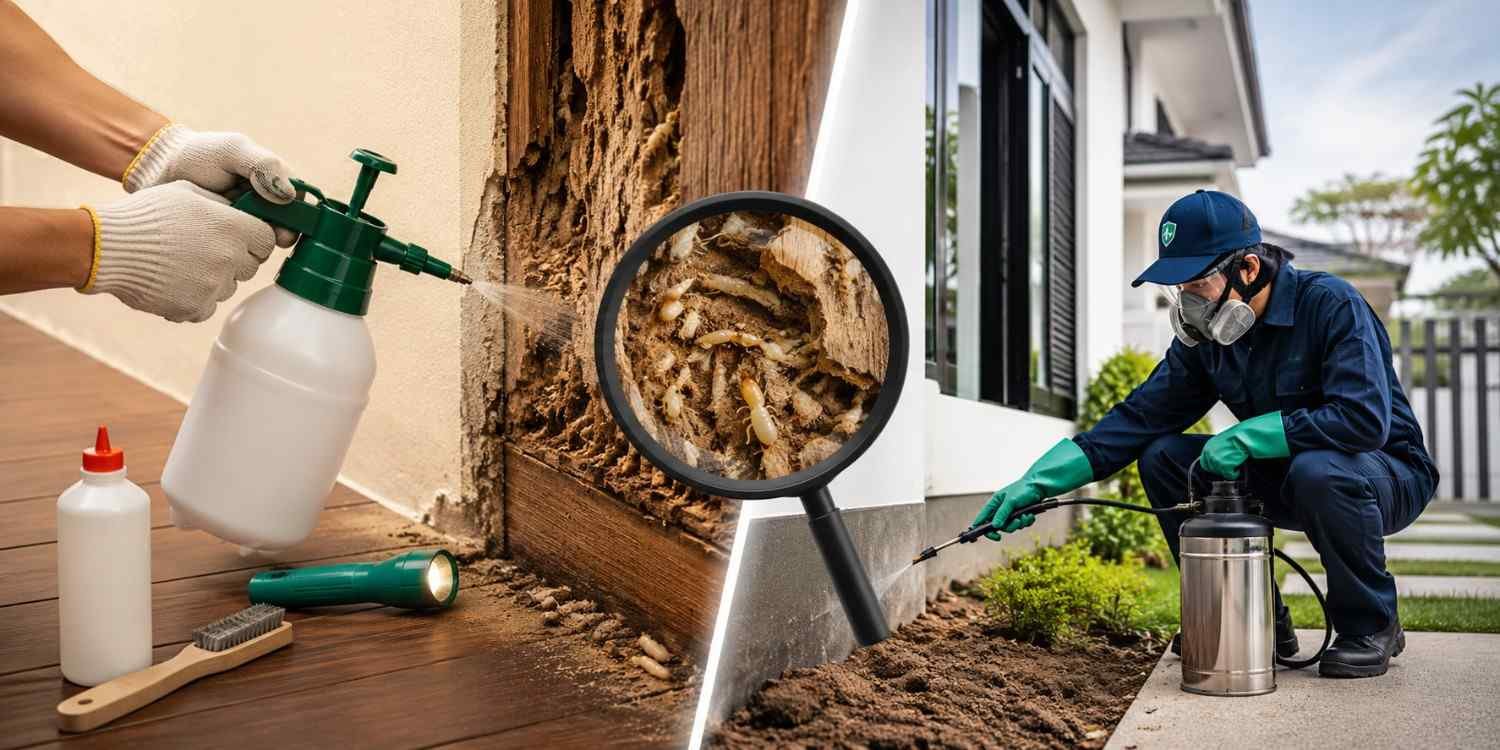
When dealing with a termite infestation, homeowners face a critical decision: handle it yourself or call in the experts. For most situations, termite pest control handled by licensed professionals delivers more reliable, long-lasting results than DIY methods.DIY solutions might be cheaper for now, but they don't usually get to the root of the colony, and your house will continue to be susceptible to structural damage.
Why Termite Control Is Not a Simple DIY Job
Termites are not ants, nor are they cockroaches. They live deep inside walls, timber frames and soil – often undetected for years. By the time visible damage is detected, a colony can number in the hundreds of thousands. In Singapore, subterranean termites are the most destructive species, and they thrive in the warm, humid climate year round.
The National Environment Agency (NEA) in Singapore lists termites as a major structural pest and recommends professional pest management for infestations that affect load-bearing structures. “It’s not a spray bottle problem.”
DIY Termite Control: What It Can and Cannot Do
DIY termite treatments typically include retail bait stations, borate-based sprays, and foam injections. These are widely available at hardware stores and are marketed as affordable solutions for homeowners.
Where DIY Works
- Early-stage, surface-level infestations in small, accessible timber
- Preventive treatment on garden furniture or outdoor wood structures
- Interim measures while waiting for a professional inspection
Where DIY Falls Short
- Queen colony cannot be found or treated in the underground or in walls
- Retail products are generally a lower concentration than commercial grade treatments
- No capability to perform a thermal imaging or moisture scan to reveal hidden activity
- No guarantees No follow-up inspections
- Risk of driving termites deeper into the structure rather than eliminating them
The core problem with DIY is incomplete treatment. Killing visible termites does nothing if the colony remains active behind your walls. It is the equivalent of treating a symptom without addressing the cause.
Professional Termite Control: How It Works and Why It's More Effective
Licensed pest control companies in Singapore use a range of methods that are tailored to the species, extent of infestation and type of property. Professional termite control isn’t about slapping some chemicals on the problem, it’s a systematic process that starts with a thorough inspection.
Common Professional Treatment Methods
Professionals also carry out post-treatment monitoring, which is something no off-the-shelf product provides. This matters because termite colonies can re-establish through new entry points if follow-up checks are skipped.
Cost Comparison: DIY vs Professional Treatment
Cost is often the first reason homeowners consider DIY. But the financial picture changes significantly once you factor in the cost of structural repairs.
Termite damage repair in Singapore can easily run into thousands of dollars if left untreated. A professional treatment that costs SGD 800 today can prevent SGD 10,000 or more in timber replacement and renovation costs down the line.
Safety Considerations: Which Option Is Safer for Your Family?
Termiticides are controlled chemicals. When misused – in the wrong concentration, in enclosed spaces, or without proper protective equipment – they can present real health risks for children, pets, and elderly residents.
Trained pest control professionals are licensed by NEA in Singapore and are required to follow strict safety protocols. They know which products are appropriate for certain environments, such as homes with small children or homes with ventilation issues. With DIY, that knowledge gap can lead to both ineffective treatment and exposure to chemicals that aren’t necessary.
Long-Term Results: Which Option Actually Protects Your Home?
This is where the comparison is really good. DIY treatments can hide the look of termite activity temporarily, but they rarely get rid of the colony. Termites are tenacious. Even a small part of the colony can reorganise, sometimes in a matter of weeks.
Professional treatments (baiting systems, soil barriers, etc.) are intended to kill the entire colony and prevent re-entry. Many professionals provide periodic inspections as part of a service plan, giving homeowners ongoing protection instead of a one-time fix.
For homeowners in Singapore, the warm climate means that termites are active year-round, making long-term protection a necessity, not a choice.
When Should You Call a Professional Immediately?
Do not attempt DIY treatment if you notice any of the following:
- Hollow-sounding timber walls or floors
- Mud tubes along walls, skirting boards, or foundations
- Discarded termite wings near windows or doors
- Blistering or darkening of paint on walls
- Visible structural damage to beams, door frames, or flooring
These signs show an established and active infestation. At this point, any delay means more damage and a higher repair bill.
The Verdict: Which Option Works Best?
DIY products can assist with minor preventative treatment of outdoor furniture or isolated small timber pieces. If you have an active infestation inside your house, especially in structural timber, however, professional termite control is the only thing that consistently works.
It’s just not reproducible with retail products, with the combination of accurate detection, colony level treatment, regulated chemicals and post-treatment monitoring. The expense of professional treatment upfront is an investment in the long-term structural integrity of your home.
If you are dealing with a suspected or confirmed termite problem in Singapore, Action Pest offers professional termite management solutions backed by trained technicians and proven treatment methods designed for Singapore's residential properties.
Frequently Asked Questions
Q: Can DIY termite treatments fully eliminate a colony?
A: Not often. Most retail products only treat surface level termite activity and are not able to reach the queen or the core of the colony. The infestation typically comes back without eliminating the source. Professional treatments use colony-specific methods such as baits to achieve total elimination.
Q: How much does professional termite pest control cost in Singapore?
A: Professional termite control in Singapore can cost anywhere between SGD 300 and SGD 1,500 or more, depending on the property size and infestation severity. This is higher than the DIY costs but includes inspection, targeted treatment and often a service warranty to cover re-infestation.
Q: How do I know if I have a termite infestation at home?
A: Common signs include mud burrows in walls or foundations, wood that sounds hollow when tapped, wing cases left around lights, and paint blistering or darkening without any dampness. If you notice any of these, be sure to schedule a professional inspection right away to determine the extent of the problem.
Q: Is professional termite treatment safe for children and pets?
A: Yes, if done by licensed professionals and in accordance with NEA guidelines. Our technicians will apply the right products in the right strengths, and let you know about any temporary precautions to take, such as staying out of certain rooms while they’re being treated. DIY chemicals have a higher safety risk because people are not trained or have the proper equipment.
Q: How long does professional termite treatment last?
A: Most professional termite treatment services in Singapore have a warranty period of one to three years and regular monitoring. Proper maintenance can extend the effectiveness of soil barrier treatments for several years. Annual inspections are recommended to detect any new activity early on and maintain protection.
Q: What is the fastest way to stop termites from spreading in my home?
A. Call a licensed pest control company and have them do an emergency inspection. Don’t disturb mud tubes or damaged wood as this spreads the termites and makes treatment more difficult. Do not use DIY sprays before having a professional assessment, as this could drive termites deeper and make it harder to get an accurate diagnosis.
Tags : termite pest control