Digital Library Management System: A Comprehensive Guide to Revolutionizing Knowledge Access
By Yoo Library 31-08-2026 20
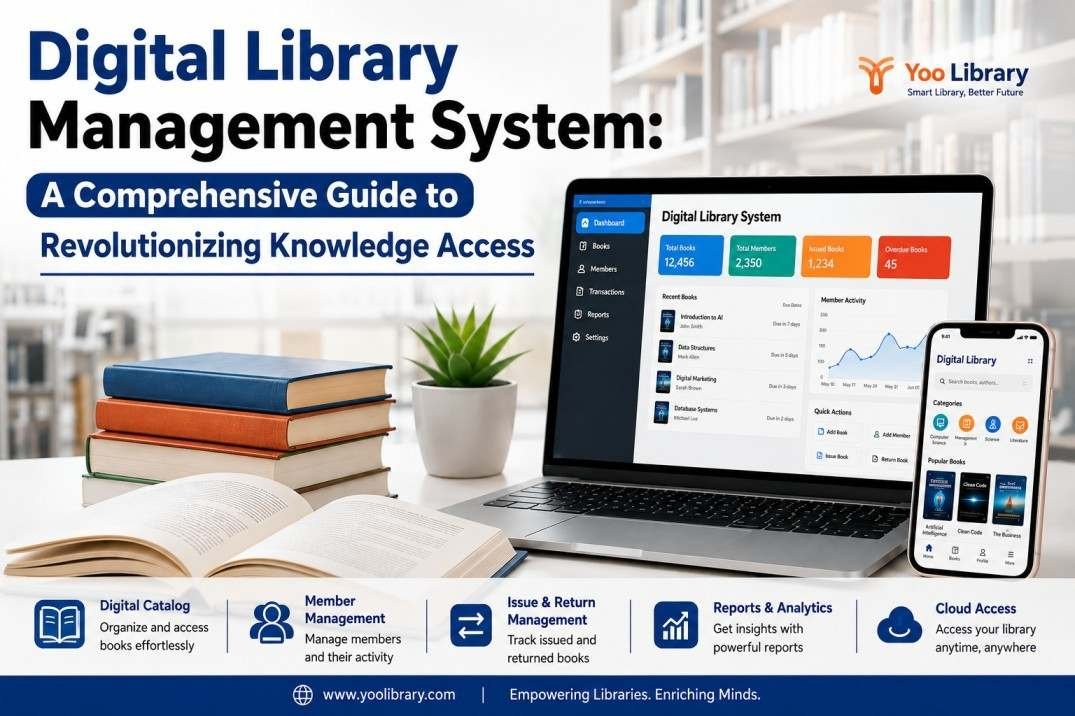
Libraries are changing with modern technology. Readers now expect faster search, digital access, and convenient services. A Digital Library Management System helps libraries organize resources, automate routine tasks, manage users, and improve access to information. It connects important library operations through a centralized digital platform.
For schools, colleges, universities, public libraries, and organizations, digital management can reduce manual work while improving accuracy and service quality.
What Is a Digital Library Management System?
A Digital Library Management System is a technology-based platform designed to manage library resources and daily operations digitally. It can handle books, digital resources, members, circulation, cataloging, records, and reports from one place.
Traditional libraries often depend on registers, spreadsheets, and manual processes. These methods can become difficult when collections and membership numbers increase.
A digital system creates organized records and makes information easier to access. Staff can search resources quickly, update records, monitor transactions, and generate useful reports without maintaining multiple manual files.
Why Are Digital Library Solutions Important?
Modern libraries deal with large collections and increasing user expectations. Managing these resources manually can consume significant staff time.
Digital solutions help simplify several important activities.
Faster Information Search
Users can search catalogs using titles, authors, subjects, categories, or keywords. This reduces the time needed to locate resources.
Better Record Management
Digital records can organize information about books, members, transactions, and availability. This makes data easier to maintain and retrieve.
Reduced Manual Work
Routine activities such as issue records, returns, renewals, and member management can be handled digitally. Staff can therefore focus more on user support.
Improved Accessibility
An Online Library Management System can help users access library information through connected devices. Depending on the platform, users may check availability, search catalogs, or manage their accounts remotely.
Key Features of Digital Library Software
The effectiveness of a library platform depends on its features. A suitable solution should address both administrative requirements and user needs.
1. Catalog Management
Catalog management helps libraries maintain organized information about resources. Records can include titles, authors, publishers, subjects, classifications, and availability.
A searchable catalog also makes resource discovery easier for students, researchers, teachers, and other users.
2. Member Management
Libraries can maintain digital profiles for students, staff, teachers, researchers, or other members. Important membership information can be organized in one centralized database.
3. Circulation Management
Issue, return, renewal, and due-date activities can be managed digitally. This can improve transaction accuracy and reduce paperwork.
4. Search and Discovery
A good platform should provide simple search functionality. Users should be able to locate resources without navigating complicated interfaces.
5. Automated Notifications
Library Automation Software can support reminders and notifications for activities such as due dates, returns, renewals, and membership updates.
Automation helps reduce repetitive communication tasks for library staff.
6. Reports and Analytics
Reports can provide insights into circulation activity, popular resources, membership trends, overdue items, and other operational information.
These insights can support better collection planning and administrative decisions.
Cloud-Based Library Software
Cloud technology has changed how organizations manage digital information. Cloud-Based Library Software can allow authorized users and administrators to access library services through internet-connected devices.
Instead of depending entirely on a local computer, data and applications can be managed through cloud infrastructure.
Potential advantages include:
• Remote accessibility
• Centralized data management
• Easier software updates
• Reduced dependency on local hardware
• Flexible access for multiple users
• Simplified maintenance
However, libraries should evaluate security, backup policies, user permissions, reliability, and data protection before selecting a cloud solution.
Benefits for Educational Institutions
Schools and colleges generate significant amounts of academic information. A modern library platform can make resource management easier for administrators and students.
Students can search for available resources more efficiently. Librarians can maintain organized records and monitor circulation activities. Institutions can also use reports to understand resource usage.
For universities and research institutions, organized catalogs can support access to academic materials and improve resource discovery.
How It Improves Library Automation
Library automation is not simply about replacing paper records. It involves redesigning repetitive workflows using technology.
For example, a manual issue process may require several steps. Staff may check membership information, verify availability, record the transaction, and calculate due dates.
With automation, many of these actions can be completed through a unified workflow.
This can improve consistency and reduce the possibility of human errors. Automation also creates more time for librarians to provide research assistance, reader guidance, and educational support.
Digital Library Management System vs. Traditional Methods
Traditional library management generally depends on physical registers or separate digital files. Such approaches can work for small collections but become difficult to maintain at scale.
A digital platform provides centralized records and structured workflows.
The major differences include:
Traditional Method Digital Approach
Manual records Centralized digital records
Slower searching Faster catalog search
Paper-based transactions Digital circulation
Limited reporting Automated reports
More repetitive work Workflow automation
Local access Potential remote access
The right approach depends on the library's size, budget, technical requirements, and users.
How to Choose the Right Library Management Solution
Selecting software requires more than comparing feature lists. Libraries should first understand their actual operational requirements.
Consider these factors:
Ease of Use
Staff and users should be able to understand the interface without extensive technical training.
Scalability
The system should support future growth in users, resources, branches, and digital collections.
Security
Libraries manage valuable information. Access controls, backups, authentication, and responsible data handling should be evaluated carefully.
Integration
A solution may need to work with existing institutional systems, databases, authentication services, or other technology.
Support and Training
Reliable technical support can help libraries resolve issues and maintain smooth operations.
Cost and Long-Term Value
Libraries should consider implementation costs, maintenance, upgrades, training, and scalability instead of focusing only on the initial price.
Future of Digital Library Management
The future of library technology is likely to focus on greater automation, improved search experiences, mobile accessibility, data-driven decision-making, and integration with digital learning environments.
Artificial intelligence may also influence areas such as search, recommendations, metadata assistance, and information discovery. However, libraries should use emerging technologies responsibly and maintain human oversight.
Privacy and data security will remain equally important. Technology should improve access to knowledge without compromising user trust.
Conclusion
A modern Digital Library Management System can transform how libraries organize resources, manage members, automate workflows, and deliver information services. Its value goes beyond reducing paperwork. A well-planned solution can create a more organized, accessible, and user-friendly library environment.
Libraries should evaluate their current processes, understand user expectations, and select technology that supports long-term goals. The right Library Management System can help institutions make better use of their resources while creating a stronger foundation for digital knowledge access.
If your institution is planning to modernize its library operations, now is the right time to evaluate its requirements, compare suitable features, and choose a reliable Library Management Solution built around efficiency, accessibility, security, and future growth.