Critical Limb Ischemia (CLI): Clinical Criteria and ICD-10 Codes Explained
By Advancells Stem Cell Lab and Research 16-04-2026 148
Introduction
Critical Limb Ischemia (CLI) is one of the most serious stages of peripheral artery disease. The condition appears when blood flow to the legs becomes severely restricted, often due to long-term blockage in the arteries. While it may start quietly, CLI can quickly turn into a limb-threatening condition if not treated on time.
This blog breaks things down simply—what Critical Limb Ischemia (CLI) actually means, how it’s diagnosed, and how ICD-10 coding fits into the picture.
What is Critical Limb Ischemia?
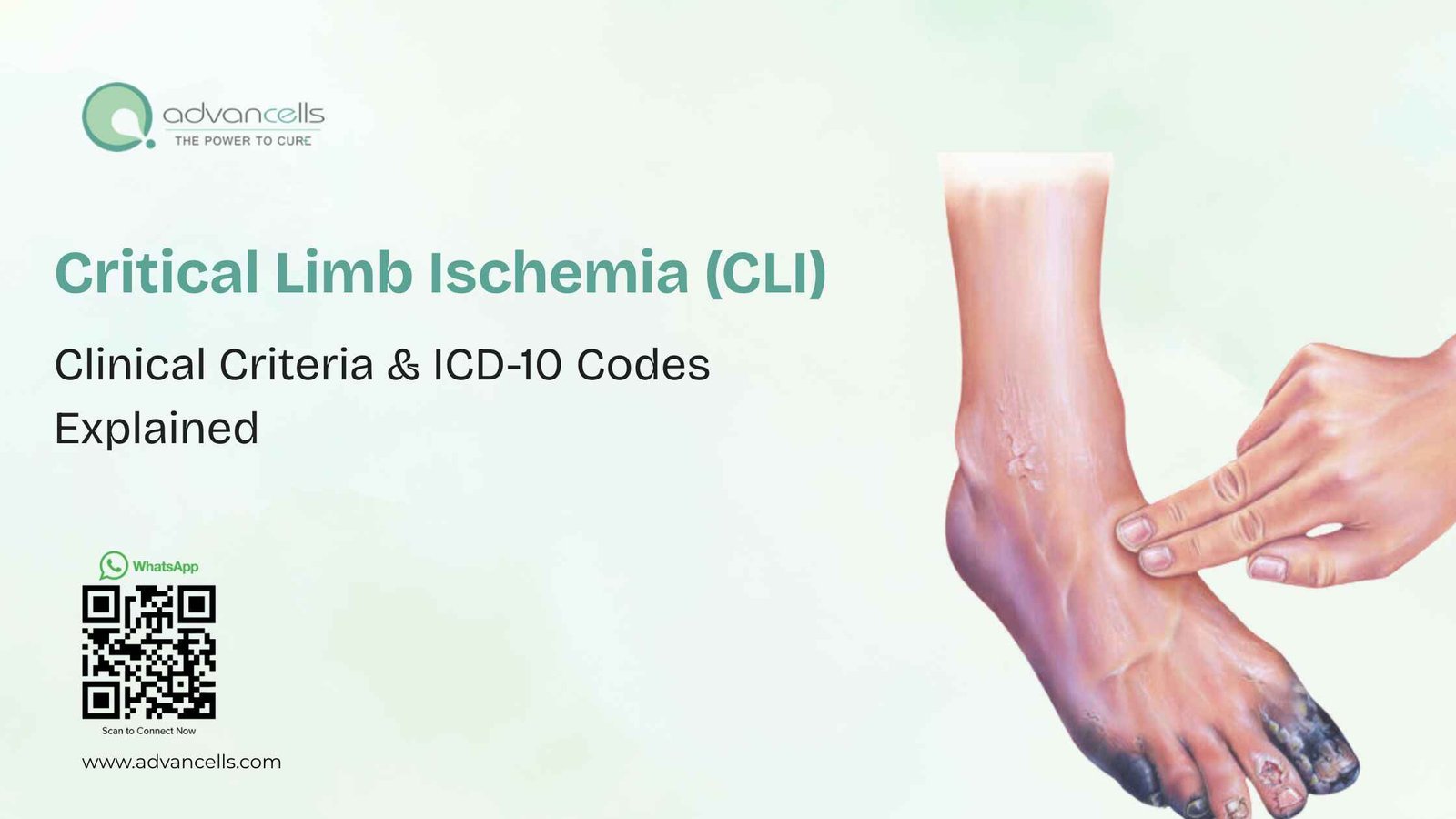
In simple terms, Critical Limb Ischemia is when the blood supply to your legs (or sometimes arms) is so poor that the tissues don’t get enough oxygen to survive. Unlike mild circulation problems that cause pain only while walking, CLI shows up even when you’re resting. People often feel constant pain in their feet or toes, especially at night. In more serious cases, wounds don’t heal, and the skin may start to break down or turn black (gangrene). It’s not just about the limb—CLI is usually a sign of widespread artery disease in the body.
Why CLI Needs Attention?
CLI isn’t something to ignore or “wait and watch.” It’s a serious condition with real risks:
- An extreme level of pain affects daily life activities
- Slow or non-healing wounds
- significant chances of infection at the site of injury
- High risk of limb amputation at the advanced stage
Also, many people with CLI already have conditions like diabetes or heart disease, which makes things more complicated. That’s why early diagnosis matters so much.
Clinical Criteria for Critical Limb Ischemia
Doctors don’t rely on just one sign to diagnose CLI. Instead, they look at a combination of symptoms and test results.
Here’s what usually defines CLI:
Pain at Rest
This is one of the most common signs. The pain:
- Persists for more than two weeks
- Is usually felt in the foot or toes
- Often gets worse at night
Many patients say they feel better when they hang their leg down from the bed—that’s because gravity helps blood flow slightly better.
Non-Healing Wounds or Gangrene
Wounds do not heal normally. The wound increases at the site and gets transformed into an ulcer or severe gangrene. This includes:
- Sores or ulcers that don’t heal
- Skin breakdown on the foot or lower leg
- In severe cases, blackened tissue (gangrene)
These are clear indicators that the tissue isn’t getting enough blood supply.
Poor Blood Flow (Measured Clinically)
Doctors confirm CLI using simple tests that measure circulation:
- Ankle pressure below 50 mmHg
- Toe pressure below 30 mmHg
- Oxygen levels in tissue (TcPO₂) below 30 mmHg
These numbers help confirm that the blood flow is critically low.
How is CLI Diagnosed?
Once CLI is suspected, doctors use a few tests to get a clearer picture:
- Ankle-Brachial Index (ABI): Comparison of blood pressure between the arm vs ankle
- Doppler ultrasound: Checks blood is flowing efficacy in arteries
- CT or MR angiography: An imaging technique that displays blockages site in the arteries
- Angiography: Imaging with the help of a fluorescence dye, for detailed identification of blockage location
These tests help decide how severe the condition is and what treatment is needed.

Understanding Critical Limb Ischemia ICD-10 Codes
Now coming to the coding part—this is especially important for documentation, billing, and medical records. There isn’t a single code labelled “CLI.” Instead, doctors use a group of codes under arterial disease. Common ICD-10 Codes Used:
I70.2 Series (Atherosclerosis of Extremities)
These are the most relevant for CLI:
- With rest pain
- With ulcers
- With gangrene
Each variation helps describe how advanced the condition is.
L97 Series (Chronic Ulcers)
If the patient has wounds, these codes are added to show:
- Location of the ulcer
- Severity
I73.9 (Peripheral Vascular Disease, Unspecified)
This is sometimes used, but only when details are missing. It’s not ideal for clear CLI cases.
Coding Tips for CLI
Correct coding is crucial in the identification of appropriate problems. A few simple tips:
- Always mention which leg is affected (right or left)
- Clearly document symptoms—pain, ulcers, or gangrene
- Use combination codes when needed
- Avoid vague or “unspecified” codes if possible
Good documentation leads to better clarity and smoother processes overall.
What About Treatment?
While this blog focuses more on diagnosis and coding, it’s worth knowing how CLI is managed.
Treatment usually aims to restore blood flow and protect the limb from amputation:
- Surgical Procedures like angioplasty, stenting, or bypass surgery
- Through Wound Care to manage ulcers, management of metabolic conditions like diabetes
- Medications to improve blood circulation, prevent clots, manage high sugar and lipids.
- Lifestyle Changes, especially for diabetes and smoking
- Regenerative Medicine, stem cell therapy is an emerging technique that potentially damages cell regeneration. It creates a supportive environment, promotes repair mechanisms, reduces inflammation, and immunomodulation.
In severe cases, when the tissue is too damaged, amputation may be necessary.
Conclusion
Critical Limb Ischemia is a serious condition, but it doesn’t have to lead to the worst outcomes—especially if caught early. Understanding the CLI, knowing adequate clinical signs and symptoms, and using the right Critical Limb Ischemia ICD 10 codes potentially make a real difference in both patient care and clinical accuracy. Overall, understanding early clinical signs and consultation aids in adequate CLI management.