Choosing the Right Hardware Development Company: A Complete Guide for Innovators and Businesses
By Avantari 14-11-2025 32
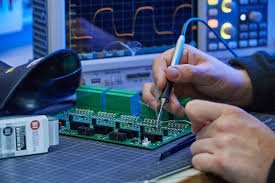
Bringing a hardware product to life is an exciting journey—but also a complex one. From concept design to prototyping, testing, and manufacturing, every step must be handled with precision. This is why choosing the right hardware development company is one of the most important decisions you’ll make. The partner you choose will determine your product’s quality, cost-efficiency, time-to-market, and long-term sustainability.
In this guide, we explore what hardware development companies do, how to evaluate the right partner, and why professional expertise matters—whether you're building consumer electronics, IoT devices, robotics, medical equipment, or industrial systems.
What Is a Hardware Development Company?
A hardware development company is a specialized engineering service provider that designs, prototypes, and helps manufacture physical electronic products. These companies typically offer:
Product ideation & feasibility analysis
Electronic circuit design (schematics and PCB layout)
Embedded systems and firmware development
Mechanical design and enclosure engineering
Rapid prototyping services
Testing, certification, and compliance support
Manufacturing and supply chain assistance
Their role is to transform an idea into a functional, market-ready physical product.
Why You Should Work With a Professional Hardware Development Company
1. Access to Multidisciplinary Expertise
Hardware development requires a blend of electrical engineering, mechanical engineering, industrial design, manufacturing experience, and software integration. A seasoned hardware development company brings all these skill sets under one roof—saving you from managing multiple vendors.
2. Faster Time-to-Market
Time is critical, especially in competitive industries. Professional teams follow streamlined development cycles, use proven design methodologies, and anticipate technical challenges early—accelerating the entire development process.
3. Cost Reduction Through Better Design
Poorly planned hardware design can lead to expensive redesigns, product recalls, or inefficient manufacturing. Experienced hardware development companies optimize for:
Component cost
Manufacturability (DfM)
Sustainability
Reliability
The right partner ultimately saves you money—not just upfront, but throughout the product’s lifecycle.
4. Support With Certifications and Compliance
From FCC and CE to RoHS, UL, ISO, and medical-grade regulations, compliance is mandatory but often complex. A professional company helps navigate these requirements early in the design stage, avoiding compliance failures later.
5. Scalable Manufacturing and Supply Chain Guidance
Once the prototype is ready, scaling to mass production is the next big challenge. Hardware development companies with global supply-chain experience guide you in selecting:
The right manufacturer
Quality assurance processes
Component sourcing strategies
Long-term product lifecycle management
This ensures your product can scale efficiently from 10 units to 10,000 or more.
How to Choose the Right Hardware Development Company
1. Review Their Portfolio
Look for proven experience in your industry—IoT, wearable tech, robotics, medical equipment, etc. A strong portfolio indicates real-world capability.
2. Evaluate Their Engineering Capabilities
Ask questions such as:
Do they offer end-to-end development?
Can they handle both electronics and mechanical design?
Do they develop firmware in-house?
What simulation and design tools do they use?
The broader the expertise, the fewer external dependencies.
3. Check Prototype Quality
Ask to see examples of past prototype builds. High-quality prototypes reflect a professional engineering process and attention to detail.
4. Understand Their Communication Style
Hardware development involves iterations, problem-solving, and transparent communication. Choose a partner that:
Provides regular progress updates
Is open to technical discussion
Offers clear documentation
Good communication ensures fewer surprises along the way.
5. Ask About Post-Development Support
A reliable hardware development company won’t just build your prototype and disappear. Look for teams that provide:
Manufacturing support
Revision control
Ongoing technical assistance
Supply chain management
This ensures long-term success beyond the initial design.
Common Services Offered by Hardware Development Companies
1. PCB Design and Engineering
Precision PCB layout, high-speed design, RF engineering, multilayer boards, and more.
2. Embedded Systems and Firmware
Microcontroller programming, IoT connectivity, real-time systems, and sensor integration.
3. Industrial and Mechanical Design
3D modeling, enclosure design, materials selection, and thermal management.
4. Prototyping and Testing
CNC machining, 3D printing, electronics assembly, environmental testing, and functional validation.
5. Manufacturing Support and Quality Control
Vendor selection, production documentation, pilot runs, and logistics coordination.
Industries That Benefit From Hardware Development Services
Consumer electronics
Smart home and IoT devices
Robotics and automation
Healthcare and medical devices
Automotive and transportation systems
Industrial machinery
Wearable technology
Aerospace and defense
Virtually any industry that requires physical electronics can benefit from a reliable hardware development company.
Final Thoughts
Choosing the right hardware development company can determine the trajectory of your entire product journey. From early concept exploration to mass production, the right partner provides expertise, reduces risks, lowers costs, and accelerates your product's path to market. Take the time to evaluate your options carefully—your product deserves the best possible foundation.
Frequently Asked Questions (FAQ)
1. How long does hardware development typically take?
Most hardware products take 3 to 12 months, depending on complexity, regulatory requirements, and iteration cycles.
2. How much does it cost to work with a hardware development company?
Costs range widely—from $10,000 for simple devices to $250,000+ for complex products involving custom electronics, enclosures, and certifications.
3. Can hardware development companies help with manufacturing?
Yes. Many companies offer manufacturing readiness, vendor selection, pilot production runs, and quality control services.
4. Do I need a patent before hiring a hardware development company?
Not necessarily. Many clients start with NDAs and later pursue patents once the concept is validated.
Tags : Hardware Development Company