Centrifugal Pumps: The Backbone of Modern Fluid Handling | Taha Industries
By TAHA INDUSTRIES 25-09-2025 512
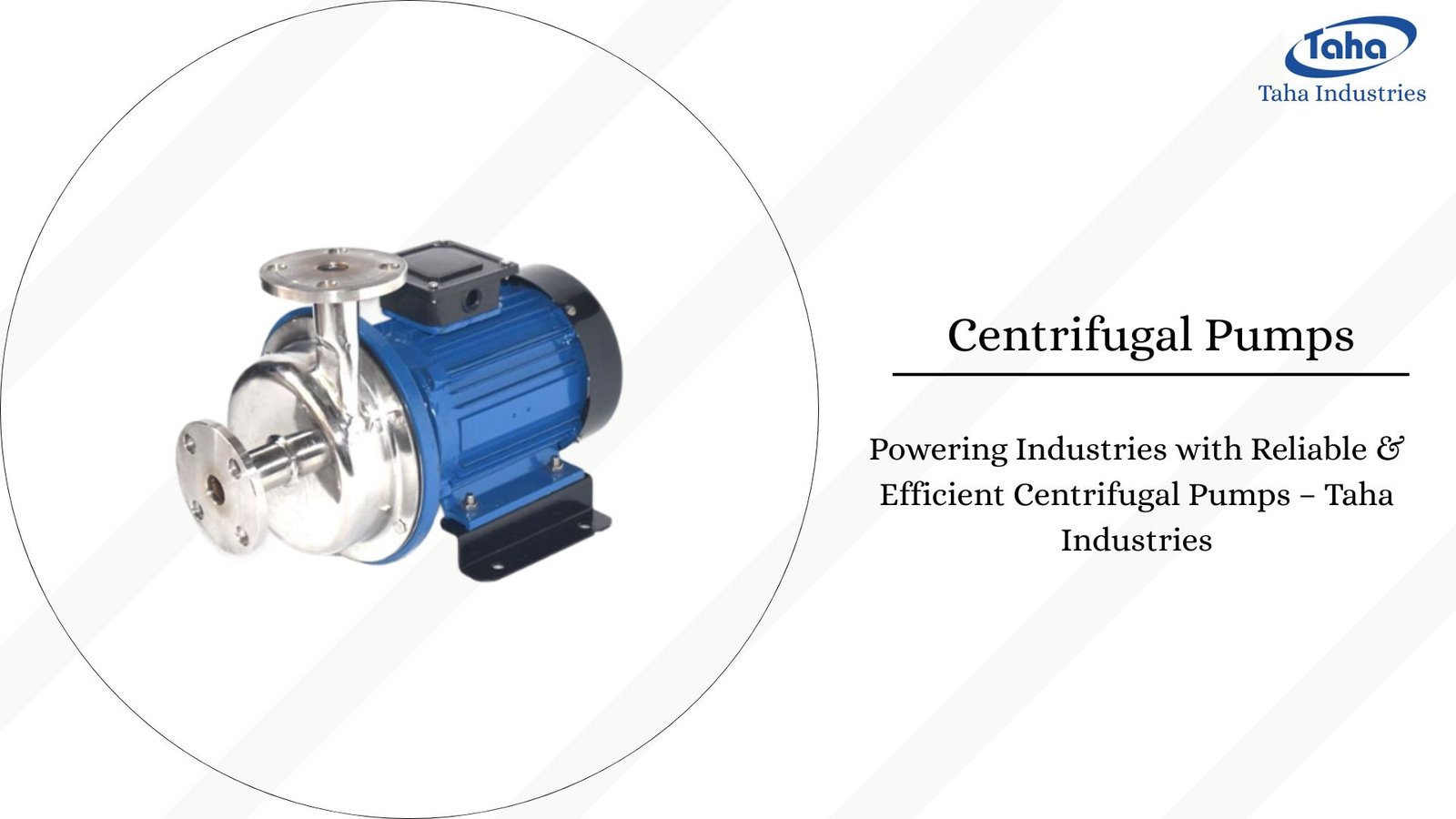
In today’s fast-paced industrial world, reliable fluid handling solutions are essential for smooth operations. One of the most widely used technologies across industries is the centrifugal pump. Known for its simple design, efficiency, and ability to handle large volumes, centrifugal pumps are considered the backbone of fluid transfer in sectors like water treatment, oil & gas, chemicals, agriculture, and more.
At Taha Industries, we specialize in manufacturing high-performance centrifugal pumps tailored to meet the toughest industrial demands. In this blog, we’ll dive deep into what Centrifugal Pumps are, how they work, their applications, benefits, and why choosing the right manufacturer makes all the difference.
What is a Centrifugal Pump?
A centrifugal pump is a mechanical device designed to move liquids by converting rotational energy into kinetic energy. This energy is typically supplied by an electric motor or engine that rotates the impeller inside the pump. As the impeller spins, it pushes the fluid outward, creating a continuous flow.
This simple yet effective mechanism makes centrifugal pumps one of the most commonly used pumps worldwide.
How Do Centrifugal Pumps Work?
The working principle of centrifugal pumps can be broken down into three steps:
- Liquid Enters Through the Suction Nozzle – The pump draws the fluid into the center (eye) of the impeller.
- Impeller Rotation – The impeller blades rotate at high speed, applying centrifugal force to the liquid.
- Discharge Under Pressure – The liquid moves outward through the casing and exits at a higher velocity and pressure.
This efficient flow mechanism allows centrifugal pumps to handle large volumes with ease, making them ideal for continuous operations.
Key Features of Centrifugal Pumps :
At Taha Industries, our centrifugal pumps are designed with features that deliver reliability and performance, including:
- High flow capacity with consistent output
- Robust impeller design for handling corrosive and abrasive fluids
- Low maintenance requirements due to fewer moving parts
- Versatility to handle water, chemicals, and industrial fluids
- Compact, space-saving design for easy installation
Types of Centrifugal Pumps :
Different applications require different designs. The most common types of centrifugal pumps include:
- Single-Stage Pumps – Simple and cost-effective, suitable for low-pressure applications.
- Multi-Stage Pumps – Contain multiple impellers for handling higher pressures.
- End-Suction Pumps – Compact and widely used in water supply systems.
- Split-Case Pumps – Easy to maintain and ideal for large flow rates.
- Self-Priming Pumps – Designed for operations where suction lift is required.
Applications of Centrifugal Pumps :
Centrifugal pumps are found in nearly every industrial sector. Some key applications include:
- Water Supply & Irrigation – Municipal water distribution and agricultural irrigation systems.
- Chemical Processing – Handling acids, solvents, and corrosive liquids.
- Oil & Gas Industry – Transporting fuels, oils, and hydrocarbons.
- HVAC Systems – Circulating chilled and hot water.
- Food & Beverage Industry – Managing liquid ingredients safely and efficiently.
- Pharmaceuticals – Precise transfer of chemicals and solutions.
Benefits of Using Centrifugal Pumps :
The popularity of centrifugal pumps lies in their advantages:
- High Efficiency – Handles large volumes with low energy consumption.
- Durability – Long service life with minimal maintenance.
- Versatility – Suitable for a wide range of fluids and industries.
- Cost-Effective – Simple design keeps manufacturing and maintenance costs low.
- Continuous Operation – Ideal for industries requiring nonstop fluid transfer.
Common Challenges & How to Overcome Them :
Like any equipment, centrifugal pumps may face operational challenges. Here are a few:
- Cavitation – Caused by low suction pressure. Solution: maintain proper suction head.
- Seal Leakage – Regular inspection and seal replacement prevent downtime.
- Overheating – Ensure proper lubrication and flow to avoid pump damage.
- Corrosion & Wear – Use pumps made with materials like stainless steel or PVDF for chemical handling.
At Taha Industries, we design pumps with corrosion-resistant materials and advanced sealing systems to minimize these issues.
Why Choose Taha Industries for Centrifugal Pumps?
When it comes to fluid handling, the quality of your pump determines the reliability of your operations. Here’s why Taha Industries is a trusted centrifugal pump manufacturer and exporter:
- Proven Expertise – Over two decades of experience in industrial pump manufacturing.
- Quality Assurance – Every pump undergoes rigorous testing before delivery.
- Custom Solutions – Pumps tailored to specific industry needs.
- Global Reach – Supplying high-performance pumps across India and internationally.
- After-Sales Support – Dedicated customer support for installation and maintenance.
Centrifugal pumps are the driving force behind countless industries, providing efficient and reliable solutions for fluid handling. Whether you need a pump for chemical processing, water treatment, or heavy-duty industrial use, Taha Industries has the expertise, technology, and commitment to deliver pumps that meet your exact needs.
By choosing the right centrifugal pump, businesses can enhance efficiency, reduce costs, and ensure smooth operations.
Looking for high-quality centrifugal pumps? Connect with Taha Industries today to get the best solutions for your industry.
Tags : PVDF Centrifugal Pumps Centrifugal Pumps Manufacturer Centrifugal Pump Manufacturer Vertical Centrifugal Pumps stainless steel centrifugal pump SS316 Centrifugal pumps stainless steel centrifugal pump manufacturers Vertical Centrifugal Pumps manufacturer Centrifugal pumps manufacturer India centrifugal pumps manufacturers in india