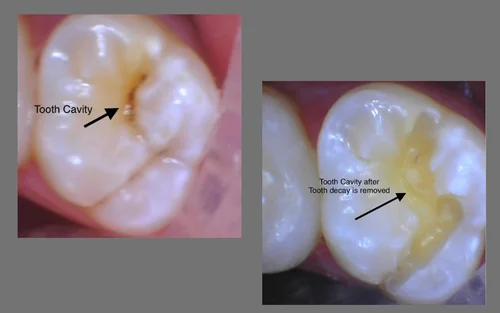
You notice a faint white patch on a tooth, or feel a sudden twinge when sipping something cold, and quietly hope it will disappear by itself. It's a common thought among patients, but the truth is more nuanced than a simple yes or no.
Whether a small cavity can heal depends entirely on how far the damage has progressed. In the earliest stage, your enamel can repair itself with the right care. Once a cavity has formed, only a dentist can stop it. A cavity-filling dentist in Allen can treat your tooth well in such cases.
So let's start at the beginning and understand how a cavity forms in the first place.
How Does a Cavity Form in the First Place?
Decay does not happen all of a sudden. You have bacteria in your mouth that form a sticky film known as plaque. Whenever you consume foods and beverages rich in sugar or refined carbohydrates, these bacteria will use them as a source of nutrition and create acid. The acid will reduce the level of pH in your mouth, and when the pH falls to a certain level, it will begin stripping the calcium and phosphate from the tooth enamel.
Tooth enamel is considered the hardest tissue in the body, but it is not immune to damage. Each time you consume sugary snacks or drinks, your teeth are exposed to an acid attack for about 20 to 30 minutes. This will continue until the enamel weakens and leads to tooth decay.
Can a Small Cavity Really Heal on Its Own?
Sometimes, but only at a very early stage.
1. Early-stage (enamel demineralization) can be reversed.
Before a hole, enamel is only losing minerals. This is a situation where a cavity filling dentist in Allen detects chalky-white patches on the tooth’s surface. In such a case, the surface is still intact, meaning that it is possible for the saliva in your mouth to replace lost minerals through remineralization.
2. Once a hole (cavitation) forms, it’s permanent.
Your body cannot regrow that lost tooth structure when the enamel surface breaks down and a physical opening develops. Enamel can't regenerate the way skin or bone can because it doesn't have any living cells. Bacteria can settle inside the opening, where brushing can't reach them, and decay keeps advancing. At this stage, only a dental filling can stop it.
What Helps Repair Early Enamel Damage?
If the best dentist in Allen, TX, confirms that your enamel damage is still in the early stage, these steps can support remineralization:
- Brushing twice a day with fluoride toothpaste.
- Fluoride varnish applied in a dental office delivers a higher concentration than home products.
- Limiting snacks and sweet drinks gives saliva time to repair your enamel.
- Drinking water helps rinse out the pieces of food, while chewing sugarless gum, particularly those with xylitol, triggers saliva production.
- Cleaning between your teeth eliminates the plaque that builds up in places your toothbrush cannot clean.
Signs Your Cavity Has Gone Too Far to Heal
Early cavities often cause no pain at all, which is why many people don’t notice them until they’ve progressed. Watch for these warning signs and look for dental fillings in Allen as soon as possible.
- Sensitivity to hot, cold, or sweet foods and drinks.
- A visible pit, hole, or rough spot on a tooth.
- Brown, gray, or black staining on the tooth surface.
- Pain when biting or chewing.
- Lingering or spontaneous toothache.
- A bad taste or persistent bad breath.
- Swelling in the gums near a tooth.
What Happens If You Wait? (Risks of Delaying Treatment)
If you ignore a cavity because it seems small or painless, the decay may continue progressing beneath the surface. Delaying treatment can lead to:
- If treatment is delayed, a small cavity may advance into deeper layers and destroy the tooth.
- An untreated cavity will ultimately affect the dentin layer, resulting in sensitivity to hot and cold or sweet foods.
- When a cavity advances towards the pulp, you may suffer from a toothache when eating or other symptoms.
- An advanced cavity may result in infections, swelling, or formation of an abscess in the surrounding tooth.
- The cavity, which could have been treated by a filling, may end up requiring further treatment.
- Tooth decay that is severe will require root canal treatment to remove the diseased tissues.
- Extensive decay of teeth may finally end up being removed due to the inability to treat it.
Conclusion
To conclude, a small cavity can heal on its own at the earliest stage. However, only if the enamel loses minerals and no hole has formed. A few things can help at this stage. Once the cavity has broken through the enamel, it will not reverse. Moreover, it will be more expensive to fix. In such a situation, you can schedule a visit with a trusted local or cavity filling dentist in Allen so a small problem doesn't become a big one.