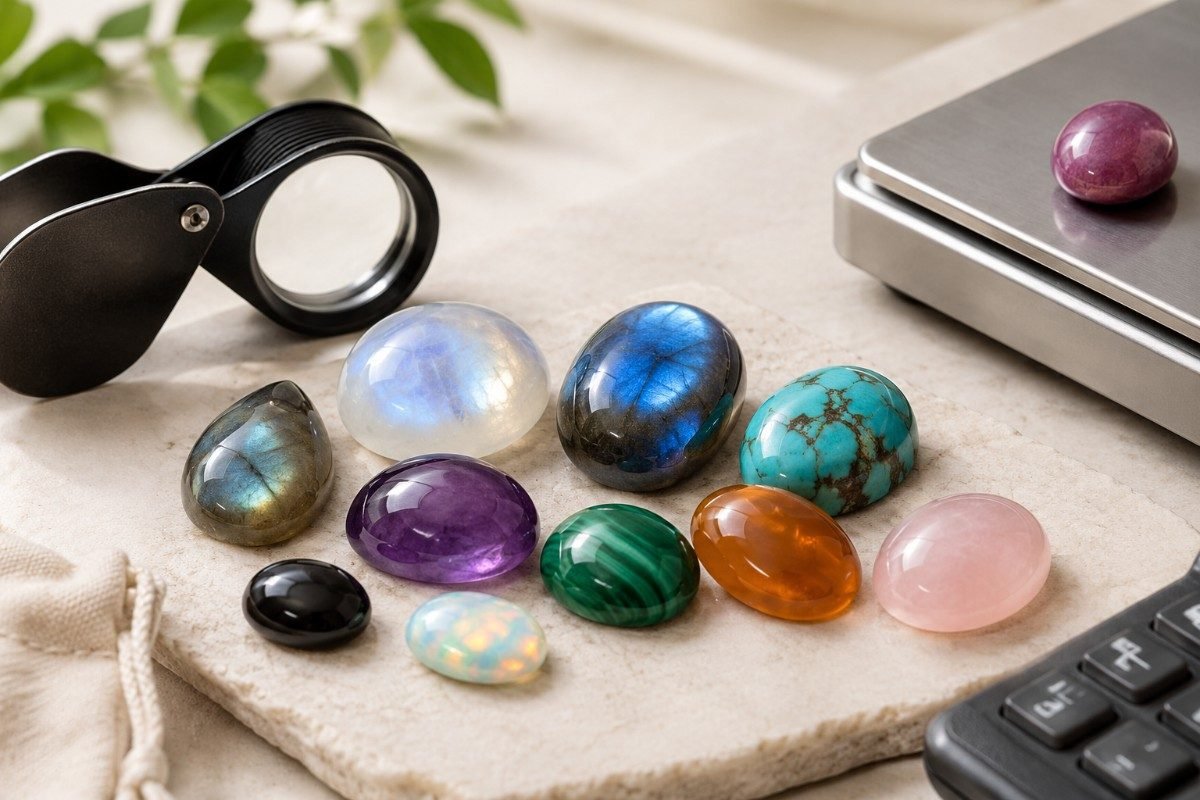
A remarkable cabochon can pause you in your tracks before it ever becomes jewelry. A cabochon with a smooth blue shimmer of labradorite, the look of a surreal desert landscape locked inside a jasper, or a turquoise color that feels like it bottled up the entire sky can catch you off guard entirely. Unlike faceted stones, cabochons have no single, universal grading chart.
Along with a simple grade or price tag, there are many factors that make a gemstone cabochon valuable, such as: a combination of material rarity, optical quality, cutting craftsmanship, and market demand. Once you understand these factors, pricing stops feeling random and starts making sense.
So, if you are curious to know what really drives cabochon value, then keep following this guide. Whether you are pricing your own collection, buying for a custom design, or just trying to figure out if a listing is fairly priced, this guide covers everything you need to know about cabochon gemstone pricing.
What Makes Gemstone Cabochon Pricing Different
Unlike faceted gems, which are priced heavily on the 4 Cs grading system, gemstone cabochon grading follows different logic. Cabochons are typically cut from opaque or translucent rough that wouldn’t perform well faceted. Materials like opal, turquoise, moonstone, malachite, and labradorite are cut as cabochons specifically to showcase surface phenomena such as play-of-color, chatoyancy, or adularescence, effects that faceting would actually diminish.
Here are six core factors that dictate its ultimate market value and pricing, helping you know how to judge cabochon quality when buying.
The Six Key Pricing Factors Are:
- The Material Type and Rarity: The raw mineral type sets the price ceiling before any cutting even happens. Common semi-precious stones like basic agate or jasper cost less, while rare precious stones like high-grade opal or ruby cost much more.
- The Color: Actually the single biggest value driver within material type. Color is usually one of the first cabochon quality factors people are drawn to, and it has a real effect on value and pricing. Rich, vibrant hues with balanced tones are generally expensive.
- Matrix and Character: In patterned stones like turquoise or rhodochrosite, a balanced spiderweb matrix adds immense character and value. On the contrary, a messy, mud-colored matrix patches lower the price. In the cabochon world, the right inclusions add depth, movement, and character.
- Optical Phenomena: Some of the most expensive cabochons are valued purely for their optical tricks. Stones that display special visual effects like cat’s eye (chrysoberyl), a star (sapphire), adularescence in moonstone, or opal’s play-of-color, command much higher prices and value among gem lovers.
- Size, Weight, Cut and Symmetry: A perfectly shaped dome, uniform thickness, and a smooth, scratch-free polish represent expert lapidary craftsmanship. Furthermore, larger carat stones scale exponentially in value.
- Origin: Where the stone came from also influences market prestige and cost.
Conclusion
So, whether you are an experienced buyer or just new to the gemstone world, once you learn these core quality factors, pricing becomes less about guessing from appearance and more about understanding what quality a stone actually holds within it. When you go buy cabochons for sale, don't think that the rare and expensive cabochon would be right for you. Look for the stone that attracts your soul, whose color and smoothness catch your glance instantly, and by holding it, you can feel real joy.
Lastly, choosing a reputable seller is also essential. Always look for a seller who offers authentic gemstones for sale and keeps a wide range of varieties readily available, so that you can choose the stone that you will love forever and whose value grows with each passing year.