Bounce Your Way to a Better Life: How Trampolines Are Reshaping Modern Wellness
By kayohaf 22-04-2026 114
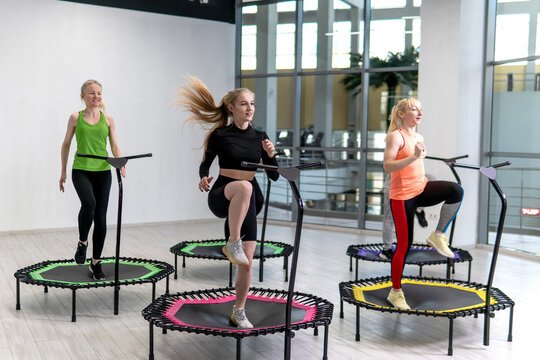
There is something quietly radical about joy. In a culture obsessed with optimizing every workout, tracking every calorie, and squeezing productivity from every waking hour, the idea of exercising by simply jumping up and down feels almost subversive. And yet, across backyards and living rooms, basements and rooftop terraces, trampolines are making a serious comeback not just as children's toys, but as genuine lifestyle tools for people of all ages.
This is not about nostalgia, though there is certainly some of that. This is about a growing recognition that movement does not have to be miserable to be meaningful. That fitness can feel like play. That the best habit you ever build might be one you actually look forward to.
So, what is really going on with this trampoline renaissance? And why are so many wellness-minded adults, parents, professionals, and fitness enthusiasts alike choosing to bring one into their lives?
The Problem With How We Think About Exercise
Let us be honest: most of us have a complicated relationship with exercise. We know we should do it. We start strong in January, skip a week in February, and by March the gym membership becomes a subscription we pay for without using. The issue is rarely motivation, it is friction. Exercise, for many people, feels like work. It is scheduled, effortful, and emotionally separate from the rest of life.
Research consistently shows that one of the strongest predictors of whether someone will maintain a physical activity long-term is whether they enjoy it. Not whether it burns the most calories, or builds muscle fastest; whether it genuinely feels good. And yet the fitness industry has spent decades packaging movement in the language of punishment and discipline.
Trampolining cuts through all of that. The moment you step onto a trampoline and start to bounce, something shifts. Your body engages automatically. Your breathing deepens. A smile often involuntary appears. This is not a coincidence. It is physiology.
What Happens to Your Body When You Bounce
The physical benefits of regular trampolining are surprisingly well-documented. Rebounding the term used for low-impact bouncing engages multiple muscle groups simultaneously, from the legs and core to the arms and back. Because the surface absorbs impact, the joints experience far less stress than they would during running or jumping on hard ground.
Studies have found that rebounding can improve cardiovascular fitness at rates comparable to jogging, while placing significantly less strain on the knees and hips. This makes it an exceptional option for people who love cardio but are managing joint pain, recovering from injury, or simply seeking something sustainable as they age.
Balance and coordination improve, too. Every time the surface moves beneath you, your body has to self-correct a process that quietly strengthens the small stabilizing muscles around your ankles, knees, and core. Over time, this translates into better posture, greater spatial awareness, and a reduced risk of falls in daily life.
The lymphatic system also benefits. Unlike the cardiovascular system, which has the heart to pump blood around the body, the lymphatic system relies almost entirely on movement and muscle contraction to circulate fluid. Rebounding with its rhythmic, full-body compression and release is one of the most efficient ways to stimulate this system, which plays a central role in immunity and waste removal.
The Mental Health Angle Nobody Talks About Enough
Physical benefits aside, perhaps the most compelling case for trampolining is the effect it has on the mind.
Exercise and mental health have a well-established relationship. Physical movement triggers the release of endorphins, serotonin, and dopamine, the neurochemicals associated with pleasure, calm, and motivation. But trampolining may have an edge over other forms of exercise here, because the act of bouncing activates the vestibular system: the part of the inner ear that governs our sense of balance and spatial orientation.
The vestibular system is directly connected to the emotional processing centers of the brain. Stimulating it through rhythmic movement the way rocking, swinging, and bouncing all do has a demonstrably calming effect on the nervous system. This is why babies are soothed by being rocked, why swings remain enduringly popular, and why adults often describe the experience of bouncing as almost meditative.
For people managing anxiety, stress, or low mood, a ten-minute bouncing session can function as a form of regulated movement therapy accessible, private, and requiring no special equipment beyond the trampoline itself.
There is also the matter of play. Adults do not play enough. We schedule leisure, optimize relaxation, and turn every hobby into a potential side hustle. Trampolining invites genuine, unstructured play in a way few other activities do. And play research increasingly confirms it is not just for children. It is a psychological necessity at every stage of life.
The Backyard Transformation: Making Space for Movement
One of the most significant lifestyle shifts in recent years has been the move toward home-based wellness. The pandemic accelerated this trend dramatically, but it has continued well beyond lockdowns. People are investing in their outdoor spaces not just for aesthetics, but for utility. A backyard is no longer just a lawn; it is potential living space, a place to cook, to gather, to breathe, and increasingly, to move.
A trampoline fits naturally into this vision. Unlike a home gym that requires a dedicated room, or a pool that demands significant upkeep, a quality outdoor trampoline integrates into the garden with relatively little fuss. Children use it spontaneously. Adults rediscover it on a lazy Sunday. Families find it becomes the default gathering point on warm evenings.
The key is choosing the right product. A flimsy trampoline with poor safety features will sit unused after the first few weeks either because it feels unstable, because someone gets hurt, or simply because it does not provide the satisfying bounce that makes the activity enjoyable. Quality matters enormously here, and it is worth understanding what separates a well-built trampoline from a cheap one.
For American families looking to make this investment, exploring options for trampolines for backyards from a reputable manufacturer ensures you get something built to last through multiple seasons, growing children, and the occasional ambitious adult. The difference in bounce quality, spring durability, and safety net design between a budget option and a well-engineered model is significant and felt the moment you step on it.
Indoor Bouncing: The Fitness Trampoline Revolution
Not everyone has a backyard. Apartment dwellers, city residents, and those in colder climates have turned to indoor alternatives and the market has responded with a category of compact, purpose-built equipment designed specifically for fitness use.
The indoor rebounder sometimes called a mini trampoline has grown from a niche fitness accessory into a mainstream piece of home gym equipment. At roughly a meter in diameter and low to the ground, it takes up about as much floor space as a yoga mat and can be stored vertically against a wall when not in use. Yet it delivers a full-body workout that many users find more genuinely engaging than any treadmill or stationary bike.
In Canada, for instance, demand for a quality fitness trampoline has grown substantially as people seek home workout options that feel genuinely enjoyable rather than obligatory. The best models in this category feature bungee-cord suspension rather than metal springs producing a quieter, lower-impact bounce that protects joints and can be used in apartment settings without disturbing neighbors.
Indoor bouncing sessions are flexible by nature. A ten-minute morning session can serve as a wake-up routine. A twenty-minute midday bounce breaks up a sedentary work-from-home day. An evening session becomes a decompression ritual. Unlike gym workouts, which require commuting and scheduling, the indoor trampoline eliminates every barrier between the impulse to move and the act of moving.
Trampolining as a Family Activity
One of the underappreciated values of a trampoline, particularly an outdoor one is its ability to bring family members of all ages together in shared, screen-free activity.
Children are drawn to trampolines instinctively. They need no instruction, no motivation, no reward chart. They simply bounce, and in doing so, they develop coordination, build strength, practice spatial awareness, and burn energy in a way that makes bedtime considerably easier for parents.
But the family dimension extends beyond children. Grandparents who might struggle with high-impact activity find that gentle bouncing is both accessible and enjoyable. Teenagers often resistant to organized exercise will spend hours on a trampoline with friends. Parents who join their children discover that ten minutes of bouncing is more genuinely fun than any fitness class they have paid for.
In a broader cultural moment defined by disconnection from nature, from each other, from our own bodies there is something genuinely meaningful about an activity that pulls people outside, away from screens, and into shared laughter.
Safety, Done Right
Any honest discussion of trampolining must address safety. Falls, collisions, and improper landings are real risks, and the history of cheap, poorly-designed trampolines has justifiably made some parents cautious.
The good news is that trampoline safety engineering has advanced considerably. Modern enclosure nets are designed to prevent users from falling off the edge, while padded covers protect the springs and metal frame. Better-quality trampolines are built with bounce characteristics that reduce the likelihood of uncontrolled movement. Many are independently certified against international safety standards, including CE and ASTM certifications.
Basic ground rules matter, too. Supervision is important for young children. A single-user policy of one person bouncing at a time eliminates the most common cause of injury, which is collision between multiple jumpers. Starting with low, controlled bouncing before attempting tricks or height gives the body time to adapt to the surface.
With appropriate equipment and sensible usage habits, trampolining carries no more inherent risk than cycling or swimming and considerably less than many contact sports children regularly participate in.
The Sustainability Argument
As consumers become more conscious of the environmental impact of their purchases, the longevity of a product matters more than ever much like long-term financial decisions such as loans. A trampoline that lasts a decade, serves multiple children across different stages of childhood, and can ultimately be recycled or responsibly disposed of is a very different proposition from one that ends up in landfill after two seasons.
Leading manufacturers in this space are increasingly attentive to these concerns, designing products with replaceable parts so that a worn mat or broken spring does not require replacing the entire unit, publishing recycling guidance, and committing to sustainability targets in their production processes. Roughly 99.5 percent of components in the best-designed models are recyclable, which is a meaningful consideration for any long-term investment.
When evaluating any major purchase for your home, it is worth asking not just about price and immediate quality, but about how the product is made and what happens to it at the end of life.
A Different Kind of Lifestyle Investment
We spend a great deal of money on wellness. Supplements, gym memberships, sleep trackers, meal plans the modern wellness economy is vast, and much of what it sells promises more than it delivers. The trampoline is, in some ways, the opposite of this: unglamorous, wonderfully simple, and genuinely effective.
It does not require an app. It does not demand a subscription. It does not need to be worn, consumed, or updated. It asks only that you step onto it and move. And in that simplicity, it delivers something the wellness industry often struggles to provide: actual enjoyment.
The lifestyle case for trampolining is not complicated. It is a form of exercise that people return to voluntarily. It works the body without punishing it. It benefits mental health, strengthens family bonds, and transforms outdoor space into something more alive. It scales from three-year-olds learning to balance to competitive trickers perfecting aerial maneuvers and serves every stage in between.
That is a rare combination. And it is why, for a growing number of people, the answer to the perennial question of how to move more and stress less turns out to be deceptively simple: bounce.
Where to Begin
If you are considering adding a trampoline to your life, the most important first decision is the simplest one: what fits your space and your life? For those with gardens and families, a larger outdoor model with a quality safety enclosure is the natural starting point. For apartment dwellers or solo users focused on daily fitness, a compact indoor rebounder is more practical and equally effective.
Both have genuine, lasting merit. Both can become fixtures of a healthier, more joyful daily routine. The best exercise, after all, is the kind you will actually do. And for a growing number of people across ages, lifestyles, and climates that turns out to be bouncing.
Tags : Trampolines health