Bharatvarsha Yatra: Journey Through India's Sacred and Timeless Heritage
By Piyush Agrawal 31-12-2025 61
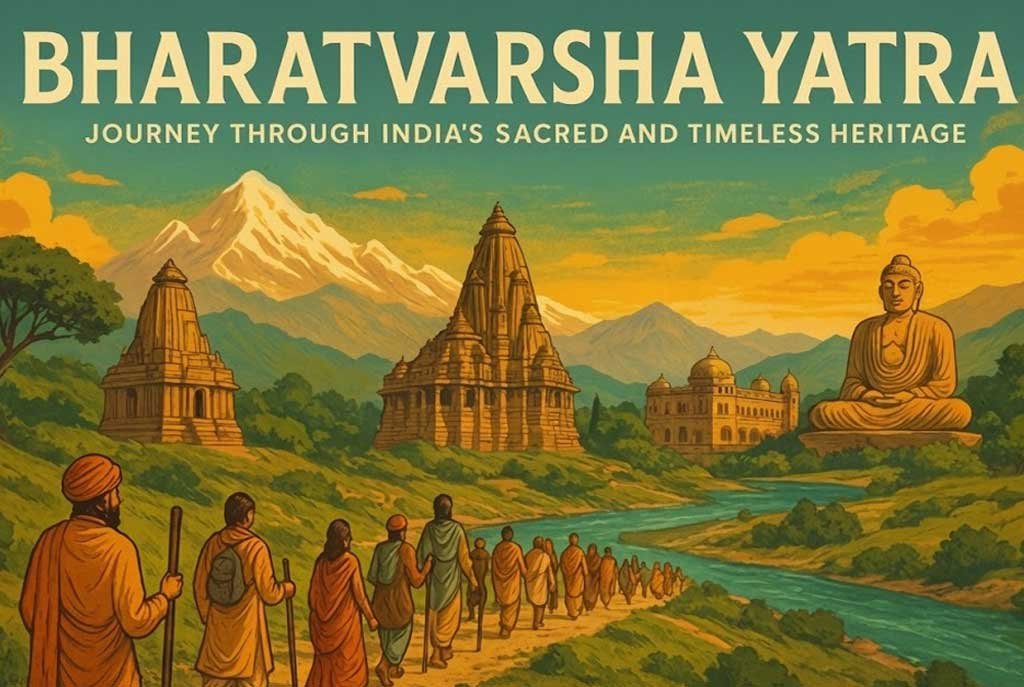
India, once called Bharatvarsha in ancient texts, is known around the world for its deep cultural and spiritual roots. From the Himalayas in the north to the southern seas, this land is shaped by a lasting heritage. A Bharatvarsha Yatra is more than just a journey; it is an invitation to explore the civilization, stories, and values that have shaped the Indian subcontinent.
Understanding Bharatvarsha
The term Bharatvarsha is deeply ingrained in India’s cultural heritage. It appears in ancient Hindu scriptures such as the Vishnu Purana and the Mahabharata. Several Jain and Buddhist texts also reference Bharatvarsha, using it to describe the geographical and cultural expanse traditionally associated with India and its surrounding regions.
The name 'Bharat' comes from the legendary emperor Bharata Chakravarti, who is respected in many traditions. In Hinduism, Bharata is known as a ruler who led with moral strength and followed the principles of dharma. In Jain stories, he is the son of the first Tirthankara, Rishabhanatha, and gave up his kingdom for spiritual freedom. In Buddhist accounts, Bharata represents leadership, justice, and compassion. Because of his legacy, the land became known as Bharatvarsha, or 'the land of Bharata.'
Bharatvarsha once meant more than just present-day India. It included areas that are now Pakistan, Nepal, Bangladesh, Afghanistan, Sri Lanka, and parts of Southeast Asia. Ancient thinkers saw this land as sacred, believing its landscapes were filled with divine energy.
The Spiritual Essence of the Yatra
A Bharatvarsha Yatra follows the paths of pilgrims, sages, and seekers who have traveled these lands for thousands of years. Unlike regular travel, this journey helps people connect with the spiritual traditions that run through the subcontinent.
Holy rivers such as the Ganga, Yamuna, Narmada, Godavari, and Kaveri are revered as divine mothers. Their waters are believed to purify both the body and the soul. Taking a dip in these rivers is said to wash away sins and renew spiritual resolve. Mountains like the Himalayas, Vindhyas, and Sahyadris are seen as eternal guardians of wisdom. They offer sanctuaries for meditation and ascetic practices.
Pilgrimage towns such as Kashi, Ayodhya, Mathura, Dwarka, Haridwar, Rameswaram, and Puri are important centers of worship and tradition. Visiting these places helps people connect more deeply with dharma. Pilgrims can see and take part in the rituals and beliefs that have shaped Indian civilization.
Historical and Cultural Significance
The concept of Bharatvarsha is closely linked to India’s grand epics and historical narratives. The Mahabharata describes Bharatvarsha as the heartland, where karma bears its most powerful fruit, emphasizing its unique spiritual significance. An example of this historical breadth can be found in the Ashokan Edicts, which delineate the extent of Bharatvarsha during Emperor Ashoka's reign, illustrating its vast reach and cultural unity.
Emperor Bharata, after whom the land is named, is celebrated as a political unifier and a moral exemplar. Ancient Indian kings aspired to be Chakravartins, or universal monarchs who ruled ethically and justly over diverse peoples. This vision of righteous kingship fostered political cohesion and cultural harmony across vast territories.
Bharat has a rich tradition of literature in languages like Sanskrit, Prakrit, Pali, and Tamil, which led to the creation of epics, plays, and important writings on philosophy, science, and government. Impressive architecture, from the Ajanta and Ellora caves to grand temples in Tamil Nadu and Odisha, reflects the spiritual spirit of this land. At Ajanta, the sound of monks chanting in the caves brings to mind a time of quiet devotion. In Madurai, the lively markets and the scent of jasmine and incense show the energy of life today. The Bharatvarsha Yatra brings together history, mythology, and culture.
Bharatvarsha Yatra in Practice
Today, a Bharatvarsha Yatra can take many forms. Some pilgrims follow the traditional Char Dhams—Badrinath in the north, Rameswaram in the south, Dwarka in the west, and Puri in the east. These are believed to grant spiritual liberation. Others join massive gatherings such as the Kumbh Mela, the world’s largest congregation of humanity, which is held on the banks of sacred rivers.
Key destinations on the Yatra include:
Ayodhya – Birthplace of Lord Rama and associated with Bharata, his devoted brother.
Prayagraj – The confluence (Triveni Sangam) of the Ganga, Yamuna, and Saraswati, considered the holiest of meeting points.
Varanasi (Kashi) – Among the oldest continuously inhabited cities in the world, it is revered as the city of Lord Shiva.
Ujjain – Home to the Mahakaleshwar Jyotirlinga, a powerful Shaivite shrine.
Bodh Gaya – Where Lord Buddha attained enlightenment, marking India’s significance to global spirituality.
Sravanabelagola – A Jain pilgrimage site in Karnataka, known for the colossal statue of Lord Bahubali.
Kanchipuram and Madurai are centers of South Indian temple culture. Visiting these places helps pilgrims see Bharatvarsha not just as a location, but as a living heritage that continues through its sacred sites, stories, and rituals.
The Journey Beyond Geography
The Bharatvarsha Yatra is not just about visiting sacred places; it is also a journey within. Each step encourages qualities like compassion, self-control, and letting go. At dawn, pilgrims often stop to meditate, enjoying the quiet of the early morning. This moment of reflection balances the physical journey. Pilgrims also practice simplicity by walking barefoot, sharing simple meals, and praying. These actions help them connect with the sacred spirit of the land.
In many ways, the Yatra is like life itself, full of challenges and devotion. Rivers show the flow of life, mountains stand for strength, and temples are places of peace. These inspire pilgrims to live ethically and be more aware spiritually. To bring the spirit of the Yatra into daily life, you could start your day by chanting a mantra at sunrise or offer a simple meal to someone in need. These small actions help make spirituality a real part of everyday life.
Bharatvarsha Yatra in the Modern Age
Today, the Bharatvarsha Yatra is open to everyone, not just ascetics or saints. Better travel options, cultural tourism, and efforts to preserve heritage have helped millions of people, both from India and abroad, rediscover this ancient tradition. Modern Yatras can be walking pilgrimages on old routes or guided tours that mix spirituality with cultural learning.
The Yatra also acts as a unifying force in contemporary India. In a nation rich in linguistic, regional, and cultural diversity, pilgrimage routes link communities and foster a shared spiritual landscape. Whether Shaivite, Vaishnavite, Buddhist, Jain, or Sikh, the Yatra honors the land’s sacredness and a vision of unity.
The Yatra also helps keep India’s sacred sites, like Bodh Gaya, vibrant and welcoming to visitors from around the world. Festivals such as Diwali, Navratri, and Rath Yatra are celebrated with great energy, showing how Bharatvarsha’s traditions continue to thrive.
Embracing the Legacy
The Bharatvarsha Yatra connects the past and present, highlighting India’s long history as a civilization. It honors a heritage that changes over time but keeps its spiritual heart.
This sacred journey is more than just visiting rivers, mountains, and cities. It is also about exploring your own beliefs and devotion. By walking this ancient path, pilgrims take part in a tradition that has shaped many lives and still guides people today.
Taking part in a Bharatvarsha Yatra lets you see history and tradition come together with modern life, and experience the living, sacred heart of India.
Tags : Bharatvarsha Yatra