Beyond the Screen: How Liveness Detection Is Redefining Digital Security
By Andrew Lauzan 28-01-2026 31
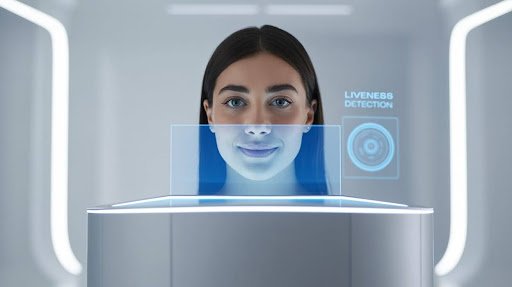
With the digitization of interactions becoming more of a verification than a face-to-face one, making sure that there is a real human face behind a screen is becoming a major issue of concern. Organizations have become very dependent on biometric authentication since it is used in mobile banking and online payments, as well as remote onboarding and access control. Nevertheless, conventional biometric systems can be spoofed by use of photos, videos, masks or synthetic media. This is where liveness detection comes in. Liveness check is used to verify that the biometric data is taken in real time when the individual is alive and not a counterfeit or artificial one.
What Is Liveness Detection?
Liveness detection is a security feature in biometric system that is applied to ensure that the biometric trait presented, which could be a face, fingerprint, or voice, belongs to a living person. Compared to basic biometric matching, which only verifies similarity, a liveness detection solution is also concerned with authenticity. It ascertains the state of the biometric sample being taken to be of an actual person during the time of verification.
This technology is usually implemented together with facial recognition, fingerprint scanning and voice authentication to avoid identity fraud and unauthorized access.
The importance of Liveness Detection
Identity-based fraud has also been on the increase as a result of the emergence of digital services. The bypass of biometric systems is now done through printed pictures, recorded videos, silicone masks, and even deepfakes. These attacks can be done with very ease in the absence of liveness detection.
Liveness detection can secure the organization and users, ensuring account takeovers, financial fraud, and data breaches are avoided. It is particularly significant in other sectors like banking, fintech, health, government services, and travel where identity check is essential. Liveness detection creates trust and compliance to digital ecosystems by ensuring only real and present users can authenticate.
Types of Liveness Detection
There are two broad categories of liveness detection methods namely active and passive.
Active Liveness Detection
Active liveness detection involves involvement of the user. The system will make the user carry out certain actions as blinking, smiling, turning their head or responding to instructions on the screen. Such measures cannot be easily reproduced with non-moving pictures or already recorded videos and hence they are good with introducing simple spoofing.
Although the active methods are considered as reliable, there are also occasions that they may affect the user experience, particularly when the process seems intrusive or repetitive.
Passive Liveness Detection
Passive liveness detection is an automatic process and does not need the user to make any conscious effort. It examines minute indicators like the skin texture, light reflections, depth cues, micro-motions or blood flow patterns. Passive approaches offer a less user-intensive experience and are becoming a common approach in mobile and web applications.
Liveness Detection as a comparison to Deepfake and Spoofing Attacks
With the further development of deepfake technology, active liveness detection has developed in an attempt to combat such threats. Contemporary systems are able to detect anomalies of the face, unnaturalistic light or flatness that are usually commonly known in synthetic media. Face, voice and behavioral data (or multimodal) are especially effective against advanced attacks. Through liveness detection combined with other security measures, organizations would be able to minimize the chances of biometric spoofing and synthetic identity fraud considerably.
Liveness Detection is difficult to implement
Liveness detection is associated with challenges regardless of all these advantages. One of the problems is the security and convenience between the user. Strict systems can be very strict and can detract individuals who are authentic because of the light conditions, the quality of the camera, or because of natural facial variations, resulting in false rejections. The other obstacle is diversity of devices. Liveness detection should be compatible with various smartphones, web cameras and sensors that have different capabilities. The issue of privacy should also be taken into consideration since biometric information is very sensitive; it should be stored and processed in a safe environment and in accordance with the regulations available in data protection.
Use Cases Across Industries
Digital onboarding Liveness detection is a popular tool used by banks and fintech firms to authenticate the identity of the customer remotely. It aids in patient records protection and insurance frauds in the medical sphere. It is a secure method of government agencies accessing e-services and border control systems. Liveness detection is used to make sure that only legitimate users gain access to information even in mundane tasks such as unlocking a smartphone and taking tests on the internet.
The Future of Liveness Detection
The way forward in liveness detection is more seamless, intelligent and privacy conscious solutions. The development of AI will keep enhancing precision and make users less frictional. It is new, where liveness is not authenticated once in a session but continuously, through a session.
With the emergence of digital identity as the center of contemporary life, liveness detection will continue to play a central role in the biometric systems of security and trust.
Conclusion: The Real Humans in Virtual World
Liveness detection is not a luxury anymore: it is a must in the digital-first world we live in today. It prevents biometric systems against spoofing, fraud and abuse by establishing the true presence of actual human beings. With threats in the system changing, liveness detection technologies change and assist organizations and individuals to engage in online communication with more confidence, security, and trust.
Tags : Liveness Detection