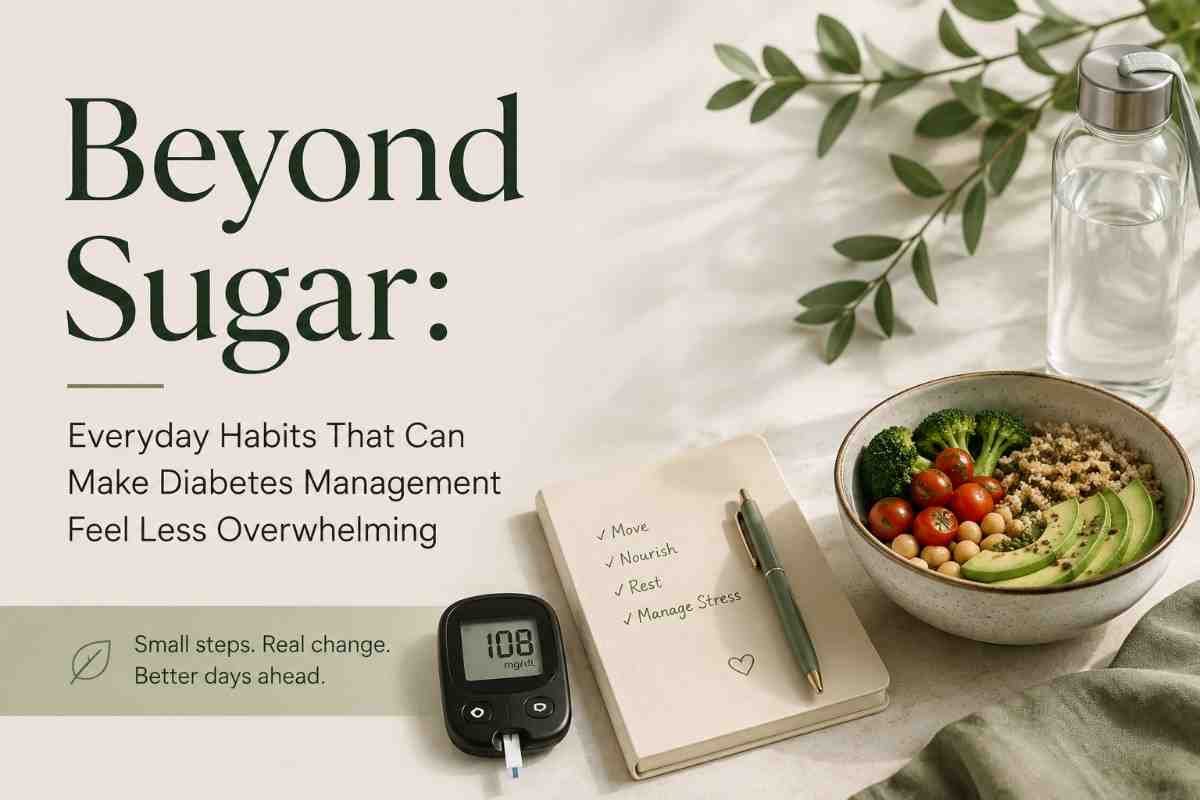
Beyond Sugar: Everyday Habits That Can Make Diabetes Management Feel Less Overwhelming
By keerthika 19-09-2026 13
Managing diabetes can sometimes feel like a full-time job.
There are meals to think about, medications to remember, appointments to keep and blood glucose levels to monitor. Add work, family and everyday responsibilities, and it's easy to see why some people feel overwhelmed.
The good news is that diabetes management doesn't have to mean changing everything overnight.
Small habits can make a routine feel more manageable. The key is finding changes that fit into everyday life rather than trying to follow a perfect plan for a week and then giving up.
Start With the Habits You Can Actually Keep
Big changes sound impressive.
Wake up early. Exercise every day. Prepare every meal from scratch. Never eat anything sweet again.
Real life usually has other ideas.
A more realistic approach is to start small. Maybe you begin by eating meals at more regular times. Perhaps you add a short walk to your day or become more consistent with checking your blood glucose as advised by your healthcare team.
Small changes may not feel dramatic, but they are often easier to maintain.
And consistency matters.
Food Doesn't Have to Become the Enemy
Being told to pay attention to what you eat can sometimes make food feel stressful.
Suddenly, every meal comes with questions.
Can I eat this?
How much should I have?
Did I make the wrong choice?
Rather than focusing on one "good" or "bad" food, it can help to look at your overall eating pattern.
Regular meals, appropriate portions and a balanced approach can make everyday decisions feel less complicated. A healthcare professional or registered dietitian can also provide advice based on your individual needs.
You don't have to eat perfectly to make positive changes.
Don't Forget About Movement
Exercise doesn't have to mean joining a gym or spending an hour doing something you dislike.
Movement can be much simpler.
A walk after dinner.
Taking the stairs when practical.
Dancing at home.
Cycling.
Gardening.
The best activity is often the one you're willing to do again tomorrow.
If you're starting something new, choose a pace that feels manageable and discuss any concerns with your healthcare team, especially if you have other health conditions.
Look Beyond the Front of Supplement Labels
Supplements are often marketed with simple promises.
"Supports blood sugar."
"Daily wellness."
"Natural support."
Those phrases can make a product sound like an easy answer. But it's still important to read the full label.
A diabetic gummy may be convenient for someone who prefers gummies over tablets, but convenience alone doesn't tell you whether the ingredients are suitable for your individual needs.
Check the serving size, ingredients and nutrition information before adding anything new to your routine.
Sugar-Free Is Only One Part of the Picture
The words "sugar-free" can immediately catch your attention.
But don't stop reading there.
A sugar free gummy for diabetics may still contain other ingredients or carbohydrates that you want to consider as part of your overall eating plan.
Look at the serving size too.
Sometimes one serving includes more than one gummy, which can change the amount you're actually consuming.
Taking an extra minute to read the label is often more useful than choosing a product based on one claim printed on the front.
Supplements Shouldn't Replace Your Diabetes Care
There are many products marketed toward people with diabetes.
Some are vitamins. Some are minerals. Others contain combinations of herbs and other ingredients.
You may also come across diabetes gummies marketed as an easy addition to a daily routine.
Before adding a supplement, ask yourself a few simple questions:
- Why am I taking this?
- What ingredients does it contain?
- Am I already taking something similar?
- Could any ingredients interact with my medication?
If you're unsure, speak with a doctor or pharmacist before starting something new.
A supplement should not replace prescribed medication, recommended monitoring or the diabetes care plan provided by your healthcare team.
Sleep Can Make Everything Feel Harder
After a poor night's sleep, almost everything becomes more difficult.
You're tired.
Your concentration disappears.
Healthy choices can feel harder to make.
Sleep problems are common and can have many different causes. Building a more consistent bedtime routine may help some people, but ongoing sleep difficulties are worth discussing with a healthcare professional.
You don't need a complicated evening routine.
Try a few basics.
Keep a regular sleep schedule when possible.
Reduce caffeine later in the day if it affects you.
Give yourself time to unwind.
Even small adjustments can make a routine feel more manageable.
Stress Is Part of the Picture Too
Nobody can remove all stress from their life.
That's not realistic.
But finding a way to manage some of it can still be useful.
Take a walk.
Spend time with people you enjoy.
Listen to music.
Take a break from your phone.
Do something that gives your mind a chance to slow down.
Stress looks different for everyone, so the best approach is usually the one you can realistically keep doing.
Keep Your Healthcare Team in the Conversation
You don't have to figure everything out alone.
If something isn't working, say so.
If a routine feels impossible to maintain, mention it.
If you're experiencing changes in your blood glucose levels or have concerns about medication, bring them up with your healthcare professional.
The best diabetes management plan is one that takes your individual needs and everyday life into account.
The Goal Isn't Perfection
There will be busy days.
Meals won't always go according to plan.
You might miss a walk.
You might have a stressful week where your usual routine disappears.
That doesn't mean you've failed.
Diabetes management is not about being perfect every day.
It's about returning to the habits that support your health and making adjustments when you need to.
Start with one small change.
Make it realistic.
Give yourself time.
Then build from there.
Managing diabetes may involve many daily decisions, but you don't have to solve everything at once. Sometimes, the most sustainable progress starts with making one part of the day a little easier.