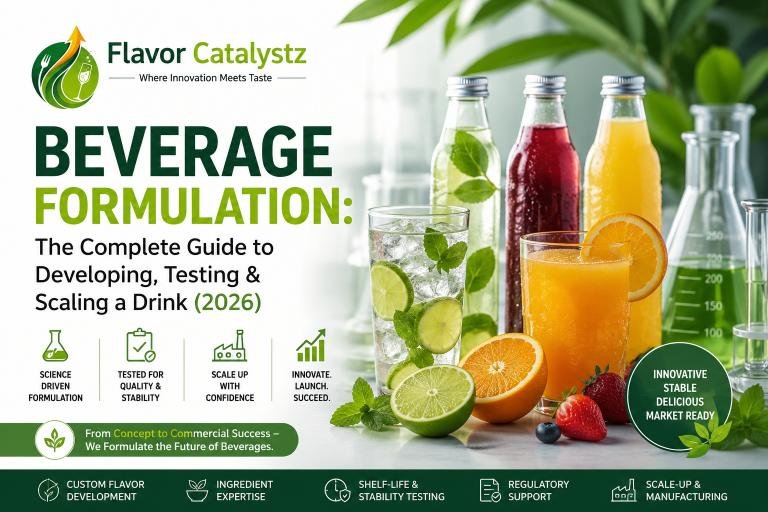
Beverage Formulation: The Complete Guide to Developing, Testing & Scaling a Drink (2026)
By flavor catalyst 29-06-2026 69
Launching a successful beverage in today's competitive market takes much more than a good idea. Consumers expect drinks that taste great, offer health benefits, have clean labels, and remain fresh from the day they're bottled until the day they're opened. Behind every successful beverage is a carefully planned Beverage Formulation process that combines food science, creativity, and manufacturing expertise.
Whether you're creating an energy drink, flavored water, protein shake, fruit juice, herbal beverage, or ready-to-drink (RTD) coffee, developing the right formula is the foundation of your product's success. From selecting ingredients to testing shelf life and scaling production, every step plays a critical role.
In this guide, we'll walk through the complete beverage development journey and explain what it takes to turn an idea into a market-ready product.
What is Beverage Formulation?
Beverage Formulation is the process of developing a beverage recipe that delivers the perfect balance of flavor, texture, nutrition, stability, and shelf life. It involves selecting the right ingredients, testing different combinations, and ensuring the final product performs consistently during manufacturing and storage.
A well-formulated beverage doesn't just taste good. It also maintains its quality over time, complies with food safety regulations, and can be produced efficiently at a commercial scale.
Every Great Beverage Starts with an Idea
Before choosing ingredients or running laboratory tests, it's important to define your product concept. Ask yourself:
Who is your target audience?
What problem does your drink solve?
Is it focused on hydration, energy, nutrition, or wellness?
Will it be carbonated or still?
What type of packaging will you use?
Answering these questions helps create a clear roadmap for product development and ensures every decision supports your business goals.
Selecting the Right Ingredients
Ingredients are the heart of any beverage. Each one affects flavor, appearance, nutritional value, cost, and shelf life.
Some of the most common beverage ingredients include:
Purified water
Natural fruit concentrates
Sugar or natural sweeteners like stevia
Citric or malic acid for flavor balance
Natural or artificial flavors
Vitamins and minerals
Plant extracts
Electrolytes
Stabilizers and emulsifiers
Natural colors
Preservatives when required
The challenge is finding the right balance. Too much acidity can overpower the flavor, while insufficient sweetness may leave consumers disappointed.
Creating the Perfect Flavor Profile
Flavor is often the deciding factor between a successful product and one that never gains traction.
Developing the ideal beverage requires balancing sweetness, acidity, aroma, and mouthfeel. Beverage developers create multiple versions of a recipe before selecting the final formulation.
Small adjustments can make a huge difference. Even changing one ingredient by a fraction of a percent may improve taste, reduce production costs, or increase shelf stability.
This is why professional Beverage Formulation relies on both scientific testing and sensory evaluation rather than guesswork.
Laboratory Testing Comes First
Once the initial recipe is developed, it moves into laboratory testing.
During this stage, specialists measure several important factors, including:
pH level
Sugar content (Brix)
Color consistency
Viscosity
Microbial safety
Flavor stability
These tests help identify potential issues before investing in large-scale production.
Shelf-Life Testing is Essential
A beverage should taste just as good months after production as it did on the day it was made.
Shelf-life testing evaluates how a beverage changes over time. Developers monitor:
Flavor retention
Color changes
Ingredient separation
Sedimentation
Nutritional stability
Packaging compatibility
Testing under different temperature conditions also helps predict how the product will perform during transportation and storage.
Scaling from the Lab to Manufacturing
Creating a drink in a laboratory is one thing. Producing thousands of bottles every day is another challenge entirely.
Before full-scale production begins, manufacturers produce pilot batches using commercial equipment. This step ensures the recipe behaves the same way in larger volumes.
Scaling involves checking:
Mixing efficiency
Homogenization
Pasteurization performance
Filling accuracy
Production speed
Batch consistency
A successful Beverage Formulation should produce the same taste and quality whether you're making 50 liters or 50,000 liters.
Listening to Consumer Feedback
Even if a beverage performs well in the lab, the real test comes from consumers.
Taste panels provide valuable insights about:
Sweetness
Aroma
Mouthfeel
Flavor intensity
Packaging appeal
Overall satisfaction
Consumer feedback often leads to minor adjustments before a product officially launches.
Meeting Food Safety Standards
Every commercial beverage must comply with food regulations.
Manufacturers need to ensure proper labeling, approved ingredients, nutritional accuracy, allergen declarations, and hygienic production practices.
Following these standards not only protects consumers but also builds trust in your brand.
Beverage Trends in 2026
Consumer preferences continue to evolve, creating exciting opportunities for beverage brands.
Some of the fastest-growing categories include:
Functional beverages
Protein drinks
Low-sugar beverages
Natural energy drinks
Electrolyte beverages
Plant-based drinks
Botanical beverages
Immunity-support beverages
Gut-health drinks
Premium sparkling beverages
Innovation remains one of the biggest drivers of success in the beverage industry.
Common Challenges During Beverage Development
Developing a new beverage isn't always straightforward. Some common challenges include:
Flavor instability
Ingredient incompatibility
High production costs
Short shelf life
Separation of ingredients
Maintaining consistency during scale-up
Regulatory compliance
Working with experienced beverage formulation specialists helps reduce these risks and speeds up the development process.
Choosing the Right Beverage Development Partner
If you're planning to launch a beverage, partnering with experienced professionals can save significant time and money.
A reliable beverage development partner should provide:
Custom recipe development
Flavor optimization
Ingredient sourcing support
Pilot production
Shelf-life testing
Regulatory guidance
Commercial manufacturing support
Having technical expertise throughout the process increases the chances of launching a successful product.
Final Thoughts
The beverage industry is more competitive than ever, but innovative products continue to capture consumer attention. Success doesn't happen by chance. It comes from careful planning, scientific testing, and continuous improvement.
Investing in professional Beverage Formulation helps businesses create beverages that taste exceptional, meet regulatory standards, remain stable during storage, and perform consistently during large-scale manufacturing.
Whether you're developing a health drink, fruit beverage, protein shake, functional wellness drink, or premium RTD product, the right formulation process can transform your idea into a successful commercial brand.
If you're looking for expert support in beverage product development, custom drink formulation, flavor optimization, ingredient selection, and commercial scale-up, Flavor Catalystz offers end-to-end beverage formulation solutions tailored to your business goals.
Frequently Asked Questions (FAQs)
1. What is beverage formulation?
Beverage formulation is the process of creating a balanced drink recipe by selecting ingredients, optimizing flavor, ensuring safety, and preparing the product for commercial manufacturing.
2. How long does it take to develop a new beverage?
Most beverage development projects take anywhere from 6 weeks to 6 months, depending on product complexity, testing requirements, and regulatory approvals.
3. Why is shelf-life testing important?
Shelf-life testing ensures a beverage maintains its taste, quality, appearance, and safety throughout its intended storage period.
4. Can a beverage recipe be scaled for mass production?
Yes. After laboratory development and pilot testing, beverage formulations can be optimized for commercial-scale manufacturing while maintaining consistent quality.
5. Why should businesses work with a beverage formulation expert?
Experienced beverage formulation specialists help reduce development time, improve product quality, solve technical challenges, and prepare beverages for successful commercial production.
Tags : Beverage Formulation