Baggage Scanner Manufacturer in India: Features, Applications & Buying Guide
By Boom Barrier 29-09-2026 19
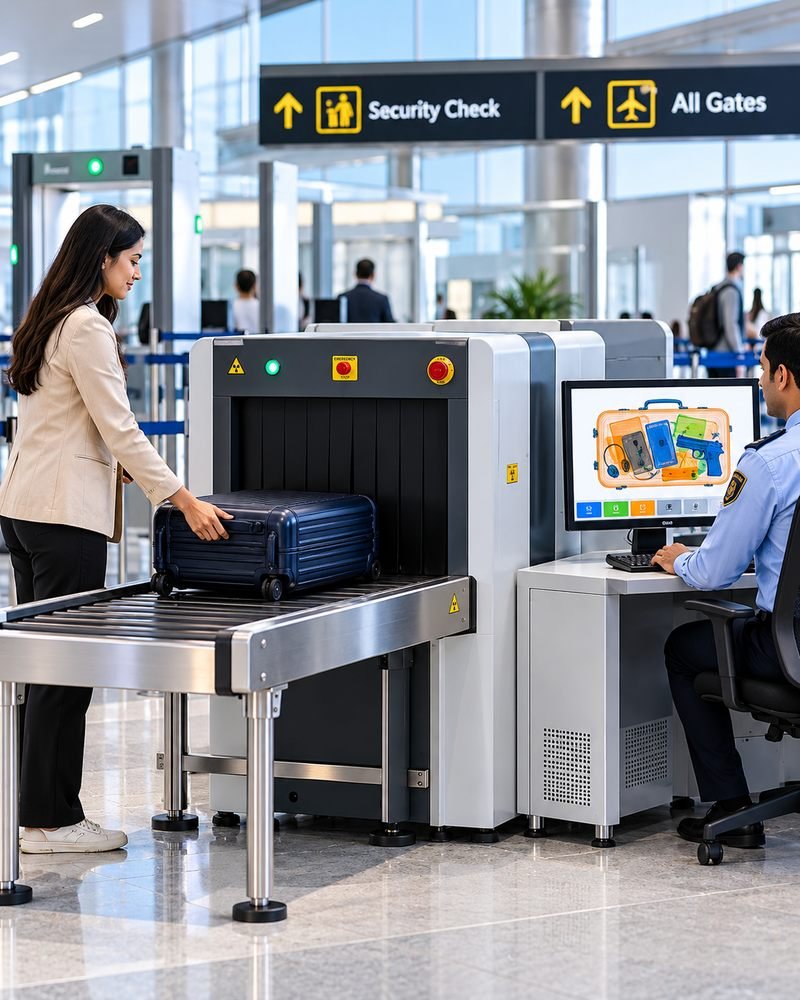
Security screening has become an important part of managing airports, railway stations, government facilities, corporate buildings, hotels, educational institutions, industrial sites, and other high-security environments. X-Ray baggage scanners provide a non-intrusive method for inspecting bags, parcels, and luggage before they enter controlled areas.
Organizations looking for a Baggage Scanner Manufacturer in India should evaluate image quality, tunnel size, detection capabilities, safety features, system reliability, installation requirements, and after-sales support before selecting a solution.
What Is an X-Ray Baggage Scanner?
An X-ray baggage scanner is a security screening system designed to examine the contents of luggage and packages without requiring them to be physically opened.
The scanner uses X-ray technology to generate an image of objects inside a bag. Security personnel can examine the displayed image and identify items that may require further inspection.
These systems are commonly used at controlled entry points where efficient baggage screening is required.
How Does a Baggage Scanner Work?
A typical screening process works as follows:
Bag Placement → Conveyor Movement → X-Ray Scanning → Image Generation → Security Inspection
The baggage is placed on the conveyor belt and transported through the scanning tunnel. X-ray technology creates an image of the contents, which is displayed on the operator's monitor.
The operator can then inspect the image and determine whether additional physical screening is necessary.
Key Features of Baggage Scanners
1. High-Resolution X-Ray Imaging
Clear imaging helps security operators examine the contents of baggage and packages more effectively.
2. Conveyor-Based Screening
A motorized conveyor system allows baggage to move through the inspection tunnel in a controlled manner.
3. Image Enhancement
Depending on the model, image-processing functions can help operators examine different areas of a scanned bag.
4. Material Differentiation
Advanced systems may provide different image representations to assist operators in distinguishing between various material types.
5. Compact Operation
Different tunnel sizes and configurations are available for applications ranging from small parcels to larger baggage.
6. Operator Display
The scanning system typically includes a monitor that allows security personnel to view and analyze X-ray images.
7. Security Screening Functions
Depending on the model and configuration, additional detection and image-analysis features may be available.
8. Integration Capability
Baggage scanners can form part of a broader security screening setup alongside metal detectors, access-control systems, CCTV, and other security equipment.
Where Are Baggage Scanners Used?
X-ray baggage scanners can be used in many environments, including:
- Airports
- Railway stations
- Metro facilities
- Government buildings
- Corporate offices
- Hotels
- Shopping malls
- Educational institutions
- Hospitals
- Industrial facilities
- Warehouses
- Courthouses
- Stadiums
- Event venues
The appropriate scanner depends on baggage size, expected screening volume, available space, and the security requirements of the facility.
X-Ray Baggage Scanner for Security Screening
An X-ray baggage scanner can help security teams inspect luggage without opening every bag manually.
This can improve the efficiency of screening operations, particularly at entrances where a large number of bags need to be processed.
The system can be deployed at a security checkpoint with trained operators responsible for examining the resulting images and following the site's established screening procedures.
How to Choose a Baggage Scanner Manufacturer in India
Selecting the right manufacturer or supplier requires evaluation of both technical specifications and service capabilities.
Tunnel Size
Choose a tunnel size appropriate for the type and dimensions of baggage that will be screened.
Image Quality
Image clarity is an important consideration because operators need to examine objects inside baggage.
Screening Volume
Consider the number of bags expected during normal and peak operating periods.
Conveyor Capacity
Check the conveyor dimensions and load capacity according to the intended application.
Software and Image Processing
Evaluate available image enhancement, zoom, image storage, and other operator functions.
Safety Features
Review the scanner's safety mechanisms and compliance documentation applicable to the installation.
Installation
Consider site preparation, equipment installation, operator training, and commissioning support.
Maintenance and Service
Availability of spare parts, technical support, warranty coverage, and maintenance services should also be considered.
Baggage Scanner vs Manual Baggage Inspection
Manual inspection requires security personnel to physically open and examine baggage. An X-ray baggage scanner allows operators to examine the contents without opening every bag.
This makes X-ray screening useful at locations where security teams need to process significant baggage volumes while maintaining controlled access procedures.
However, X-ray screening does not necessarily replace physical inspection. Depending on the security protocol and image findings, additional inspection may still be required.
Baggage Scanner for Airports and Transportation Facilities
Transportation facilities can experience significant passenger and baggage movement. X-ray baggage scanners can be deployed at security checkpoints to screen luggage before passengers enter restricted areas.
Airports, railway stations, metro facilities, and bus terminals can select different scanner configurations based on baggage dimensions, traffic levels, and available installation space.
For high-volume environments, system reliability and operator efficiency are particularly important considerations.
Baggage Scanner for Corporate and Industrial Facilities
Corporate offices, factories, warehouses, and industrial facilities may also require baggage and parcel screening at controlled entrances.
An X-ray scanner can be integrated into a broader security checkpoint that may include:
- Door Frame Metal Detectors
- Hand-Held Metal Detectors
- Access-Control Systems
- CCTV
- Visitor Management Systems
- Turnstiles
- Security personnel
Combining different security technologies can help organizations create a structured screening process based on their site requirements.
Baggage Scanner Buying Checklist
Before purchasing an X-ray baggage scanner, buyers should evaluate:
- ✔ Tunnel size
- ✔ Conveyor dimensions
- ✔ Conveyor load capacity
- ✔ Image resolution
- ✔ Image enhancement features
- ✔ Material differentiation
- ✔ Operator display
- ✔ Screening throughput
- ✔ Safety features
- ✔ Applicable compliance requirements
- ✔ Installation support
- ✔ Operator training
- ✔ Warranty
- ✔ Spare-parts availability
- ✔ After-sales service
Frequently Asked Questions
What is a baggage scanner?
A baggage scanner is an X-ray-based security screening system used to inspect the contents of luggage, bags, parcels, and other items without physically opening them.
What is an X-ray baggage scanner used for?
It is used to screen baggage and packages at controlled security checkpoints in locations such as airports, railway stations, offices, industrial facilities, government buildings, and event venues.
Can baggage scanners detect objects inside luggage?
X-ray imaging allows operators to view objects inside luggage. The ability to identify a particular item depends on the scanner's specifications, image quality, operating conditions, and operator assessment.
Where are baggage scanners commonly installed?
They are commonly installed at airports, railway stations, metro facilities, government premises, corporate offices, hotels, industrial facilities, stadiums, and other controlled-access locations.
How do I choose a baggage scanner manufacturer in India?
Compare tunnel size, image quality, conveyor capacity, screening requirements, safety features, installation support, warranty, spare parts, and after-sales service.
Does an X-ray baggage scanner replace physical inspection?
Not necessarily. X-ray screening can help identify bags that may require additional inspection, but the final screening procedure depends on the security policy and requirements of the facility.
Final Thoughts
An X-ray baggage scanner can provide an efficient method for inspecting luggage and packages at controlled security checkpoints. By allowing operators to view the contents of baggage without opening every item, these systems can support organized and efficient screening operations.
Organizations searching for a Baggage Scanner Manufacturer in India should consider technical specifications, application requirements, operator usability, safety features, installation support, and long-term maintenance before selecting a system.
Choosing a scanner based on the actual baggage size, screening volume, installation environment, and security requirements can help organizations develop a more suitable baggage-screening setup.