Automatic Flap Barrier for Modern Entrance Security: Integration, Safety & Applications
By Global Outreach 30-09-2026 9
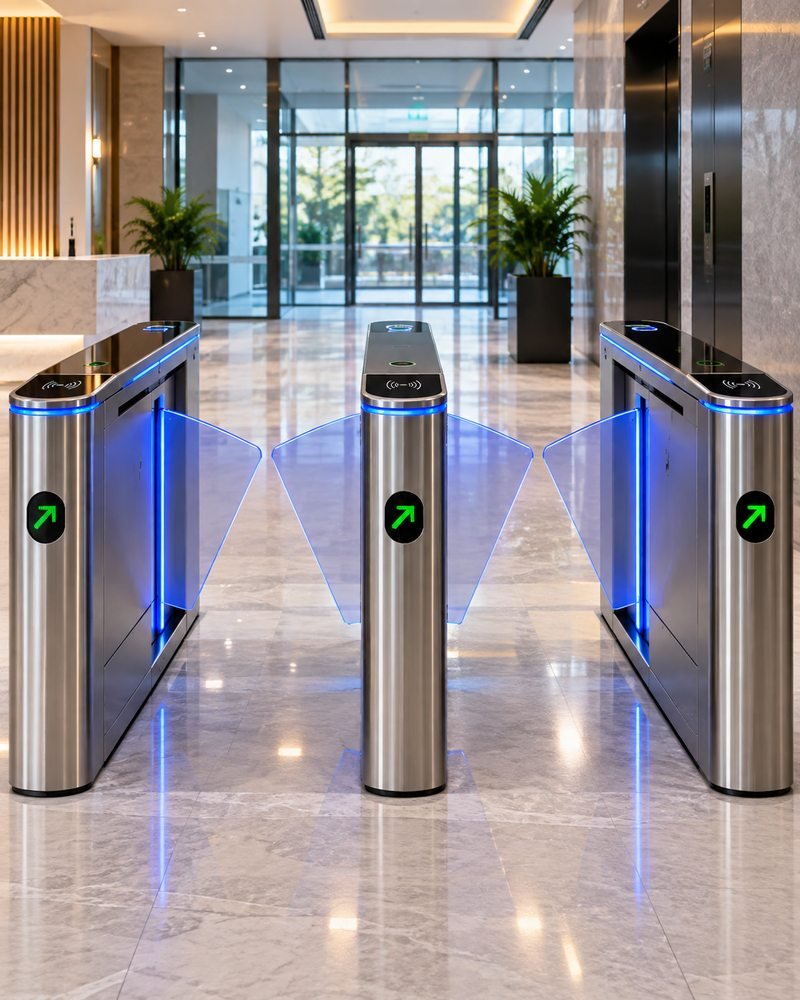
Modern buildings need access-control systems that can regulate pedestrian movement while working with existing security and identification technologies. An automatic flap barrier provides a controlled entrance solution for offices, commercial buildings, transportation facilities, educational institutions, industrial premises, and other locations where authorized pedestrian access needs to be managed.
Unlike a conventional gate, an automatic flap barrier can communicate with access-control systems and open only after the user's credentials have been successfully verified. Depending on the configuration, it can support RFID cards, biometric readers, QR credentials and other authentication technologies.
What Is an Automatic Flap Barrier?
An automatic flap barrier is a motorized pedestrian access-control gate that uses retractable or swinging flaps to regulate passage through a designated lane.
The barrier remains in a controlled position until an authorized access signal is received. After authentication, the flaps open to allow the user to pass and then return to the controlled position.
The system can be connected to access-control software, RFID readers, biometric devices, visitor management platforms and other security infrastructure.
How Does an Automatic Flap Barrier Work?
A typical access sequence includes:
- A person approaches the designated pedestrian lane.
- The user presents an RFID card, QR credential, biometric credential or other authorized identification.
- The access-control system verifies the credential.
- The controller sends an authorization signal to the flap barrier.
- The flaps open to allow the authorized person to pass.
- Sensors monitor the passage.
- The barrier returns to its secure position after the user crosses.
The exact operation depends on the selected hardware, controller and access-control software.
Key Features of Automatic Flap Barriers
Modern flap barriers can include a range of features depending on the project configuration:
- Automatic motorized operation
- RFID access integration
- Biometric reader integration
- QR-code access
- Two-way access control
- Anti-tailgating functionality
- Passage detection
- LED status indicators
- Emergency release
- Access-control software integration
- Visitor management integration
- Attendance system integration
- CCTV integration
- Stainless-steel construction options
- Indoor and controlled-environment applications
Organizations should select features according to pedestrian traffic, security requirements and existing infrastructure.
RFID Integration
RFID is commonly used for controlled employee or member access. An RFID reader can be connected to the access-control controller so that an authorized card or tag generates the signal required to open the barrier.
A typical workflow is:
RFID Card → Reader → Access Controller → Authorization → Flap Barrier Opens
This can help organizations manage authorized pedestrian movement while maintaining access records through the connected software.
Biometric and QR Access
An automatic flap barrier can also be integrated with biometric authentication systems where identity-based verification is required.
QR-based access can be useful for visitors, temporary users, events and facilities using digital credentials.
The appropriate authentication method depends on the organization's security policy, user volume, software infrastructure and integration requirements.
Anti-Tailgating and Passage Monitoring
One important consideration in pedestrian access control is preventing unauthorized users from following an authorized person through the same lane.
Flap barrier systems can incorporate sensors and access-control logic to monitor passage and detect unusual movement. Depending on the system configuration, these technologies can support anti-tailgating functions and controlled one-person passage.
The exact level of detection depends on the sensors, controller and software used in the installation.
Applications of Automatic Flap Barriers
Corporate Offices
Automatic flap barriers can be installed at employee entrances to connect physical access control with employee credentials.
Commercial Buildings
They can help regulate access at controlled entrances in offices, business centers and commercial facilities.
Educational Institutions
Schools, colleges and universities can use controlled pedestrian entrances to manage authorized movement.
Transportation Facilities
Flap barriers can form part of pedestrian access infrastructure where organized passenger movement is required.
Industrial Facilities
Factories and industrial premises can use access-controlled lanes for employees and authorized personnel.
Fitness Centers
Gyms and membership-based facilities can integrate flap barriers with membership databases or access credentials.
Government and Institutional Buildings
Controlled pedestrian access can be used at selected entrances and restricted areas.
Automatic Flap Barrier and Access-Control Systems
A flap barrier becomes more useful when integrated into a complete access-control environment.
A typical system can include:
Flap Barrier + RFID Reader + Access Controller + Software + CCTV
Additional systems such as biometric readers, QR scanners, visitor management and attendance software can be incorporated according to project requirements.
This approach allows the physical barrier and digital authorization system to operate as part of a coordinated access-management solution.
Automatic Flap Barrier vs Tripod Turnstile
Both systems can regulate pedestrian access, but their designs and deployment requirements differ.
Parameter | Automatic Flap Barrier | Tripod Turnstile |
Pedestrian access control | Yes | Yes |
RFID integration | Available | Available |
Biometric integration | Available | Available |
QR integration | Available | Available |
Anti-tailgating | Available depending on configuration | Available depending on configuration |
Corporate entrances | Suitable | Suitable |
Modern reception areas | Often suitable | Suitable |
One-person passage | Supported | Supported |
Emergency release | Available | Available |
Visual design | Often suited to premium entrances | Functional access-control design |
The appropriate system should be selected according to pedestrian flow, available space, security requirements, aesthetics, authentication technology and project specifications.
Important Parameters to Check Before Purchase
Before selecting an automatic flap barrier, buyers should evaluate:
Passage Width
The lane width should match the intended pedestrian flow and accessibility requirements.
Throughput
Consider the number of users during normal and peak periods.
Authentication
Determine whether the system needs RFID, biometric, QR or multiple authentication methods.
Sensor Configuration
Review the sensors used for passage monitoring and safety functions.
Integration
Confirm compatibility with access-control, visitor management, attendance and CCTV systems.
Emergency Operation
Check how the barrier behaves during emergency situations or power interruption.
Construction
Evaluate material, finish and environmental suitability for the installation location.
After-Sales Support
Consider installation, warranty, spare parts, technical support and AMC availability.
What Affects Automatic Flap Barrier Price?
The automatic flap barrier price can vary according to the system's configuration and project requirements.
Factors can include:
- Barrier construction
- Lane configuration
- Motor and controller
- RFID reader integration
- Biometric integration
- QR reader integration
- Sensor configuration
- Access-control software
- Installation
- Number of lanes
- Warranty
- AMC and technical support
Instead of comparing only the equipment price, buyers should evaluate the complete access-control solution and its long-term service requirements.
Benefits of Automated Pedestrian Access
A properly configured automatic flap barrier can help organizations:
- Regulate authorized pedestrian entry
- Reduce uncontrolled access
- Organize entrance movement
- Connect physical access with digital credentials
- Maintain access records
- Support visitor management
- Integrate with attendance systems
- Improve monitoring of controlled entrances
Actual results depend on the complete system design, installation and operating environment.
Frequently Asked Questions
What is an automatic flap barrier?
An automatic flap barrier is a motorized pedestrian access-control system that uses movable flaps to regulate entry through a controlled lane.
Can an automatic flap barrier work with RFID?
Yes. Compatible RFID readers can be connected to the access-control controller to authorize users.
Can biometric authentication be integrated?
Yes, compatible biometric readers can be integrated depending on the access-control architecture.
Does a flap barrier support QR access?
QR access can be implemented when compatible QR readers and software are integrated with the system.
What is anti-tailgating?
Anti-tailgating refers to technologies and access-control logic designed to help prevent an unauthorized person from following an authorized user through the same access lane.
What affects flap barrier price?
Construction, lane configuration, authentication technology, sensors, software integration, installation, warranty and service requirements can affect the overall project cost.
Conclusion
An automatic flap barrier can provide a structured approach to pedestrian access control in offices, commercial buildings, educational institutions, industrial facilities, transportation environments and other controlled premises.
Its ability to integrate with RFID, biometric, QR, visitor management and access-control systems makes it suitable for organizations that want to connect physical entrance control with digital authorization.
Before selecting a system, organizations should consider pedestrian traffic, lane requirements, authentication methods, sensor configuration, integration capabilities, emergency operation, installation conditions and after-sales support.
For organizations planning a new pedestrian access-control installation, selecting the right configuration is more important than choosing a system based only on its initial equipment price.
Houston Systems provides access-control and security solutions for organizations looking to manage controlled pedestrian entry. Contact the team for automatic flap barrier specifications, configuration guidance and project requirements.