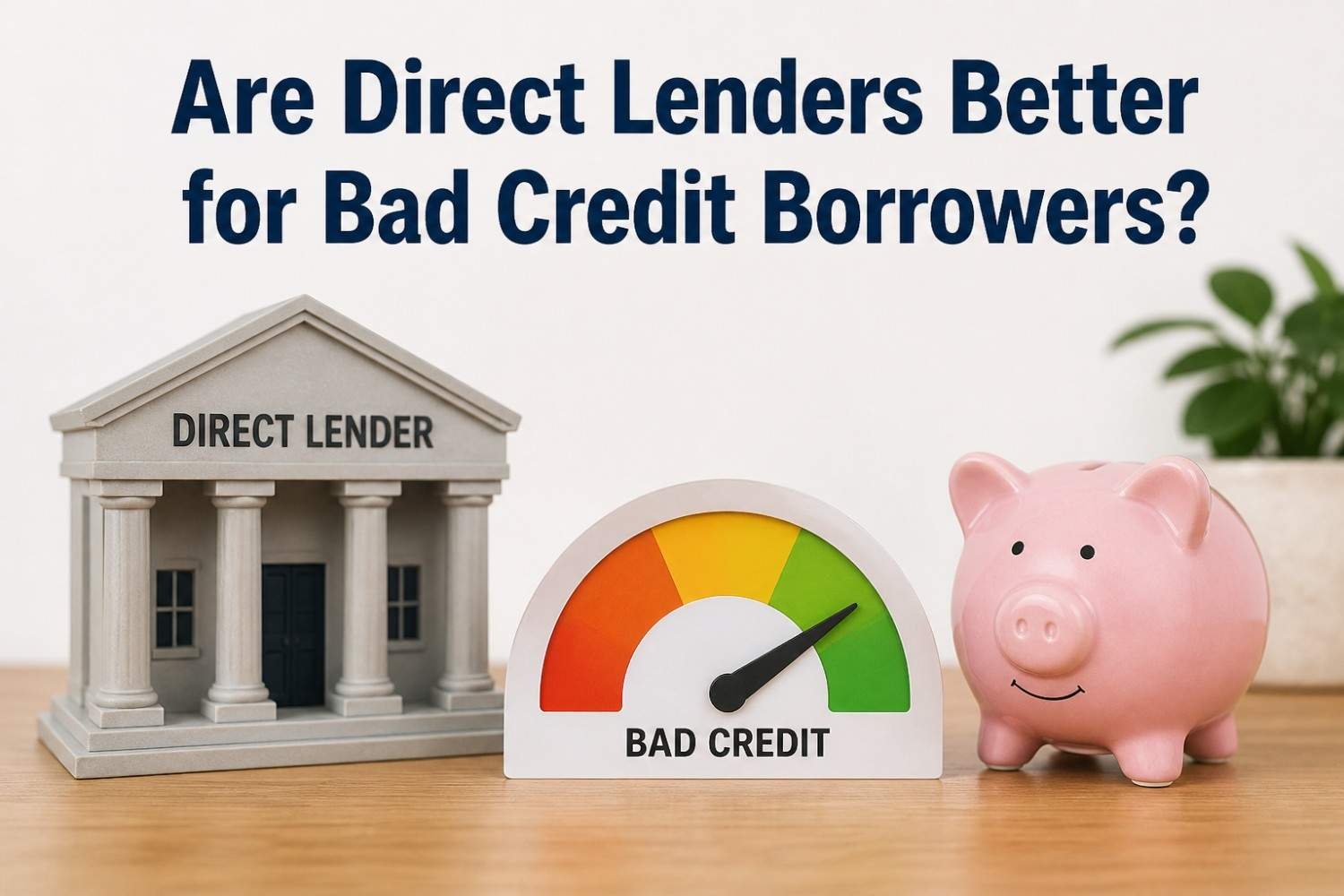
The choice between direct lenders and brokers completely depends on the type of financial product you are seeking. Subprime borrowers often struggle to qualify for a loan because of their compromised credit histories. Most of them believe that credit brokers will be better than direct lenders, while others think otherwise.
It is vital to understand who they are and what they do. They both play paramount roles in the borrowing process, but in different ways.
What is a direct lender?
A direct lender is a company or financial institution that provides loans to customers without the involvement of a third party. No intermediaries are there. Direct lenders are directly in touch with borrowers. They will shortlist their applications and make their own lending decisions. From start to disbursement, the entire process is completed by direct lenders.
What is a credit broker?
Credit brokers are intermediaries who work as middlemen between direct lenders and borrowers. When you contact a broker, you cannot be in direct touch with the loan providers throughout the process. Brokers connect you to lenders so you can compare and choose deals offered by them.
The following table explains the difference between lenders and brokers:
Aspects | Brokers | Lenders |
| Process | They connect you to different lenders. | They provide loans directly to borrowers. |
| Options availability | A wide range of lenders are available to choose from. | You only apply to one lender at a time. |
| Lending decisions | Brokers do not make any lending decisions. | Lenders are involved in the decision-making process. |
| How they make money | Brokers charge brokerage fees, passed on to customers. | Lenders charge interest rates on the borrowed sum of money. |
When brokers come in handy?
If your credit score is not perfect, you can contact both a lender and a broker. However, most of the people contact brokers when they need to apply for secured business loans and mortgages.
When it comes to borrowing a large amount of money, various prominent banks and financial institutions are out there dominating the market. Unfortunately, they follow strict acceptance criteria. Banks often reject applications from subprime borrowers. Now you have only one option left, which is to contact a direct lender.
While loans for bad credit from a direct lender are available, they charge exorbitant interest rates. On top of that the risk of falling into debt is quite high as you cannot accurately determine the authenticity of a lender.
Some online lenders are unregistered, and there is a chance of getting caught in a trap of an expensive deal. Applying for a mortgage and a business loan requires some research. You will need to compare interest rates offered by lenders, which could be a hectic job.
Applying to different lenders will result in a credit score loss, and if you stick to prequalifying offers, they do not establish a true and genuine comparison, as prequalifying rates are offered without pursuing your credit score. It does not come as a surprise when you formally put in a loan application that you have been charged very high interest rates.
Here comes the role of a broker. A reputed credit broker has a panel of lenders. When you apply for a loan through the agency of a broker, you do not need to do any research. Your broker will do all the tasks, such as submitting your applications to potential lenders on your behalf.
Brokers carefully analyse your application to see whose lending criteria you best meet. You do not have to worry about your credit score at this stage because they run a soft credit check. Brokers submit your application to multiple lenders for consideration. They will introduce you to those whose criteria you meet.
You can easily compare the interest rates quoted by them and choose the one that saves you a lot of money. Bear in mind that lenders will run a hard credit check. This will result in a temporary loss of your credit score, but you will bounce back as soon as you start making payments.
When are direct lenders suitable?
Direct lenders are suitable when you need a small amount of money. Emergencies never inform you in advance before knocking at your door. Your boiler might have conked out or your car has broken down. In both cases, you need money this instant.
Despite having savings, you might not have enough money to pay for unexpected expenses. Banks do not approve applications for small loans. This will not be a good idea to contact a broker for such a paltry sum because they will charge brokerage fees, and this unnecessarily increases the total cost of the debt.
When you need money fast, you would certainly not like to contact a broker as their process is time-consuming. By applying money directly to a lender, your application will be processed the same day. The majority of lenders disburse money within a few hours after completing the application process.
However, you will have to do a little bit of research on your own because their interest rates differ. Try choosing a direct lender whose interest rates are low.
Pros and cons of working with a broker
Here are the upsides and downsides of working with a broker:
Upsides | Downsides |
| Brokers may offer you advise to choose the best credit options. | Application process is time-consuming. |
| They save your time in research work. | They charge brokerage fees. |
| They explain complicated terms to you. | Not all brokers may have access to all products. |
| They can negotiate better interest rates. | No direct communication with a lender. |
Upsides and downsides of directly applying to a lender
Here are the advantages and disadvantages of choosing a direct lender:
Benefits | drawbacks |
| The application process is fast. | Options are limited. |
| They are cheaper than deals through brokers. | A lower scope for negotiation. |
| Bespoke lending. | High potential interest rates. |
| Transparent communication. | They might not offer a large sum of money. |
The final word
Direct lenders are better for subprime borrowers when you need a small amount of money for emergencies. They are less expensive than brokers as they do not charge any brokerage fees. However, if you need a secured loan like a mortgage, contacting a broker might be a good idea.