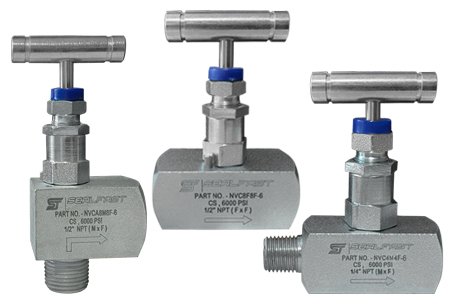
High-pressure instrumentation and process control systems put a lot of trust in a small component: the needle valve. Carbon steel needle valves handle that job across countless industrial systems, but two closely related material designations, ASTM A105 and ASTM A105N, get confused more often than they should. Sourcing High Pressure Carbon Steel Needle Valves starts with understanding that distinction, since ASTM A105 and A105N are both commonly specified forged carbon steel materials that behave differently under real operating stress. Knowing the difference helps engineers choose the right valve for the pressure, temperature, and safety requirements a given system actually demands.
ASTM A105 vs ASTM A105N: Understanding the Material
ASTM A105 is a forged carbon steel material widely specified for pressure-containing components like valves, flanges, and fittings, valued for its strength and machinability in general industrial service. A105N refers to that same base material supplied in the normalized condition, meaning it's gone through an additional heat treatment step after forging. Normalizing heats the steel above its critical temperature and then air-cools it, which restructures the grain pattern left behind by the forging process. That structural change is why normalization gets specified for critical services where consistent mechanical performance matters more than the small cost of the extra processing step.
How Normalizing Improves Valve Performance
Normalizing refines the grain structure of the steel, replacing the coarser, uneven grain pattern forging leaves behind with a finer, more consistent one. That refinement directly improves toughness and ductility, giving the material more resistance to sudden or brittle failure under stress. Mechanical properties come out more uniform across the component as a result, rather than varying depending on which section of the forging cooled fastest. Normalizing also reduces residual stresses locked in during forging, stresses that would otherwise sit in the material waiting for the wrong combination of load and temperature to cause a problem. Put together, these changes enhance reliability under the fluctuating operating conditions many instrumentation systems actually face.
A105 vs A105N Needle Valves: Key Differences
When Should You Choose a Carbon Steel A105N Needle Valve?
Low-Temperature Process Systems
Colder operating environments push carbon steel toward brittle fracture risk, and A105N's improved toughness directly addresses that vulnerability, holding up where as-forged material might crack under sudden stress.
High-Pressure Instrumentation
Critical pressure monitoring systems, process isolation applications, and instrument impulse lines all benefit from the more consistent mechanical properties normalizing delivers, since a failure in any of these points carries real consequences.
Power Generation Plants
Steam distribution systems, boiler instrumentation, and condensate systems cycle through fluctuating temperatures regularly, exactly the kind of service where A105N's improved resistance to thermal stress pays off over the plant's operating life.
Oil & Gas Processing
Refineries, pipeline instrumentation, and gas processing facilities specify A105N wherever reliability under variable conditions outweighs the modest cost difference over as-forged A105.
Petrochemical Plants
Process control systems, high-pressure fluid handling, and critical shutdown systems all depend on valves that won't fail unpredictably, making A105N's toughness and consistency a natural fit for petrochemical service.
Factors to Consider Before Selecting A105 or A105N
Selecting between the two grades comes down to matching material condition to actual service demands rather than defaulting to whichever costs less upfront. A handful of factors should shape that decision directly:
- Operating pressure the valve will see in continuous service
- Service temperature, particularly whether the application runs cold enough to raise brittle fracture concerns
- Applicable ASTM or ASME specifications governing the project
- Client or project requirements that may mandate one grade over the other
- Impact testing requirements tied to the service temperature range
- Long-term reliability expectations weighed against maintenance access
- Budget versus performance, since A105N's cost premium is usually modest relative to the reliability gain
Working through these factors early avoids a mismatch that only becomes obvious once the system is already in service.
Inspection and Material Verification
Confirming that a valve actually meets its stated grade starts with chemical composition testing, verifying the material matches ASTM A105 or A105N chemistry as certified. Mechanical property verification and heat treatment records confirm normalizing was actually performed where A105N is specified, not just claimed on paper. Positive Material Identification, commonly called PMI, adds another layer of confidence for critical applications. Hydrostatic and pneumatic testing verify pressure integrity before the valve ships, and Mill Test Certificates document all of the above for project records. Visual and dimensional inspection round out the process, catching any physical defects or dimensional issues before installation.
Conclusion
Both ASTM A105 and ASTM A105N are reliable forged carbon steel materials, but A105N offers meaningfully improved toughness and consistency thanks to the normalizing process. Selecting the appropriate material depends on operating conditions, project specifications, and service requirements, not a blanket preference for one grade over the other. Where enhanced mechanical properties and dependable performance under fluctuating conditions matter most, a Carbon Steel A105N Needle Valve is the material choice worth specifying, and sourcing it from an experienced manufacturer such as Virgin Engineers helps confirm that normalizing and testing were actually carried out as certified.