A Guide to Preadipocytes and Adipocytes Function in Primary Cell Culture Studies
By Kosheeka Primary Cells for Research 16-04-2026 148
Introduction: Preadipocytes and Adipocytes in Metabolic Research
Adipose tissue or ‘fat tissue’ is known as a dynamic metabolic organ. They are responsible for energy storage, metabolic regulation, and endocrine signalling. The tissue consists of heterogeneous cell types such as preadipocytes and adipocytes.
Preadipocytes act as cell precursors that differentiate into mature adipocytes. These cells are responsible for lipid storage and the secretion of adipokines. Primary cell culture, which focuses on Preadipocytes and Adipocytes, enables researchers to investigate adipogenesis and metabolic regulation, various disease conditions, such as obesity, obesity, diabetes, etc., along with their cellular mechanisms.
What Are Preadipocytes and Adipocytes?
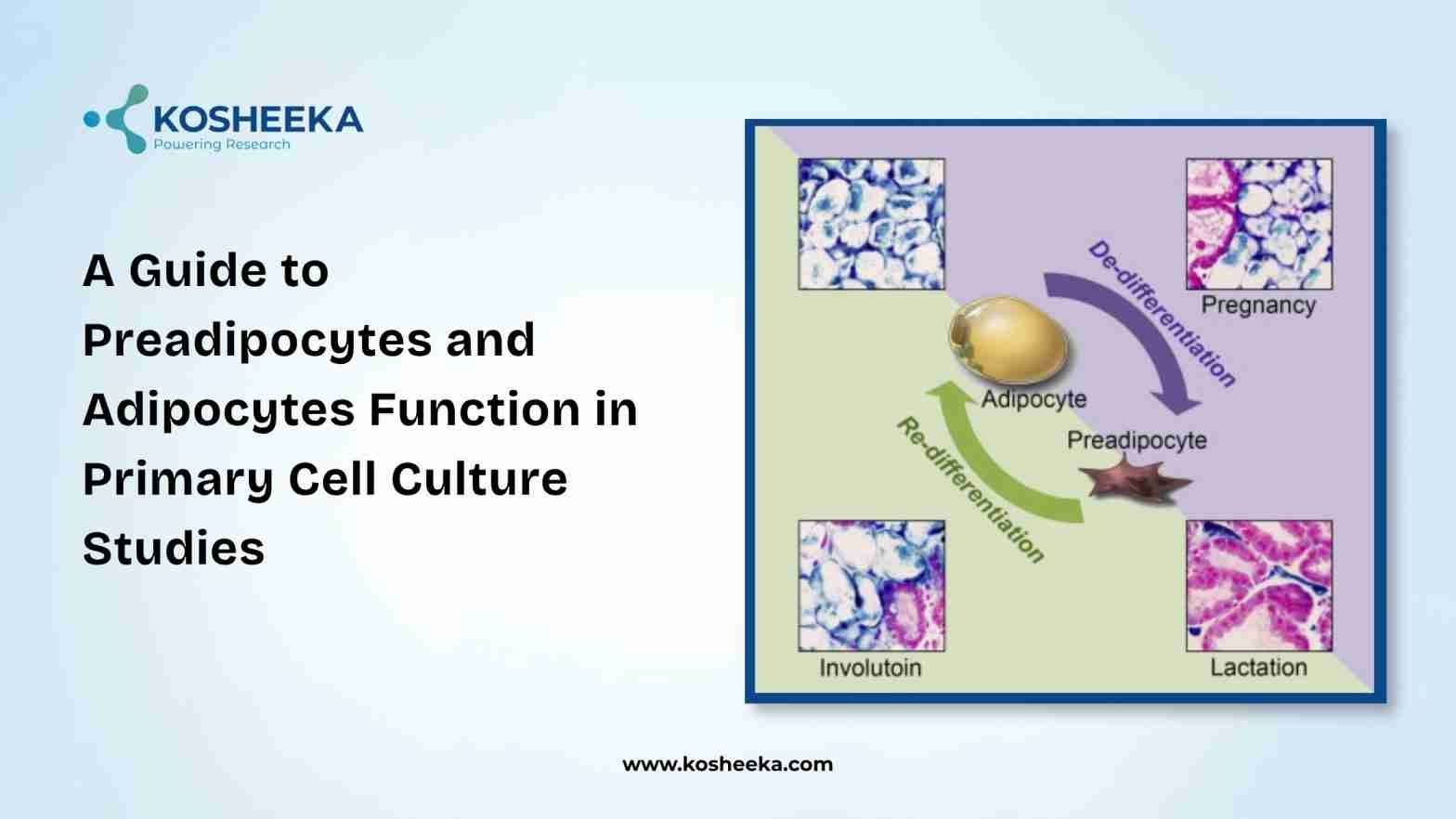
Preadipocytes and adipocytes are essential cellular components of adipose tissue. Morphologically, preadipocytes are fibroblast-like cells that act as precursor cells. Cells are derived from mesenchymal stem cells (MSCs) within adipose tissue. Preadipocytes are undifferentiated cell. They retain the capacity to proliferate and differentiate into mature adipocytes.
Preadipocytes undergo a well-regulated differentiation under suitable physiological conditions; this process is called adipogenesis. This involves activation of key transcription factors such as PPARγ and C/EBP family proteins. The activation of these factors promotes lipid droplet accumulation and metabolic specialization. The maturity of adipocytes transforms cell morphology in spherical structure that efficiently stores lipids and secretes bioactive molecules. Mature adipocytes are spherical cells primarily responsible for lipid storage and secretion of bioactive molecules, including adipokines that regulate systemic metabolism and energy homeostasis.
Preadipocytes and Adipocytes: Functions
Preadipocytes and adipocytes play crucial roles in maintaining adipose tissue homeostasis and maintaining systemic balance. Their biological roles are fat storage and involve complex metabolic and endocrine activities. The key physiological functions include:
- Storage of Lipids and Regulate Energy Homeostasis: On maturity, adipocytes actively store excessive energy in the form of triglycerides. When the body demands energy, the lipids mobilize via the process of lipolysis.
- Adipogenesis and Tissue Expansion: Adipose tissue expands through hyperplasia that maintains metabolic balance during increased energy intake.
- Endocrine Signaling: Adipocytes secrete various bioactive molecules called adipokines. These molecules include leptin, adiponectin, and resistin. These signaling molecules regulate appetite, insulin sensitivity, inflammation, and systemic metabolism.
- Metabolic Regulation: Adipose cells regulate glucose metabolism, turnover of fatty acids, and insulin signalling pathways. They maintain tissue homeostasis.
- Obesity and Metabolic Disorders: Dysregulation of preadipocyte differentiation or adipocyte function leads to inappropriate adipose tissue expansion, chronic inflammation, and metabolic dysfunction. These factors are major contributors in developing obesity, type 2 diabetes, hyperlipidemia, and insulin resistance.

Primary adipocyte culture: Primary Cell Culture
Primary cell culture systems are used in adipose tissue research due to physiological relevance with humans. Primary Adipocyte Culture and primary preadipocyte culture enable researchers to use physiologically relevant models in controlled laboratory conditions. The key importance includes:
- Physiological Relevance: primary cells isolated from adipose tissue retain various physiological Relevance, including morphology, genetic makeup, metabolic features, etc.
- Adipogenesis Process: Detailed investigation on adipocyte differentiation, transcription factors activation, etc.
- Metabolic Analysis: Studies including lipid metabolism, lipolysis, and insulin responsiveness,
- Disease Modeling: Obesity, insulin resistance, and metabolic disorders
- Translational Research: Drug discovery and therapeutic research in metabolic diseases.
Primary Preadipocytes Culture: Isolation and Experimental Applications
The isolation of primary preadipocytes from adipose tissue involves a multi-step process. The stem includes:
- Adipose Tissue Collection: Collection of adipose tissue in sterile conditions and placed in 1X PBS buffer in the presence of antibiotics.
- Washing and Mechanical Disintegration: Tissue thoroughly washed, and mechanically crushed. Tissues chopped into smaller sizes using sterile scissors.
- Enzymatic Digestion: Collagenase or trypsin used for enzymatic digestion at 37 °C. This breaks down the extracellular matrix and releases individual cells from the tissue.
- Filtration & Centrifugation: Cells filtrated via a 70–100 µm cell strainer. Cell filtrates are centrifuged. Mature adipocytes float due to their lipid content, while the SVF pellet contains preadipocytes, endothelial cells, and immune cells.
- Collection of Stromal Vascular Fraction (SVF): Pellets resuspended in appropriate culture medium and seeded in an adequate flask.
- Cell Seeding & Culture: Cells cultured in complete medium (DMEM + FBS +antibiotic). Incubated in a CO2 incubator at 37 °C with 5% CO₂
- Expansion and Differentiation: The cell adheres to the coated surface of the flask and differentiates. Cells differentiate and reach 80-85% confluency. They are passaged/sub-cultured in a fresh flask. Cells used for experimental purposes.
Conclusion
Primary adipocyte culture is valuable in experimental models. The investigation enables the study of various diseases, including obesity, metabolic disorders, and insulin resistance, etc. The primary cell culture enables researchers to gain preclinical data. This enables planning of adequate clinical investigation. Overall, Preadipocytes and Adipocytes function in laboratory conditions enabling various translational biomedical research.