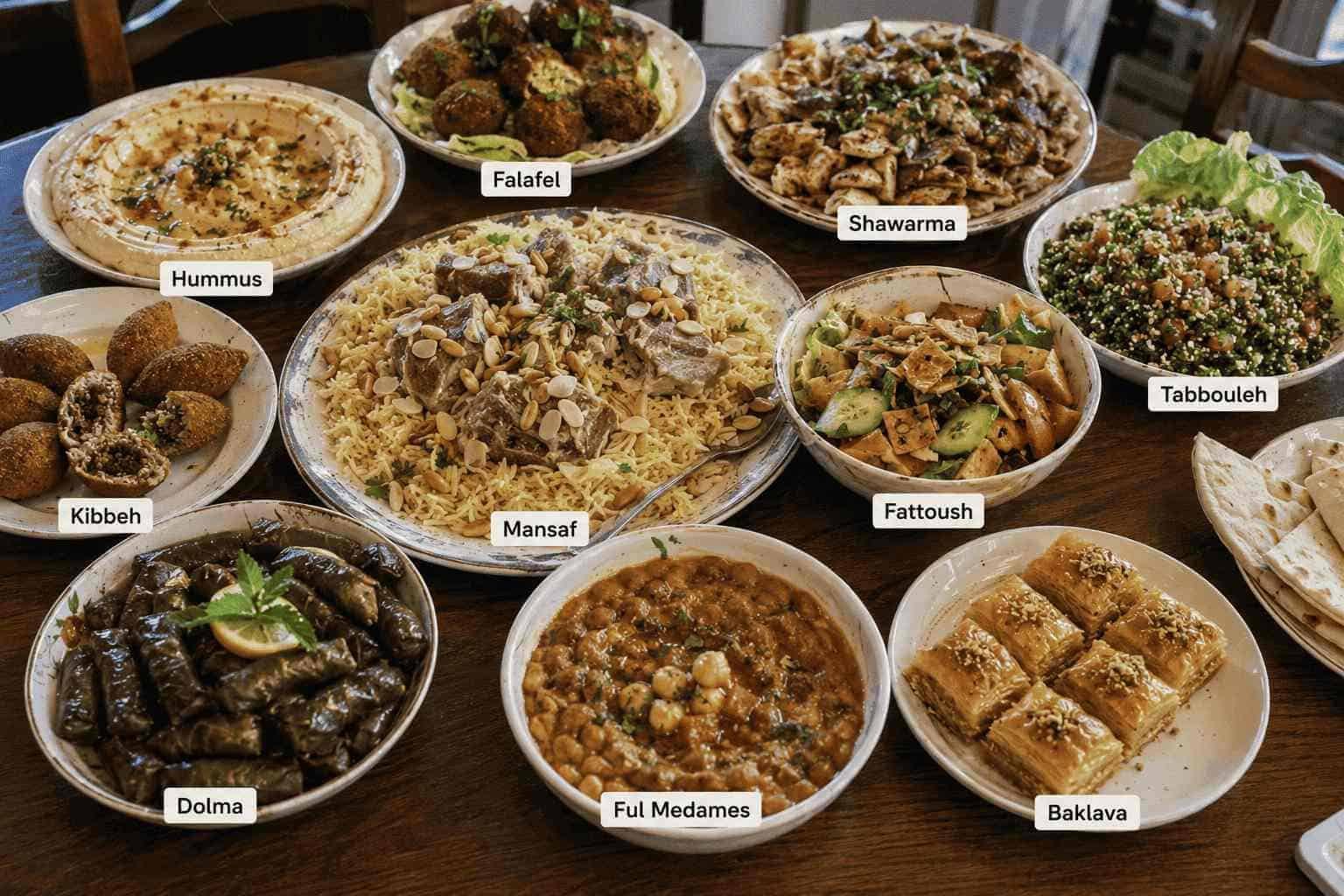
Middle Eastern food includes many dishes made with fresh vegetables, grains, beans, meat, herbs, and simple spices. Hummus, falafel, shawarma, tabbouleh, kibbeh, and mansaf are some of the best-known dishes from the region. Many of these foods have been made for generations and are still common in homes and restaurants today. Their recipes can change from one country to another, but the main ingredients often stay the same. The dishes below explain what each food is, where it comes from, what goes into it, and how people usually eat it.
1. Hummus
Hummus is a smooth dip made from cooked chickpeas and tahini. Tahini is a paste made from ground sesame seeds. Lemon juice, garlic, salt, and olive oil are also common ingredients. The chickpeas are blended until smooth, then mixed with the other ingredients.
Hummus has a long history in the Middle East. Its exact origin is not known, and several countries have their own versions. It is common in countries such as Lebanon, Syria, Palestine, Jordan, and Egypt.
Hummus is usually served cold or at room temperature. If you are preparing for a large gathring its best to use a hummus blender for convenience and time-saving. It is often placed on a wide plate with olive oil on top. People eat it with pita bread, vegetables, falafel, or grilled meat. It can be served as a starter or as part of a larger meal.
2. Falafel
Falafel is made from ground beans or chickpeas mixed with herbs and spices. The mixture is shaped into small balls or patties and then fried until the outside becomes crisp. Garlic, onion, parsley, coriander, and cumin are often used in the mixture.
The exact origin of falafel is debated. Egypt is often linked to its early history, where a version called ta'amiya is made with fava beans. Over time, falafel became popular across the Middle East, with chickpeas used in many countries.
Falafel is often eaten inside pita bread with tomatoes, cucumbers, pickles, and tahini sauce. It can also be served on a plate with hummus and salad. It is common as a breakfast, lunch, or light meal.
3. Shawarma
Shawarma is made from thin slices of seasoned meat cooked on a vertical rotating spit. Chicken, beef, lamb, or a mix of meats may be used. The meat is stacked on the spit and slowly cooked as it turns. The cooked outer layer is sliced off and served.
Shawarma developed in the Ottoman period and is closely linked with the cooking traditions of the Middle East. It is related to other vertical spit dishes, including Turkish döner. Today, shawarma is common across the region, with each country adding its own style.
Shawarma is often served inside pita or flatbread. Garlic sauce, tahini, pickles, tomatoes, onions, and other fresh vegetables are common additions. It can also be served on a plate with rice, salad, and sauces.
4. Tabbouleh
Tabbouleh is a fresh salad made with parsley, tomatoes, bulgur, mint, onion, lemon juice, and olive oil. Parsley is the main ingredient, while bulgur is used in a smaller amount. The salad has a fresh taste from the lemon and herbs.
Tabbouleh is strongly linked with the Levant, especially Lebanon and Syria. It has been part of the region's food culture for many years. Recipes can differ between families, but fresh herbs remain an important part of the dish.
Tabbouleh is usually served cold or slightly chilled. It is often placed beside grilled meat, falafel, hummus, and other dishes. It can be eaten with pita bread or used as part of a larger meal.
5. Kibbeh
Kibbeh is a traditional dish made with bulgur, minced meat, onions, and spices. The ingredients are mixed into a dough-like mixture. Some types have a filling of minced meat, onions, and nuts inside. Kibbeh can be baked, fried, or served raw, depending on the recipe.
Kibbeh is strongly associated with the Levant. Lebanon and Syria are especially known for different types of kibbeh. Each area may prepare it in a different shape or use a different cooking method.
Fried kibbeh is often shaped like an oval ball with a crisp outside. Baked kibbeh can be made in a large tray and cut into pieces. It is usually served with salad, yogurt, or other side dishes.
6. Mansaf
Mansaf is a famous Jordanian dish made with lamb, rice or bulgur, and a fermented dried yogurt sauce called jameed. The lamb is cooked until tender and served over rice. Almonds or pine nuts are often added on top.
Mansaf is closely linked with Jordan and is considered an important part of Jordanian food culture. It is also served in parts of Palestine and other nearby areas. The dish has a strong connection with family meals and special events.
Mansaf is usually placed on a large shared tray. People gather around the dish and eat together. Traditionally, it may be eaten by hand, although spoons and forks are also common today. It is often served at weddings, family events, and other large gatherings.
7. Fattoush
Fattoush is a salad made with fresh vegetables and pieces of toasted or fried pita bread. Tomatoes, cucumbers, lettuce, radishes, parsley, and mint are common ingredients. A dressing made with lemon juice, olive oil, and spices gives the salad its fresh taste.
Fattoush comes from the Levant and is especially common in Lebanon and Syria. The dish also reflects a simple way of using leftover bread. Pieces of pita are added to the salad instead of being thrown away.
Fattoush is usually served cold. The bread is often added close to serving time so it stays crisp. It works well beside grilled meat, rice, hummus, and other Middle Eastern dishes.
8. Dolma
Dolma refers to vegetables or leaves stuffed with a mixture of rice, herbs, spices, and sometimes meat. Grape leaves are often used, but peppers, zucchini, eggplant, and other vegetables can also be stuffed.
Stuffed vegetables are common across the Middle East and nearby regions. The word dolma comes from a Turkish word meaning “stuffed.” Different countries and families have their own recipes, so the taste can vary greatly.
Dolma is usually cooked slowly in a pot until the leaves or vegetables become tender. It can be served warm or at room temperature. Some versions are served with yogurt or a simple sauce.
9. Ful Medames
Ful medames is a simple dish made from cooked fava beans. The beans are usually mixed with olive oil, lemon juice, garlic, and salt. Some people add tomatoes, onions, chili, or cumin.
Ful medames is strongly linked with Egypt and has been an important part of Egyptian food for a long time. It is also eaten in other Middle Eastern countries. The dish is filling, simple, and made from ingredients that are easy to store.
Ful is often eaten for breakfast. It is served in a bowl or plate with olive oil and fresh vegetables. Pita bread is used to scoop up the beans. It can also be served with boiled eggs or other simple foods.
10. Baklava
Baklava is a sweet pastry made with thin layers of dough, butter or ghee, nuts, and sweet syrup. Pistachios, walnuts, and almonds are common fillings. The pastry is baked until crisp and golden before syrup is added.
Baklava has a long history in the Middle East and the wider former Ottoman region. Its exact origin is debated, and many countries have developed their own styles. The shape, filling, and amount of syrup can change from one place to another.
Baklava is usually cut into small squares, rectangles, or diamond shapes. It is served at room temperature and often comes with tea or coffee. It is common during holidays, celebrations, family visits, and other special occasions.
Why These Dishes Are Still Popular
These ten dishes show the range of Middle Eastern cooking. Some are simple foods made with beans, herbs, and vegetables. Others use meat, rice, or pastry and are often served at large family meals. Many can be found in both homes and restaurants.
The recipes also show how food changes from one country to another. Hummus may have a slightly different texture in one home, while falafel may use different beans in another country. Shawarma can be made with chicken, lamb, or beef, and stuffed vegetables can have many different fillings.
Middle Eastern food is also closely tied to sharing. Hummus, tabbouleh, fattoush, and other dishes are often placed in the center of the table. Family members and guests can share several foods during the same meal. This makes these dishes an important part of everyday meals as well as special occasions.
A Look at Middle Eastern Food
The most famous Middle Eastern dishes are not all alike. Some are fresh and light, while others are rich and filling. Some are served as dips or side dishes, while others can make a complete meal. Their ingredients are simple, but their recipes carry years of food history.
From a bowl of hummus and a plate of falafel to a shared tray of mansaf or a piece of baklava with coffee, these foods remain part of daily life across the region. Their long history and many local versions are what make Middle Eastern food so varied and interesting.