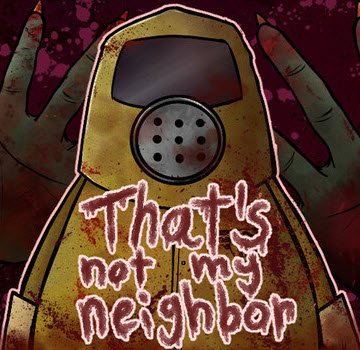
That’s Not My Neighbor is a tense, logic-driven horror simulation that challenges your attention to detail, judgment, and nerves. Developed by Nacho Sama (Ignacio Alvarado), the game quickly gained popularity thanks to its unique identity verification gameplay, often compared to Papers, Please, but with a darker and more unsettling twist.
Setting and Storyline
Set in the year 1955, That’s Not My Neighbor places players in a world under threat from mysterious shapeshifting entities known as Doppelgangers. You take on the role of a newly hired doorman working for the Doppelganger Detection Department (D.D.D), tasked with protecting an apartment building from these hidden intruders.
Every day, residents attempt to enter the building—but not all of them are who they claim to be. Your job is to carefully inspect documents, verify identities, and decide who gets in and who doesn’t. One wrong decision could mean letting a deadly entity inside.
Key Features of That’s Not My Neighbor
One of the standout aspects of That’s Not My Neighbor is its decision-based gameplay. Players must analyze IDs, compare facial features, and spot inconsistencies under pressure. The game doesn’t rely on fast reflexes but instead demands sharp observation and logical thinking.
Another defining feature is the increasing difficulty curve. As the game progresses, Doppelgangers become more sophisticated, making them harder to detect. New rules, documents, and scenarios are introduced, keeping the experience fresh and challenging.
The game also creates tension through its minimalist yet eerie design. From subtle visual clues to unsettling audio cues, every detail contributes to a constant sense of unease.
Why That’s Not My Neighbor Is So Engaging
What makes That’s Not My Neighbor truly addictive is its blend of psychological tension and problem-solving. Each interaction feels like a small puzzle, but the stakes make it intense. You’re not just checking papers—you’re deciding safety or danger.
The game also taps into a strong sense of responsibility and consequence. Every mistake feels personal, pushing players to improve and stay focused. Over time, you develop sharper instincts, and moments of doubt become part of the thrill.
Who Should Play That’s Not My Neighbor?
That’s Not My Neighbor is perfect for players who enjoy slow-burn horror, deduction mechanics, and thoughtful gameplay. If you like games that challenge your mind more than your reflexes, this is a great fit.
Casual players can enjoy the story and atmosphere, while more dedicated players will appreciate mastering the complex identification system. It’s especially appealing to fans of indie games that offer unique concepts and memorable experiences.
Final Thoughts
In a genre often dominated by jump scares, That’s Not My Neighbor stands out by focusing on tension, logic, and atmosphere. Its simple mechanics, combined with high-stakes decision-making, create a deeply engaging experience.
If you’re looking for a game that keeps you thinking, questioning, and slightly on edge the entire time, That’s Not My Neighbor delivers something truly different.
Gallery
Opening Hours
| Open | 24 x 7 Hours |
|---|
Recent Questions and Answers
Have a question? Ask away!