How to Choose the Right Door Frame Metal Detector for Entrance Security
By Global Outreach 22-10-2026 2
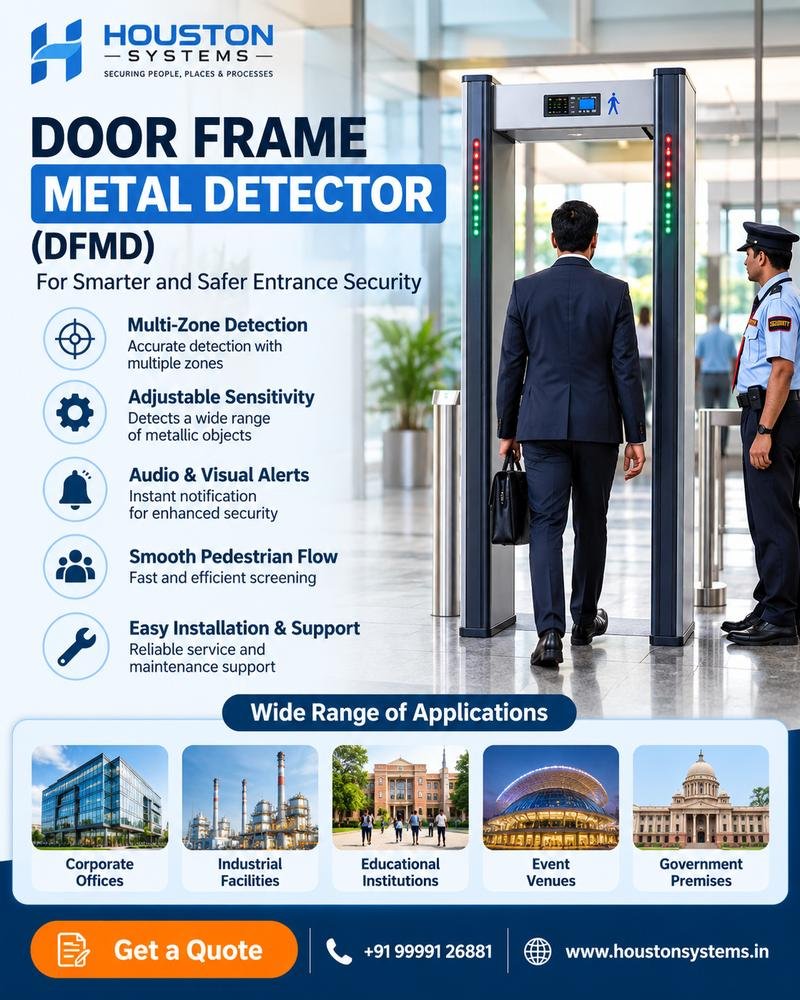
Security screening is an important part of managing entrances at commercial buildings, industrial facilities, educational institutions, event venues, and other controlled-access locations. Organizations need screening equipment that supports effective detection while allowing people to move through checkpoints in an organized manner.
A Door Frame Metal Detector (DFMD), also known as a walk-through metal detector, is commonly used to screen individuals for concealed metallic objects as they pass through an entrance checkpoint.
Choosing the right system requires more than comparing prices. Detection capabilities, installation requirements, expected footfall, and after-sales support should all be considered.
What Is a Door Frame Metal Detector?
A Door Frame Metal Detector is an electronic screening system designed as an archway. When a person carrying a detectable metallic object passes through the detection area, the system can trigger an audible or visual alarm according to its configuration.
DFMD systems are used at a range of entrances, including office buildings, factories, educational campuses, public venues, and selected infrastructure facilities.
The appropriate system depends on the site's security requirements and the manufacturer's documented specifications.
Important Factors to Consider When Selecting a DFMD
1. Detection Zones and Sensitivity
Different DFMD models offer different detection-zone configurations and sensitivity controls. Multi-zone systems can help security personnel identify the approximate area where a metallic object has triggered an alarm.
Before purchasing, review the manufacturer's specifications and assess whether the detection capabilities suit the intended screening application.
2. Alarm Indicators
Audible alarms and visual indicators help security personnel respond when metal is detected. Depending on the model, indicators may include zone lights, display information, or adjustable alarm settings.
Consider the surrounding environment, especially where ambient noise may affect the ability to hear an alarm.
3. Pedestrian Traffic and Entrance Layout
Busy entrances require a screening arrangement that balances security checks with pedestrian movement. Estimate peak-hour traffic, available installation space, and the need for secondary screening before deciding how many units are required.
A suitable layout can help reduce unnecessary congestion at entry points.
4. Installation and Operating Conditions
Check the available space, power requirements, environmental conditions, and installation instructions. For outdoor or demanding environments, verify that the selected model is specifically suitable for those conditions.
Also confirm the required maintenance access and any site preparation before installation.
5. Integration with Security Procedures
A DFMD is one component of an overall security process. Facilities should establish procedures for responding to alarms, conducting secondary checks, and managing entry permissions.
Where appropriate, the screening arrangement can be coordinated with other security measures, such as handheld metal detectors, baggage screening, and visitor management procedures.
6. Warranty and After-Sales Support
Before placing an order, review warranty terms, service availability, spare-parts support, installation assistance, and maintenance requirements.
Clear technical documentation and responsive support can help organizations plan for long-term equipment operation.
Where Are DFMD Systems Commonly Used?
Door Frame Metal Detectors may be suitable for:
- Manufacturing plants and industrial facilities
- Corporate offices and business campuses
- Schools, colleges, and institutional buildings
- Stadiums, exhibitions, and event venues
- Government and other controlled-access premises
- Selected transport and infrastructure facilities
The screening requirements can differ significantly between locations, so product selection should be based on a site-specific assessment.
DFMD Price: What Determines the Cost?
The cost of a Door Frame Metal Detector can vary depending on its detection zones, sensitivity features, construction, display and alarm functions, power arrangements, accessories, warranty, and service requirements.
Rather than comparing equipment on price alone, buyers should evaluate the specifications against their security needs and operating environment. Requesting a detailed quotation can help clarify what is included in the proposed configuration.
Choosing a Suitable DFMD Solution
Businesses planning to improve entrance screening should compare documented product specifications, assess their expected pedestrian traffic, and confirm installation and service requirements before making a decision.
Houston Systems offers security and access control solutions for commercial and industrial applications. Businesses evaluating a walk-through screening system can explore the available DFMD solutions and contact the company to discuss their requirements.
Conclusion
Selecting the right Door Frame Metal Detector involves understanding the screening objective, required detection capabilities, site conditions, and support requirements. A well-planned screening arrangement can help organizations manage entrance security while maintaining orderly pedestrian movement.
By reviewing technical specifications and evaluating the intended application carefully, businesses can make a more informed decision about their DFMD requirements.