Financial reporting is becoming increasingly dependent on structured digital information. While traditional financial statements present information in a format that people can read, structured reporting allows financial data to be identified, processed and analyzed using standardized digital concepts. XBRL plays an important role in this process, and the XBRL taxonomy is one of its fundamental components.
For finance and compliance teams, understanding taxonomy is important because it determines how different financial information is represented in an XBRL report. Taxonomy concepts connect reported information with standardized definitions, making the resulting data more structured and easier to process.
What Is an XBRL Taxonomy?
An XBRL taxonomy is a structured collection of concepts and relationships used to represent business and financial information in XBRL.
In simple terms, a taxonomy provides a framework for describing financial information. It can contain concepts representing items such as assets, liabilities, revenue, expenses and other reporting information.
Instead of treating a financial statement as a collection of ordinary text and numbers, XBRL allows individual pieces of information to be associated with specific digital concepts.
This makes financial information more structured and machine-readable.
Why Is Taxonomy Important in XBRL Reporting?
Taxonomy provides the foundation for mapping financial information into an XBRL report.
Consider a financial statement containing an item such as revenue. The reporting team needs to determine which appropriate taxonomy concept represents that information. The objective is not simply to find a concept with a similar name. The selected concept should reflect the meaning and characteristics of the underlying financial information.
Accurate taxonomy selection therefore contributes to the quality of the overall XBRL report.
How Does Taxonomy Mapping Work?
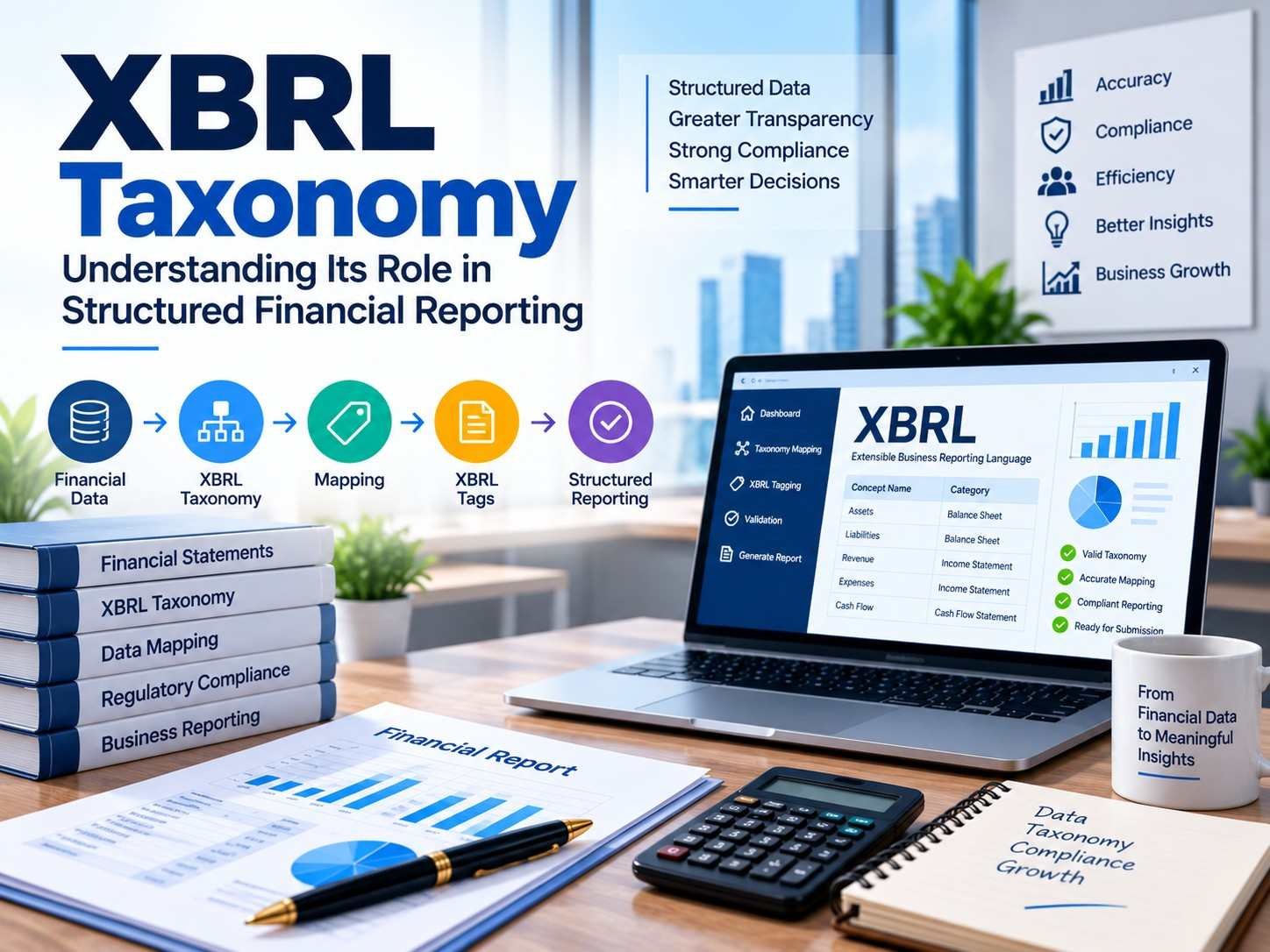
Taxonomy mapping is the process of connecting financial information with relevant XBRL concepts.
A typical mapping workflow can include the following steps:
- Identify the financial statement item.
- Understand the meaning and characteristics of the item.
- Search the applicable taxonomy for relevant concepts.
- Compare available concepts.
- Select the concept that appropriately represents the information.
- Apply the concept to the relevant financial data.
- Review and validate the resulting information.
This process requires both knowledge of the financial information and an understanding of the applicable XBRL taxonomy.
What Factors Should Be Considered When Selecting a Concept?
Selecting a taxonomy concept should involve more than comparing labels.
Meaning of the Financial Item
The concept should represent the economic meaning of the reported information. Similar wording does not necessarily mean that two concepts are interchangeable.
Reporting Period
Financial information may relate to a specific reporting period. The reporting context should therefore be considered when preparing structured data.
Entity Information
The same type of financial information may be reported by different entities. Appropriate context helps identify the entity to which the information relates.
Units and Values
Numerical information may require appropriate units and other characteristics. These details contribute to the correct interpretation of structured financial data.
Taxonomy Relationships
Taxonomy concepts can have relationships with other concepts. Understanding these relationships can help finance professionals review whether the selected concept fits appropriately within the report.
What Is the Difference Between Taxonomy and Tagging?
Taxonomy and tagging are closely related, but they are not the same thing.
The taxonomy provides the concepts used to describe financial information. Tagging involves applying those concepts to specific financial information in the XBRL report.
For example, a taxonomy may contain a concept representing a particular financial item. During the reporting process, that concept can then be applied as a tag to the corresponding information.
Understanding this distinction can help finance teams better manage the XBRL preparation process.
How Can XBRL Software Support Taxonomy Mapping?
Taxonomy mapping can become more complex when a report contains a large number of financial items.
An appropriate XBRL Software solution can help finance teams organize activities such as data preparation, taxonomy mapping, tagging and validation within a structured workflow.
However, technology does not eliminate the need for professional review. The finance or compliance team still needs to determine whether the selected taxonomy concepts accurately represent the underlying financial information.
What Challenges Can Occur During Taxonomy Mapping?
Taxonomy-related challenges can arise at different stages of XBRL reporting.
Similar Concepts
Different concepts may appear similar based on their labels. Selecting between them requires attention to their definitions and reporting characteristics.
Incomplete Understanding of Financial Information
If the person preparing the report does not fully understand the underlying financial item, selecting the appropriate taxonomy concept can become difficult.
Changes in Reporting Requirements
Taxonomies and reporting requirements can change over time. Teams should therefore review the applicable taxonomy rather than assuming that previous-period mappings will always remain appropriate.
Manual Errors
Large reports can involve many financial items. Repetitive manual activities can increase the possibility of incorrect mapping or tagging.
How Can Businesses Improve Taxonomy Management?
Organizations can introduce several practical controls to make taxonomy-related activities more manageable.
Document important mapping decisions: Maintaining records can help teams understand why particular concepts were selected.
Review previous mappings: Earlier reports can provide useful references, but mappings should be reviewed for the current reporting period.
Use validation checks: Validation can help identify structural, calculation or other issues in the prepared XBRL information.
Create internal review stages: A second-level review can help identify mapping decisions that require further examination.
Keep source data organized: Consistent financial information makes the mapping process easier to manage.
Why Does Taxonomy Knowledge Matter for Finance Professionals?
XBRL is not simply a technical reporting format. It connects financial information with structured digital concepts.
Finance professionals who understand how taxonomy, mapping, tagging, context and validation work together can participate more effectively in the reporting process.
This knowledge can also help teams communicate more clearly with technology providers and compliance specialists when implementing or reviewing an XBRL reporting workflow.
Frequently Asked Questions
What is an XBRL taxonomy?
An XBRL taxonomy is a structured collection of concepts and relationships used to represent business and financial information in XBRL.
Why is XBRL taxonomy important?
Taxonomy provides the concepts used to represent financial information in a structured format. Appropriate taxonomy selection helps maintain the meaning of the reported information.
What is taxonomy mapping in XBRL?
Taxonomy mapping connects financial statement items or other business information with appropriate concepts from an applicable XBRL taxonomy.
Is taxonomy the same as XBRL tagging?
No. Taxonomy provides the concepts, while tagging involves applying those concepts to specific financial information in an XBRL report.
Can previous-period taxonomy mappings be reused?
Previous mappings can be useful as references, but they should be reviewed because financial information, reporting circumstances or applicable taxonomy requirements may change.
Conclusion
XBRL taxonomy forms an important foundation for structured financial reporting. It provides the concepts and relationships needed to represent financial information in a machine-readable format.
For finance teams, accurate taxonomy mapping requires attention to the meaning of financial information, reporting context, units, relationships and applicable reporting requirements. Combining appropriate technology with professional review can help organizations maintain a more controlled and consistent XBRL reporting workflow.